 vs

MergeLabs vs Ontime
Both are in our Event planning & production category. MergeLabs is best for event agencies, PCOs and AMCs coordinating many suppliers and stakeholders; Ontime is best for Production and AV teams running conference general sessions.
The short answer: MergeLabs coordinates event production for agencies and PCOs: a master schedule feeding runsheets, tasks, bookings and guest itineraries, from $1,000 per event or $5,000/yr. Ontime is a rundown and stage-timer tool for AV crews, free to self-host with Cloud PRO at $20/month. They do different jobs and suit different teams, so they're more likely to be used side by side than chosen between.
Built from each vendor's own website and our research profiles. How we research
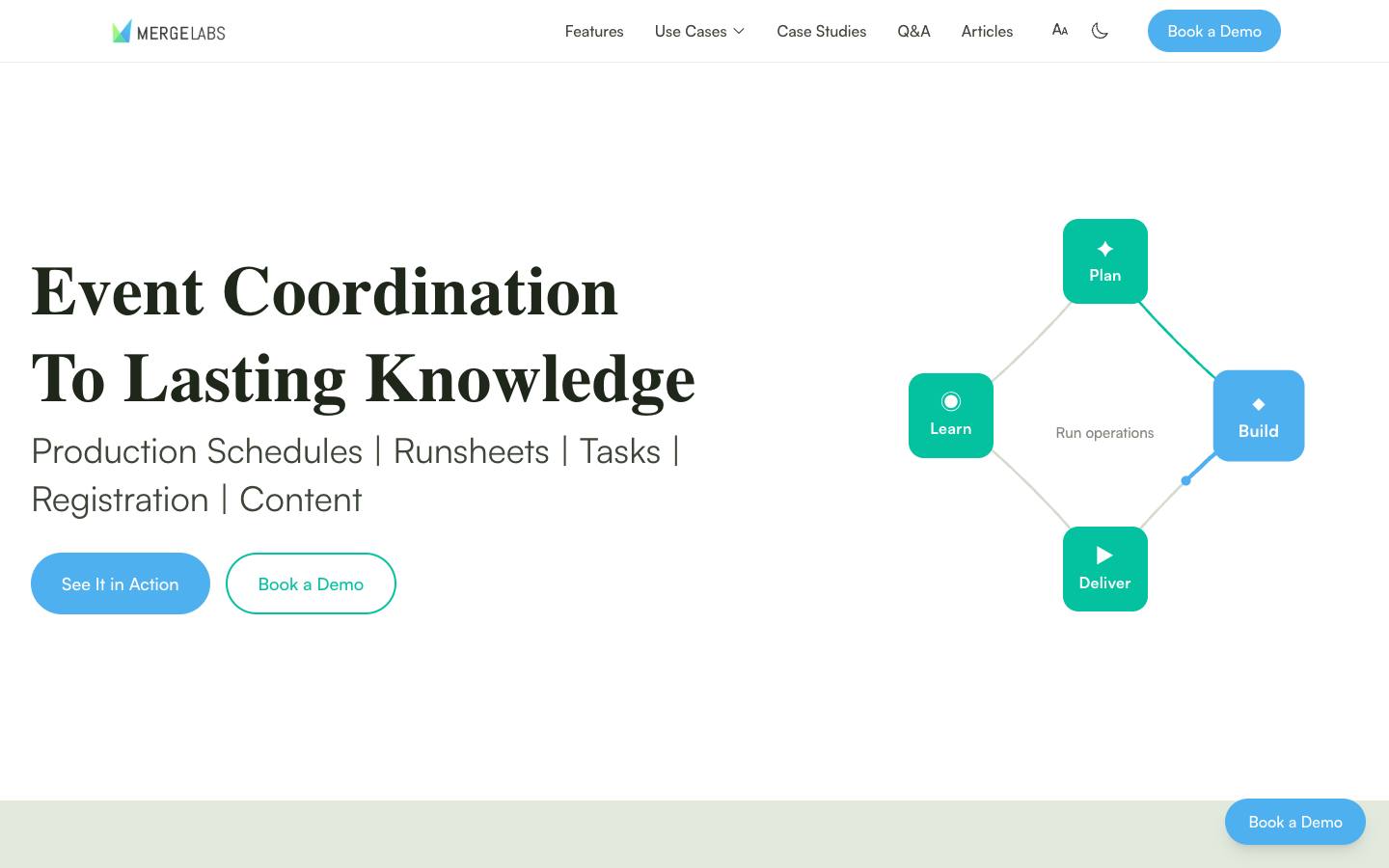
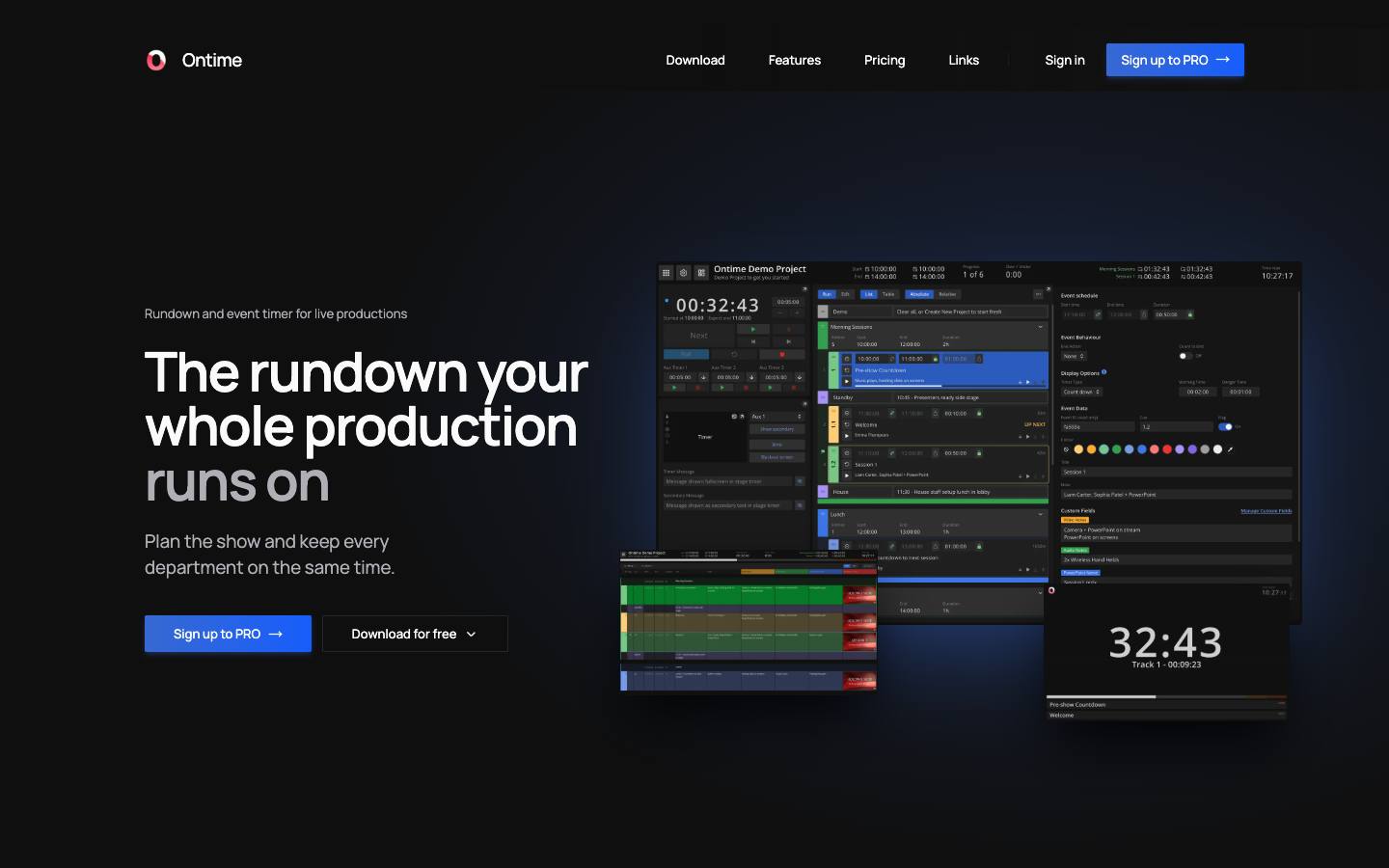
Side by side
“Not published” means we couldn't find it on the vendor's own pages.
MergeLabsOntimeStrengths and considerations
MergeLabs
What stands out
- Built around production operations (runsheets, itineraries, day-of coordination) rather than marketing attribution
- Retains event knowledge across editions through cloneable playbooks
- Multilingual guest itineraries suited to international incentive and customer programmes
Worth checking
- Very early-stage company with a single public case study
- No named integrations or security certifications
- Not a lead-capture or marketing-attribution tool
Ontime
What stands out
- Open source (GPL v3) and free to self-host
- Native show-control protocols suited to professional AV crews
Worth checking
- Built for production crews, not for attendee-facing event marketing
- Company details, named customers and security certifications aren't published
- Self-hosted users rely on community support
Notable customers
Organizations each vendor names on its own website: customer stories first, then testimonials and logos.
MergeLabs
Ontime
None found on its website.
The main difference between MergeLabs and Ontime
MergeLabs coordinates the people and logistics around an event, while Ontime times what happens on stage. MergeLabs keeps one master schedule that generates runsheets, venue agendas and stakeholder views, tracks activity owners, tasks and blockers, clones whole events as playbooks, and sends guest itineraries by group. Ontime drives stage timers, backstage displays and operator views from one live rundown, with delay propagation and show-control APIs (OSC, HTTP and WebSocket) plus a Bitfocus Companion module.
The only real overlap is the word runsheet. A PCO or agency would use MergeLabs to plan suppliers, bookings and itineraries across a program, and a show caller would use Ontime to run the general session minute by minute. Because they sit at different points in the workflow, you can reasonably use both.
Pricing, features and fit
MergeLabs sells under the Cothena name on its pricing page: a $1,000 one-time Single Event license, or $5,000/year for unlimited events, users and spaces, with a custom plan quoted (checked November 2026). Ontime is free and fully featured when self-hosted. Ontime Cloud PRO is $20/month for 3 simultaneous stages and STUDIO is $80/month for 10 (checked October 2026).
MergeLabs lists 7 integrations, all payment providers such as Stripe, Adyen and Mollie, and runs in-person events. Ontime lists 9, mostly show-control and spreadsheet links including Excel and Google Sheets import, and covers in-person and hybrid. Neither lists a CRM connector, and we didn't find a SOC 2 report for either.
Choose MergeLabs if you're an agency, PCO or AMC coordinating suppliers and recurring programs. Its only customer shown here is Nikon Lenswear, and onboarding is demo-led with the founder. Choose Ontime if you're an AV or production team that wants a free, open-source (GPL v3) timer, accepting community support on the free version.