 vs

MergeLabs vs Stagetimer
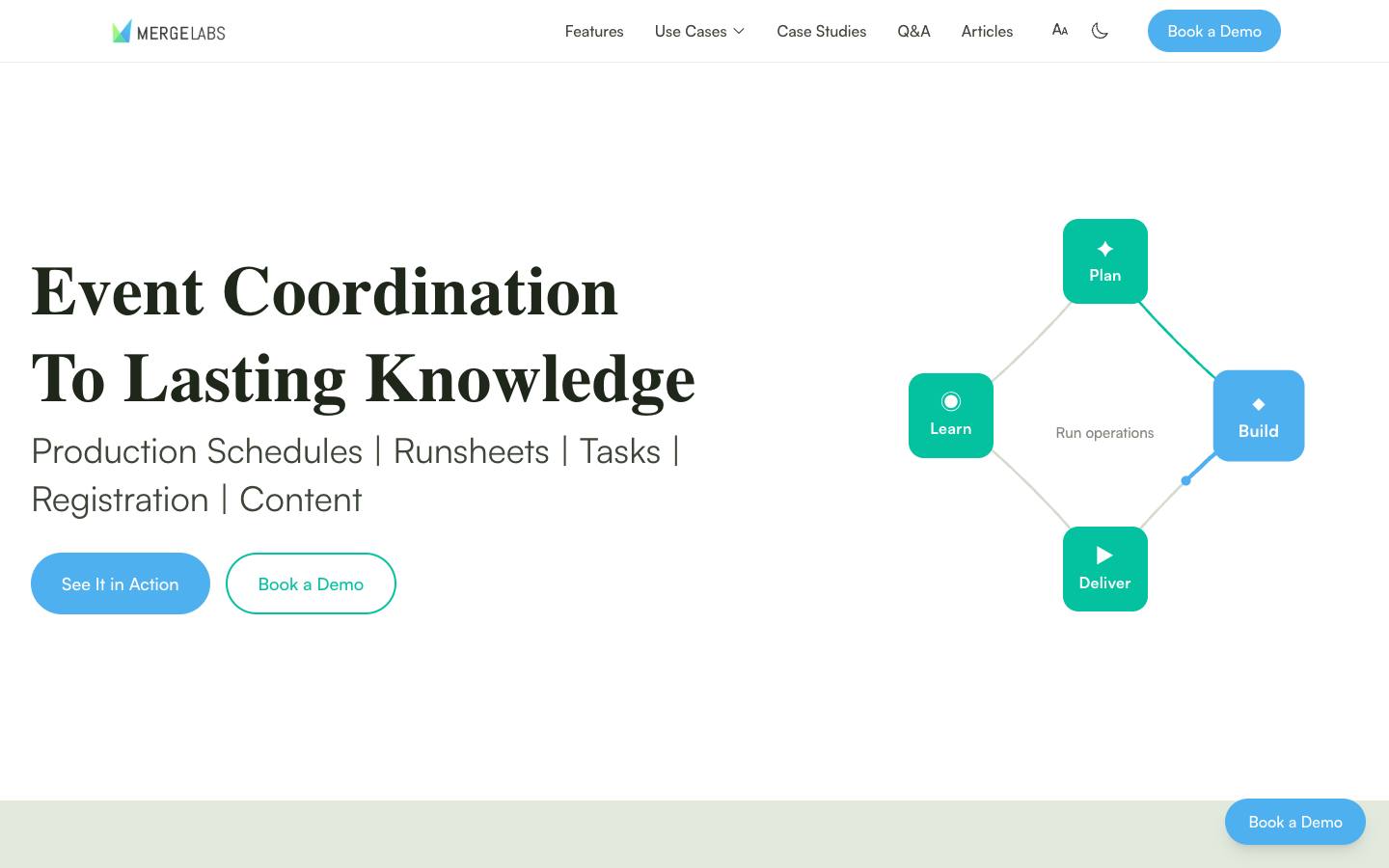
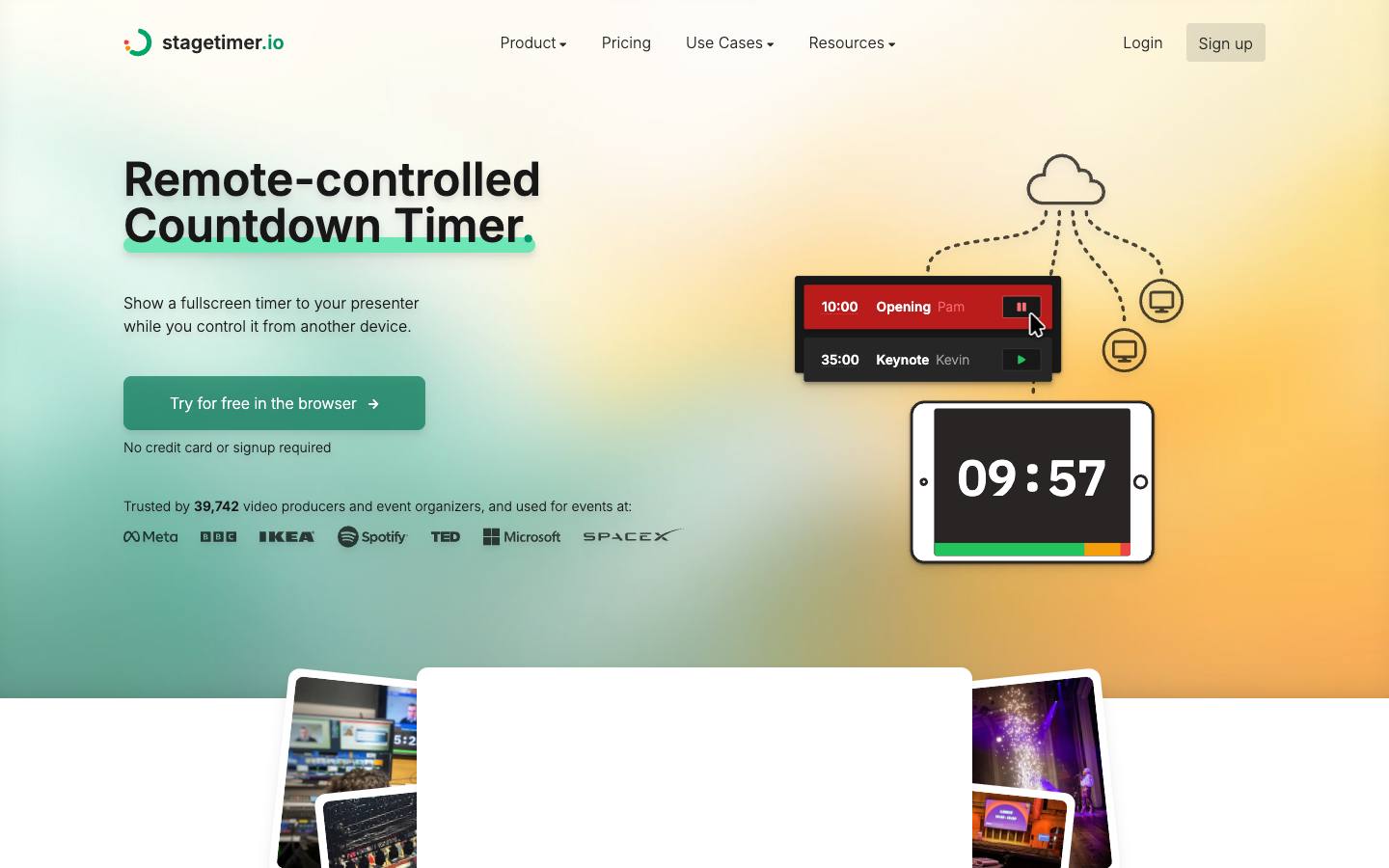
Both are in our Event planning & production category. MergeLabs is best for event agencies, PCOs and AMCs coordinating many suppliers and stakeholders; Stagetimer is best for AV and production crews running conference stages and keynotes.
The short answer: MergeLabs and Stagetimer do different jobs and rarely sit on the same shortlist. MergeLabs is a production coordination workspace for in-person events, with schedules, runsheets and guest itineraries, priced from $1,000 per event. Stagetimer is a remote-controlled countdown timer for stages, with a free tier and a Pro plan at $210/yr. Use MergeLabs to run the whole production, Stagetimer to keep speakers on time, or both.
Built from each vendor's own website and our research profiles. How we research
Side by side
“Not published” means we couldn't find it on the vendor's own pages.
MergeLabsStagetimerStrengths and considerations
MergeLabs
What stands out
- Built around production operations (runsheets, itineraries, day-of coordination) rather than marketing attribution
- Retains event knowledge across editions through cloneable playbooks
- Multilingual guest itineraries suited to international incentive and customer programmes
Worth checking
- Very early-stage company with a single public case study
- No named integrations or security certifications
- Not a lead-capture or marketing-attribution tool
Stagetimer
What stands out
- Runs in any browser with no install, plus an offline desktop option for venues without reliable internet
- Published, transparent pricing including a single-event license
- Hooks into common production control gear such as Stream Deck and Companion
Worth checking
- Interface and support are English only
- Security page states no two-factor authentication and no encryption at rest; certifications cited belong to its hosting providers
- Narrow tool for stage timing rather than an event management platform
Notable customers
Organizations each vendor names on its own website: customer stories first, then testimonials and logos.
MergeLabs
Stagetimer
None found on its website.
The main difference between MergeLabs and Stagetimer
MergeLabs coordinates an event's people and logistics; Stagetimer controls a clock. MergeLabs keeps one master schedule that feeds runsheets, venue agendas and stakeholder views, tracks each activity's owner, tasks and blockers, and clones whole events as playbooks for the next edition. It also offers booking pages and guest itineraries with QR-code access and no login, and it targets agencies, PCOs and in-house teams running roadshows and multi-city programs. It was founded in 2023, has a single public case study (Nikon Lenswear) and is a very early-stage company.
Stagetimer shows a fullscreen countdown on a confidence monitor while an operator drives it from another device, with presenter messages, shareable agenda and moderator views, and audience question intake. It runs in a browser or in offline desktop apps and covers in-person, virtual, hybrid and webinar formats, while MergeLabs is in-person.
Pricing, integrations and how they fit together
MergeLabs sells its product, Cothena, as a Single Event license at $1,000 per event or an Annual plan at $5,000/year with unlimited events, users and spaces, plus a quoted Custom plan (checked November 2026). Stagetimer has a free Starter tier, Pro at $210/yr for 1 member, Premium at $420/year and Enterprise from $630, plus a 30-day single-event license (checked October 2026). The two don't replace each other, so the price gap compares a platform with a utility.
Neither lists a Salesforce or HubSpot connector. MergeLabs lists 7 integrations, mostly payment providers such as Stripe, Adyen and Mollie. Stagetimer lists 6 production-control ones: Bitfocus Companion, Elgato Stream Deck, OBS Studio, vMix (NDI), Zoom and a public API.
When to use one, the other or both
Use MergeLabs if you coordinate many suppliers, run recurring or itinerary-heavy events and want one source of truth for the day. Use Stagetimer if your gap is stage timing: keynotes, webinars or user conferences where an operator needs to signal speakers. Production teams can run both, with MergeLabs holding the runsheet and Stagetimer showing the clock, since the products don't overlap.