 vs

Jujama vs Talque
Both are in our Event apps category. Jujama is best for life sciences and pharma companies running partnering events, investor meetings or conferences; Talque is best for DACH conference and trade-fair organizers wanting an all-in-one event app.
The short answer: Jujama is a quote-priced event app and virtual platform from Scranton with a life sciences customer base, including Merck, AbbVie and AstraZeneca. Talque is a Berlin platform that publishes annual pricing from €3,000/yr and hosts on EU servers. Choose Jujama for pharma partnering events with one-to-one meetings, and Talque for DACH conferences and trade fairs that want published prices and a public API.
Built from each vendor's own website and our research profiles. How we research
Side by side
“Not published” means we couldn't find it on the vendor's own pages.
JujamaTalqueStrengths and considerations
Jujama
What stands out
- Deep life sciences references and partnering-style meeting tools
- Flexible video approach that plugs in the organizer's own provider
- Combines in-person app and virtual platform
Worth checking
- Pricing not published
- Few named software integrations (no CRM listed)
- Security certifications aren't described
Talque
What stands out
- Single platform spanning ticketing, app, exhibitors and matchmaking
- EU hosting and GDPR-first data handling
- Published annual pricing with unlimited events
Worth checking
- No security certifications (such as ISO 27001) are named
- Few named third-party integrations beyond Stripe and its API
- Pricing page wording on per-event versus annual pricing is inconsistent
Notable customers
Organizations each vendor names on its own website: customer stories first, then testimonials and logos.
Jujama
The main difference between Jujama and Talque
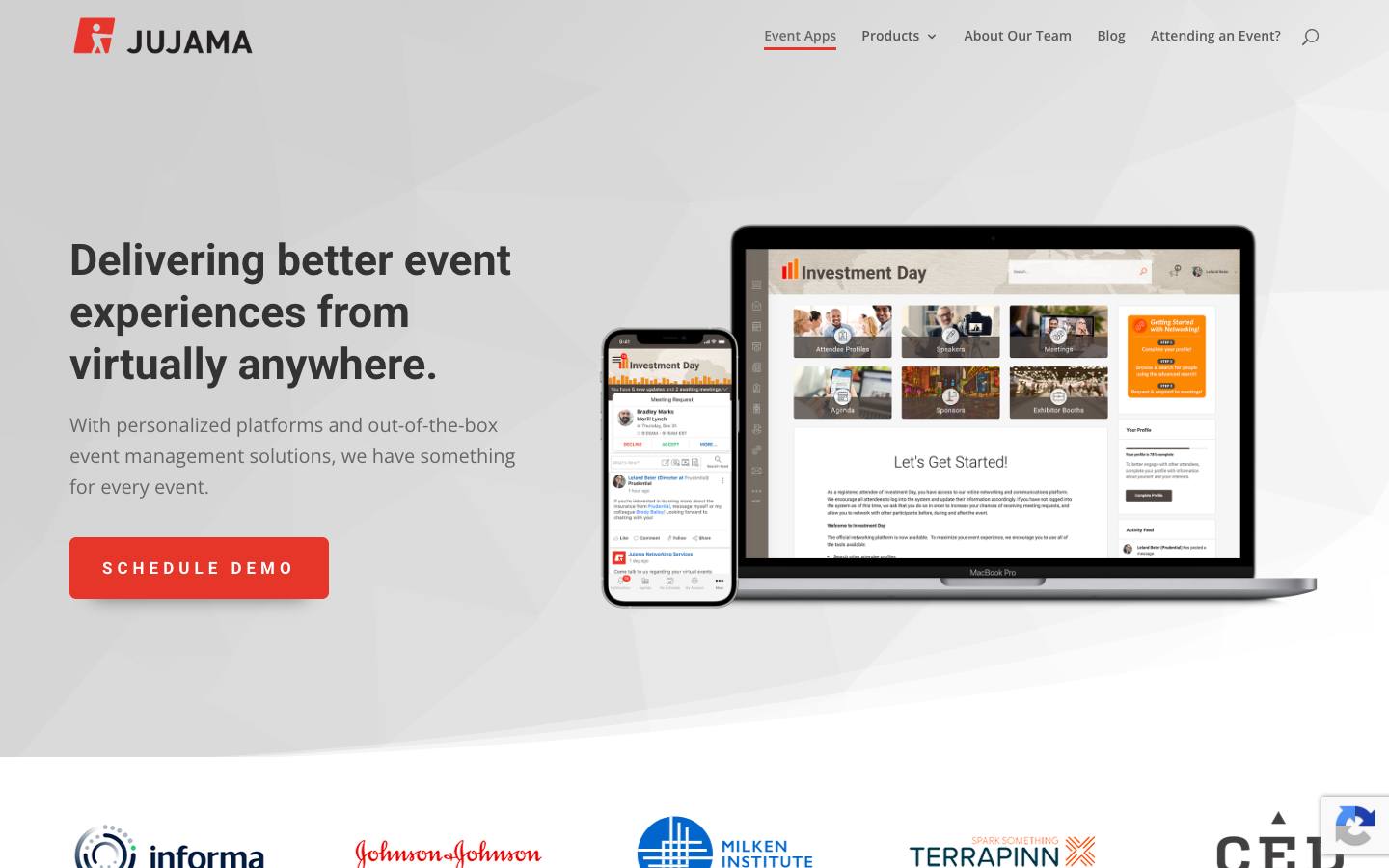
Jujama is shaped by life sciences partnering events, while Talque is shaped by German-speaking conferences and trade fairs. Jujama pairs a mobile and desktop event app with a virtual and hybrid platform: matchmaking by attendee interests, one-to-one and group messaging, meeting scheduling with built-in video calls, virtual exhibitor booths and audience analytics. Its customers include Merck, AbbVie, AstraZeneca, Johnson & Johnson, Informa and Terrapinn.
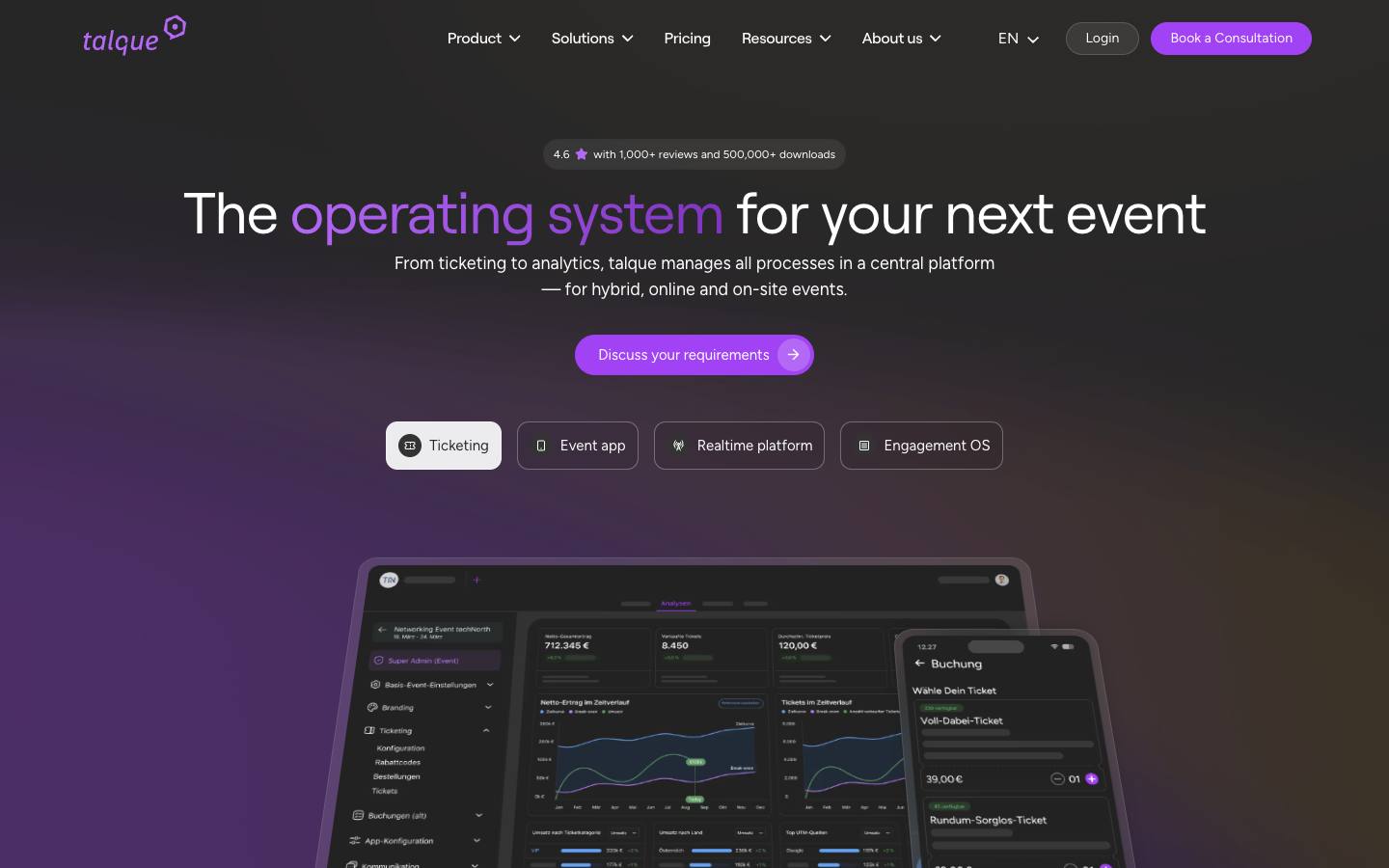
Talque is an all-in-one platform with a white-label attendee app, registration and ticket sales through Stripe Connect, badges and check-in, multi-track agendas, exhibitor lead tools, sponsor ROI reporting and matchmaking. Its customers include HANNOVER MESSE, LEARNTEC, KU Leuven and the Munich Security Conference. Both run in-person, virtual and hybrid events. Jujama's interface is English only, while Talque offers German and English.
Jujama vs Talque pricing
Talque publishes prices and Jujama doesn't. Talque's annual plans (checked October 2026): Essential starts at €3,000 per year with unlimited events, 250 attendees included, up to 499 attendees and €3 per extra attendee. Pro starts at €7,000 per year, with 500 attendees included, up to 3,000 attendees, €2 per extra attendee, and matchmaking and networking. Enterprise is custom and adds API and system integrations, custom extensions and project support. Single-event licences are also offered, and event-day support is sold in 4h and 8h packages.
Jujama has no free plan or trial and quotes by demo request or phone. Its client concierge handles training, support and project coordination for each event, so the quote includes services you'd otherwise buy separately. With Talque, ticketing is charged per ticket or as a share of ticket revenue on top of the platform plan, so budget for that if you sell paid tickets.
Features and integrations
Talque lists 8 integrations: Stripe Connect, a public API with webhooks, Zapier, Zoom, Vimeo, Pretix, Aditus and a WordPress and JavaScript website plugin. Its public API docs are on GitBook, the webhook interface is a paid add-on, and the pricing page puts API and system integrations under Enterprise. We didn't find a named CRM connector. Jujama lists 3 integrations, YouTube, LinkedIn sharing and Twitter sharing, with no CRM named. Jujama lets you plug in your own video or streaming provider for virtual sessions.
On data handling, Talque states that all servers it uses are in the EU, makes an order processing agreement (AVV) available on request, and publishes dated release notes, the latest from February 2026. We didn't find a SOC 2 or ISO 27001 report for either vendor. Jujama's privacy policy covers GDPR transfers under SCCs and states EU-U.S., UK and Swiss Data Privacy Framework certification.
Which should you choose?
Choose Jujama if you run partnering events, investor meetings or conferences in life sciences or pharma, where scheduled one-to-one meetings and interest-based matchmaking drive the program. It targets mid-market and enterprise teams, and the concierge model suits organizers who want a vendor to coordinate each event. Ask for pricing early, since none is published.
Choose Talque if you organize a conference, trade fair or association event in German-speaking markets, or want EU hosting, a German-language app and published annual pricing with unlimited events. It also fits smaller organizations, since Essential covers 250 attendees from €3,000 per year (checked October 2026). Teams that need automation can use Zapier or its API, though the API sits on the Enterprise plan.