Best Event Networking Apps in 2027: The Buyer's Shortlist
By EventMarketingSoftware.com · Published October 19, 2026 · 12 tools compared
Brella is the event networking app to start with if networking is the reason people buy a ticket: intent-based suggestions, 1:1 and group meeting booking and meeting ratings sit at the center of the product. Swapcard, Whova and Grip pair networking with a wider event platform, Eventee, Nunify and Talque publish lower entry prices, and Braindate, Airmeet, Meetaway, WITR and Sena cover specific formats from topic-led conversations to speed networking and WhatsApp concierges. All 12 picks were checked in October 2026.
Our top picks
- 1
 BrellaBest for conference and trade show organizers whose ticket value depends on attendee networkingQuote only
- 2
 SwapcardBest for trade show and association organizers who sell networking and exhibitor valueFrom $610/year
- 3
 WhovaBest for associations and academic conferences that want community-style networking inside an all-in-one appQuote only
Key takeaways
- Networking quality depends on profile data and adoption, not the app's feature list. Ask how each tool collects goals and interests at registration, and what share of attendees typically activate, because suggestions are only as good as the profiles behind them.
- Published prices span a wide range. WITR starts at £50 an event, Nunify's Engage plan at $99 a month, Swapcard's self-service plan at $610 a year, Eventee at $1,499 an event, Talque at €3,000 a year and Sena at €3,000 an event, while Brella, Grip, Whova and Braindate quote on request (checked October 2026).
- Pick the format before the vendor. Open networking (directory, chat and meeting requests) suits most conferences, timed speed networking suits online sessions, topic-led conversations suit learning-focused events, and buyer and supplier schedules belong in dedicated matchmaking software.
- Meeting booking is where networking turns into pipeline. Look for meeting locations or tables you can assign, calendar sync, reminders and attendance confirmation, and exports of who met whom so sales can follow up in Salesforce or HubSpot.
- Privacy controls matter more in networking than anywhere else in the event stack. Check opt-in settings, who can see contact details, whether sponsors can message attendees, and where data is hosted: Swapcard's privacy policy says data is stored in EEA data centers, and talque emphasizes EU hosting.
Free tool: Event software RFP builder. Pick the categories you're buying and get a requirements list, security questions and a weighted scoring sheet you can export to a spreadsheet.
Side-by-side comparison
The same criteria for every pick: networking depth, published pricing, attendee adoption friction, crm and registration connections, review footprint, data protection. A dash means the vendor doesn't publish it.
| Tool | Starting price | Free plan / trial | CRM | Capterra | App Store | Security |
|---|---|---|---|---|---|---|
| Brella | Quote only | – | Salesforce, HubSpot | – | ★ 4.1 (46) | ISO 27001, DPA |
| Swapcard | From $610/year | – | Salesforce, HubSpot | – | ★ 4.5 (837) | SOC 2 Type II, ISO 27001, SAML SSO, DPA |
| Whova | Quote only | Free trial | HubSpot | ★ 4.8 (2493) | ★ 4.8 (252,682) | SOC 2 Type II |
| Grip | Quote only | – | Salesforce, HubSpot, Dynamics, Marketo | ★ 4.8 (6) | ★ 3.0 (2) | SAML SSO, DPA |
| Eventee | From $1,499/event | Free trial | – | ★ 4.8 (64) | ★ 4.9 (2,267) | ISO 27001 |
| Nunify | From $24/month | Free trial | Salesforce, HubSpot, Marketo | ★ 4.8 (16) | ★ 4.8 (971) | DPA |
| Talque | From €3,000/year | – | – | – | ★ 4.9 (69) | DPA |
| Braindate | Quote only | – | – | – | – | – |
| Airmeet | From $167/month | Free trial | Salesforce, HubSpot, Dynamics, Marketo | ★ 4.4 (189) | ★ 4.7 (672) | SOC 2 Type II, ISO 27001, SAML SSO |
| Meetaway | From $110/month | Free trial | – | – | – | SAML SSO |
| WITR | From £50/event | Free trial | – | – | – | DPA |
| Sena | From €3,000/event | – | – | – | – | DPA |
This guide focuses on the attendee networking experience: who people can find, how they message, and how meetings get booked and kept. For structured hosted buyer programs and meeting matrices, see our guide to the best event matchmaking software, and for the full attendee app (agenda, polls, sponsors), see the best event apps.
Who this guide is for. This guide is for B2B conference organizers, association event teams, community and field marketers, and trade show producers who want attendees to meet the right people and want proof that it happened. It suits teams choosing a networking layer for an existing event as well as those picking an app where networking is the main feature, from small meetups to large international conferences.
Not sure which one fits your team?
Answer a few questions about your events, team and CRM and get a free shortlist of tools that fit, with pricing and security details side by side.
Get a free shortlistThe best event networking apps in 2027
Here are 12 event networking apps, ordered by how central networking is to each product and how well it serves B2B events. Networking-first apps and platforms come first, then self-serve apps with published prices, then specialist formats such as topic-led conversations, virtual speed networking and no-app tools. For each one, check how profiles are built, how meetings get booked and how the data reaches your CRM.
1. Brella, best for conference and trade show organizers whose ticket value depends on attendee networking
- Price
- Quote only
- App Store
- 4.1/5 from 46 ratings
- Languages
- English
- Syncs with
- Salesforce, HubSpot
- Security
- ISO 27001, DPA
- Customers include
- TechCrunch Disrupt, Aero Engines Americas, European Commission
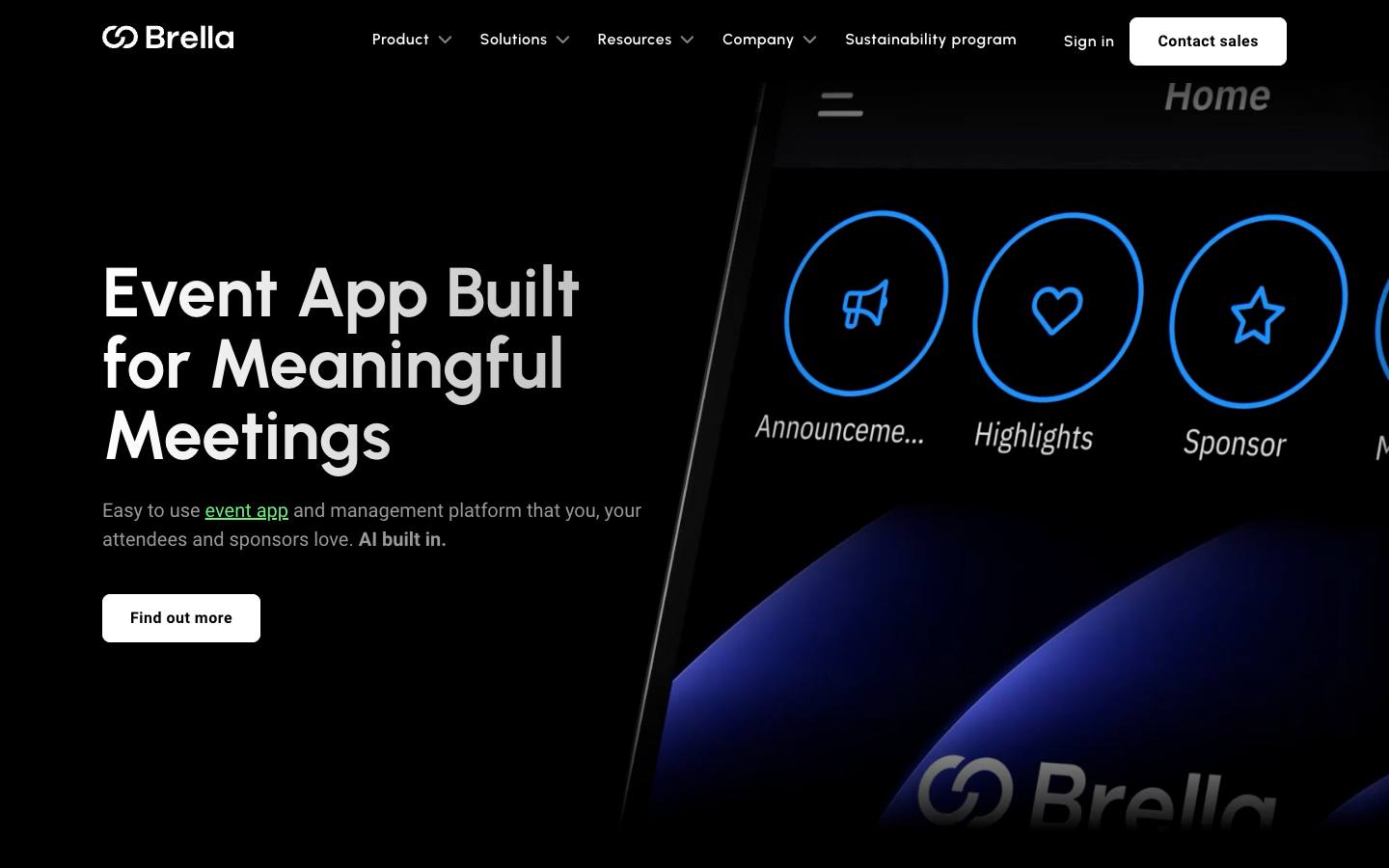
Brella is a Helsinki-based event app and platform where networking is the core of the product rather than an add-on. Intent-based suggestions pair people by stated goals and interests, attendees book 1:1 or group meetings into organizer-defined locations, and both sides rate each meeting. Sponsors get matchmaking, meet-at-booth scheduling and lead scanning.
More on BrellaLess on Brella
Founded: 2016 · HQ: Helsinki, Finland · Team: 50-100 people · Formats: In-person, Virtual, Hybrid
Brella was founded in 2016, has offices in Helsinki and Palo Alto and has raised $11.42 million according to CB Insights. Its pricing page lists product modules but no prices, so every deal goes through sales. Customers include SaaStr, Informa Markets, RX, Forbes, the Financial Times, Plug and Play and Bits & Pretzels, which gives a sense of where it's strongest: events that sell themselves on who you'll meet.
The attendee side is a white-label iOS, Android and web app with embeddable widgets. Attendees state what they're looking for, Brella suggests matches, and meetings land in organizer-defined spots so people actually find each other. Ratings from both sides feed a managed meeting dashboard, and user groups control what each attendee and sponsor type can see and do. Native connectors cover Salesforce, HubSpot, Swoogo, Eventbrite, Tito and WooCommerce, with Zapier, a REST API and webhooks for the rest. The Brella.io app holds 4.11 from 46 App Store ratings (checked October 2026).
- Native Salesforce and HubSpot connectors plus a REST API and webhooks
What stands out
- Intent-based suggestions built from attendee goals and interests
- 1:1 and group meetings with assigned locations and meeting ratings
- Sponsor prospecting and meet-at-booth scheduling
Worth checking
- Pricing isn't published
- Registration is lighter than dedicated platforms, so many organizers pair it with one
Best suited for. Brella fits organizers who want a dedicated, branded networking experience with measurable meetings for attendees and sponsors. If you need registration, badging and the app from one vendor, compare Swapcard or Whova as well.
2. Swapcard, best for trade show and association organizers who sell networking and exhibitor value
- Price
- From $610/year
- App Store
- 4.5/5 from 837 ratings
- Syncs with
- Salesforce, HubSpot
- Security
- SOC 2 Type II, ISO 27001, SAML SSO, DPA
- Customers include
- Bosch, GDC, GL Events
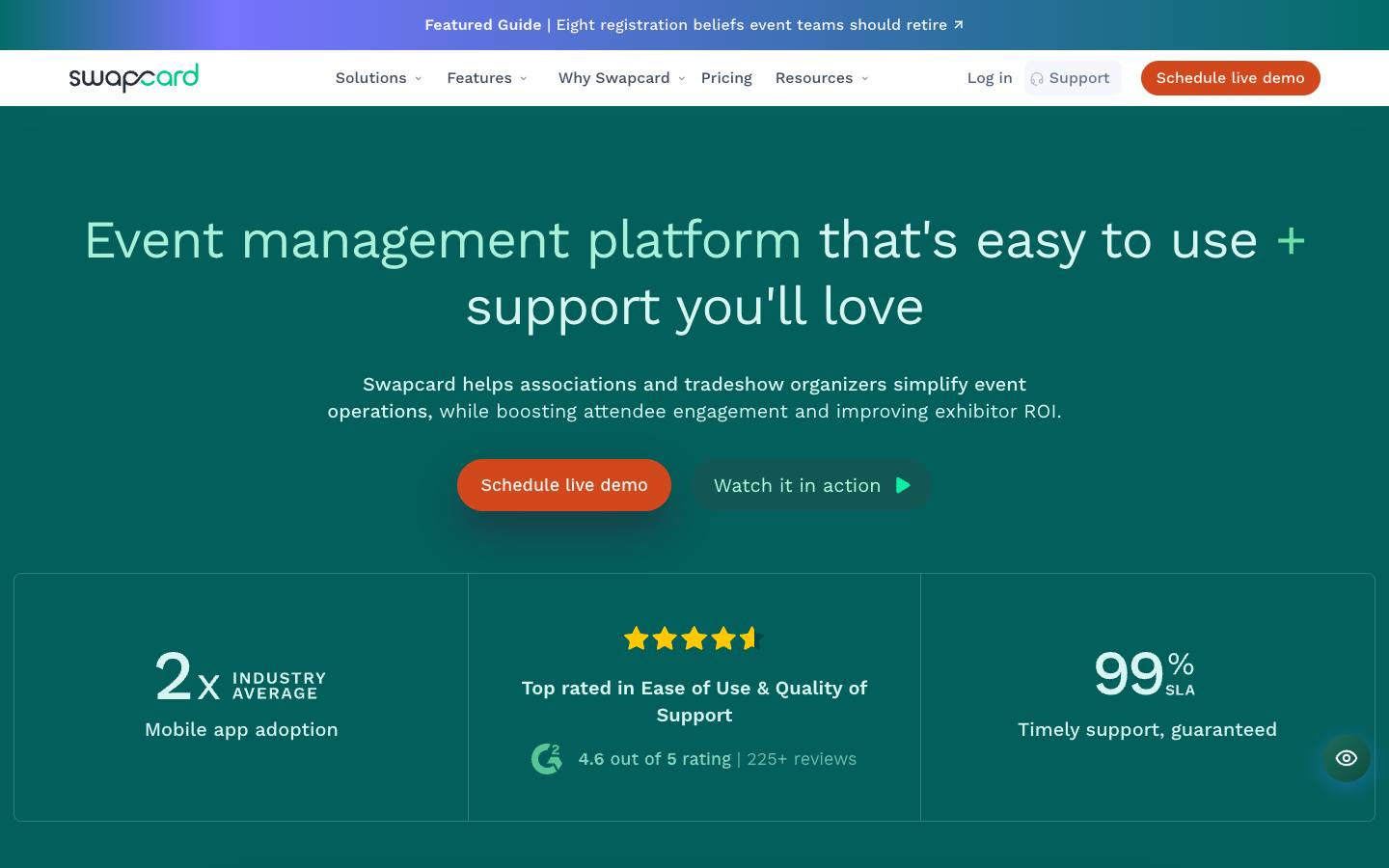
Swapcard combines an attendee web and mobile app with AI-suggested people and exhibitors, chat, meeting booking and an exhibitor lead center. A self-service Event Engagement Platform starts at $610 a year, and a custom-priced Registration and Management Platform adds registration, portals and onsite tools.
More on SwapcardLess on Swapcard
Founded: 2014 · HQ: Paris, France · Team: 51-200 people · Formats: In-person, Virtual, Hybrid, Webinar
Swapcard was founded in 2014 in Paris and has 51 to 200 employees. Its pricing page lists the Event Engagement Platform from $610 a year, a self-service starting price that includes the event web and mobile app, attendee and exhibitor networking and the exhibitor lead center; the final cost depends on attendee volume and upgrades. All plans are annual with net-30 terms, and early termination needs 90 days' notice before the subscription end date (checked October 2026).
For networking, attendees get AI recommendations of people and exhibitors to meet, chat and meeting booking inside the app, and hosted buyer and smart meeting programs are available as upgrades. Its attendee app holds 4.55 out of 5 from 837 App Store ratings, one of the larger footprints in this guide. Swapcard names Salesforce and Cvent among its integrations, routes HubSpot through Zapier and offers a GraphQL API and webhooks. Named customers include ASAE. Its security page lists ISO 27001:2022 certification, annual SOC 2 Type II reports and PCI DSS v4.0, and its privacy policy says data is stored in EEA data centers.
- Large app review footprint: 4.55 from 837 App Store ratings
What stands out
- Published self-service entry price of $610 a year
- Sherlock AI agent turns the program into personal recommendations
- Exhibitor networking and lead center for sponsor revenue
Worth checking
- Costs rise with attendee and exhibitor volume and upgrades
- Annual plans only, with 90 days' notice before the end date
Best suited for. Swapcard fits trade show and association organizers who want networking and exhibitor monetization in one app at a low published entry price. If you need per-event pricing or month-to-month terms, look at Eventee or Nunify.
3. Whova, best for associations and academic conferences that want community-style networking inside an all-in-one app
- Price
- Quote only
- Try it
- Free trial
- Capterra
- 4.8/5 from 2,493 reviews
- App Store
- 4.8/5 from 252,682 ratings
- Syncs with
- HubSpot
- Security
- SOC 2 Type II
- Customers include
- University of New South Wales, Sunway University, Air Force Civil Engineering Center
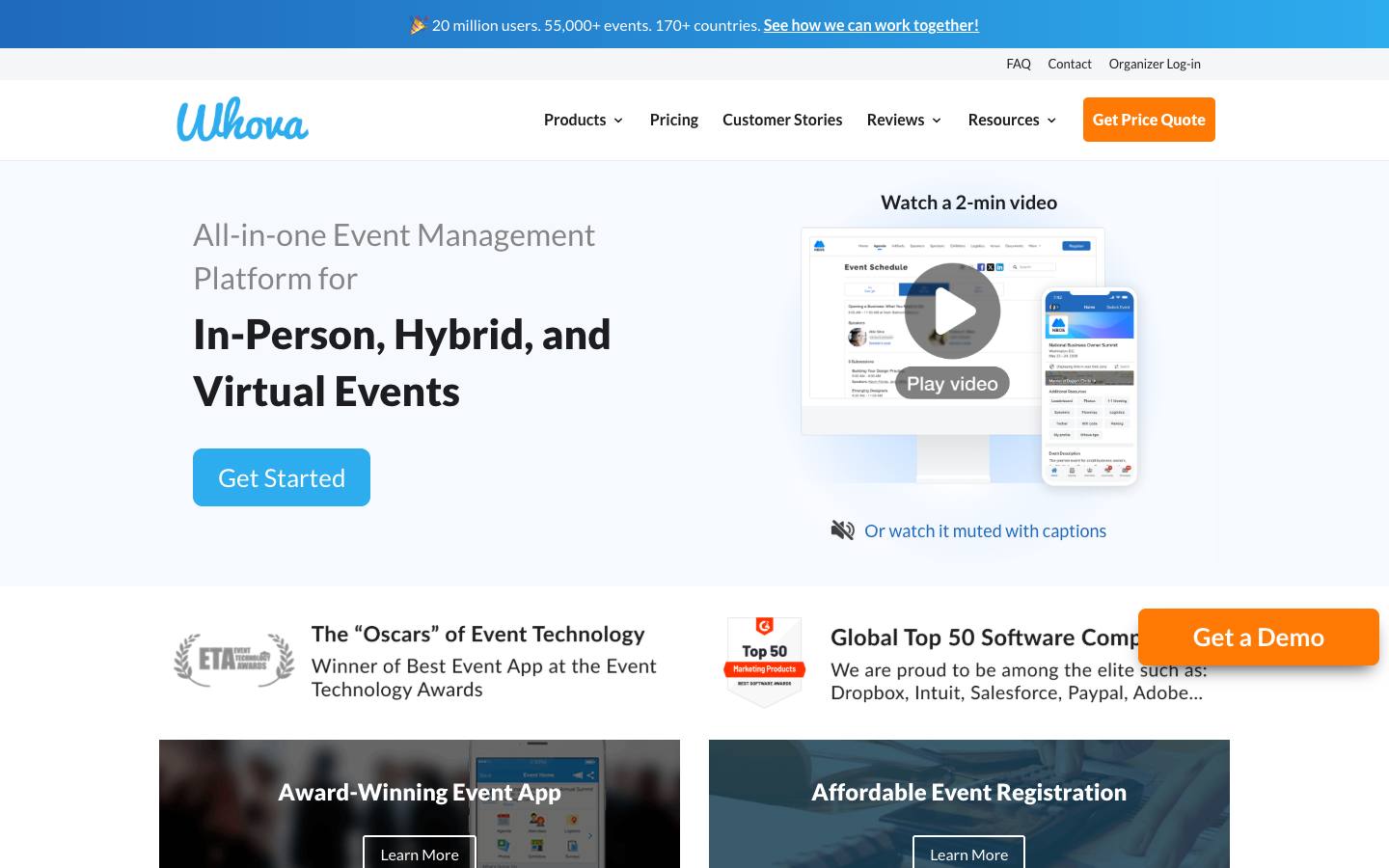
Whova's attendee app is best known for networking and community features: attendee profiles, messaging, community boards and meet-ups that attendees organize themselves. Registration, abstracts, exhibitor management and badging sit in the same product, and pricing is a custom quote with a trial after a demo.
More on WhovaLess on Whova
Founded: 2012 · HQ: San Diego, California · Team: 51-200 people · Formats: In-person, Virtual, Hybrid
Whova was founded in 2012 in San Diego and has 51 to 200 employees. Its review footprint is the largest here: 4.8 out of 5 from 252,682 App Store ratings and 4.8 from 2,493 Capterra reviews (checked October 2026). Quotes depend on event format, length, attendee count and events per year, and a trial follows a short demo. Named customers include Google, Microsoft, Oracle, American Express, IKEA and Hilton.
Networking in Whova leans social. Attendees browse profiles, message each other, post on community boards and set up their own meet-ups around topics or interests, which suits associations and academic events where peer connection matters more than sales meetings. Around the app sit registration with Stripe payments, a website builder, call for speakers, exhibitor profiles with lead retrieval, kiosk check-in and badges. Integrations cover HubSpot, association systems such as iMIS, MemberClicks and YourMembership, Mailchimp, Zoom and Zapier. It holds SOC 2 Type II and PCI DSS attestations.
- SOC 2 Type II and PCI DSS attestations
What stands out
- Community boards and attendee-organized meet-ups
- Very large review footprint: 4.8 from more than 252,000 App Store ratings
- Registration, abstracts and badging from the same vendor
Worth checking
- No public price list; quotes scale with attendee count
- Salesforce and Marketo aren't listed integrations
Best suited for. Whova fits associations, academic and community conferences that want lively peer networking plus registration and onsite tools from one vendor. B2B teams that need sponsor meeting booking with Salesforce sync should compare Brella or Grip.
4. Grip, best for large exhibitions and commercial conferences that need many meeting formats
- Price
- Quote only
- Capterra
- 4.8/5 from 6 reviews
- App Store
- 3.0/5 from 2 ratings
- Syncs with
- Salesforce, HubSpot, Dynamics, Marketo
- Security
- SAML SSO, DPA
- Customers include
- Clarion Events, General Dynamics Information Technology, Messe Frankfurt
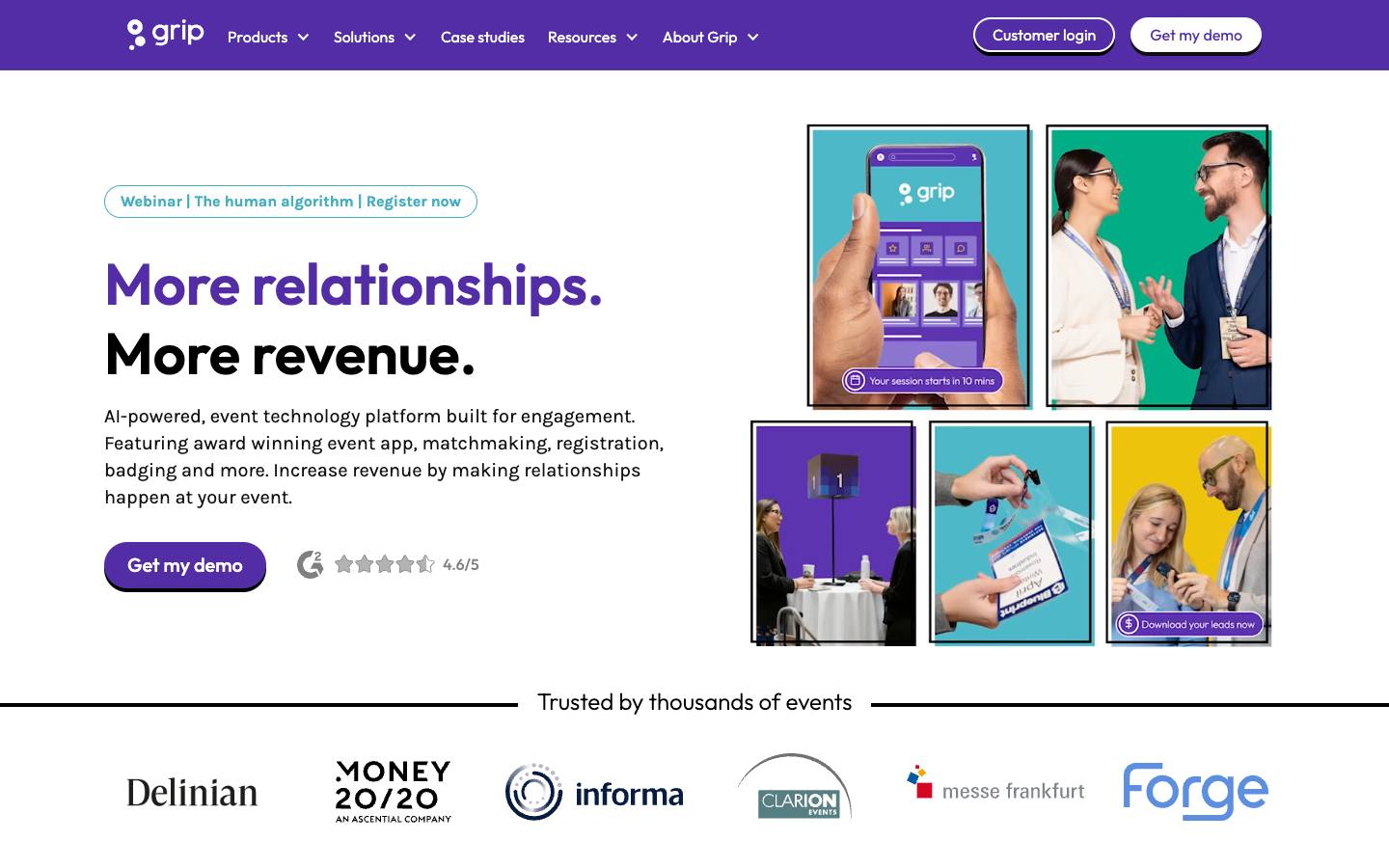
Grip is built around AI matchmaking and meeting scheduling, with an event app, registration, exhibitor tools, lead retrieval and onsite badging around it. Its networking covers more formats than most: 1:1 and group meetings, roundtables, speed networking, hosted buyer and investor meetings.
More on GripLess on Grip
Founded: 2016 · HQ: London, UK · Team: 51-200 people · Formats: In-person, Virtual, Hybrid
Grip was founded in 2016 in London and has 51 to 200 employees. Customers include Informa, Clarion Events, Messe Frankfurt, Money20/20, Delinian and Mash Media, and its App Store app is listed as Grip - Event Networking App. Capterra shows 4.83 out of 5 from 6 reviews (checked October 2026). Pricing isn't published.
Where Brella focuses on open networking, Grip goes further into structure. Recommendations are mutual, organizers decide which attendee types can see and contact each other, and meetings can be pre-scheduled, requested by attendees or run as roundtables, speed networking sessions or investor slots. A 365 community keeps networking going between editions. Its integrations manager pulls attendees from registration systems such as Cvent, Swoogo, Bizzabo, Stova, Map Your Show and Fuzion by Freeman, and CRM connectors cover Salesforce, HubSpot, Marketo and Microsoft Dynamics 365. Hosting is on AWS, and Grip's own certification is Cyber Essentials.
- Grip MCP connects language models to event data
What stands out
- Mutual AI recommendations with organizer controls over who sees whom
- Wide range of meeting formats, including speed networking and roundtables
- Long list of registration-system connectors
Worth checking
- Pricing isn't published and sales are demo-led
- Own certification is Cyber Essentials, with ISO 27001 and SOC 2 inherited from AWS
Best suited for. Grip fits large exhibitions and commercial conferences that run several networking formats and need attendee data from an existing registration system. Smaller events that want a self-serve setup and published prices should look at Eventee or Nunify.

5. Eventee, best for conferences and meetups that want self-serve swipe networking with per-event pricing
- Price
- From $1,499/event
- Try it
- Free trial
- Capterra
- 4.8/5 from 64 reviews
- App Store
- 4.9/5 from 2,267 ratings
- Languages
- 11 languages
- Security
- ISO 27001
- Customers include
- Atlas Copco, Inclusive Digital, JIC
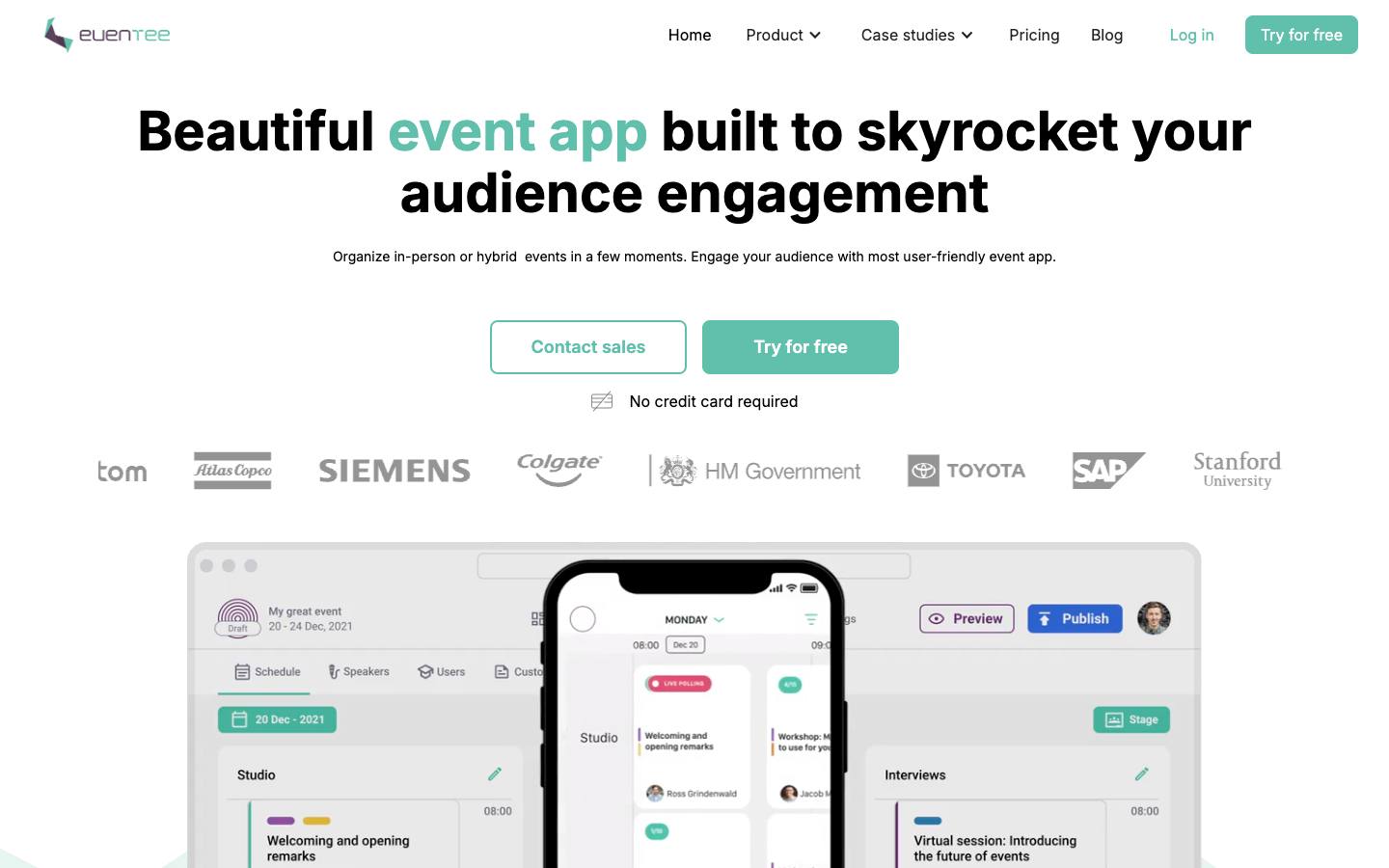
Eventee is a Czech-built, self-serve event app with swipe-based networking: attendees swipe through profiles, matched attendees can chat privately, and a scheduler books meetings. Live Q&A, polls, a social wall and gamification sit alongside, and organizers can build for free until launch.
More on EventeeLess on Eventee
Founded: 2015 · HQ: Brno, Czech Republic · Team: 2-10 people · Formats: In-person, Hybrid
Eventee was founded in 2015 in Brno and is a small team of 2 to 10 people. Pricing is per event or annual, excluding VAT and shown in local currency (our data, checked October 2026): Essential is $1,499 for one event with 200 attendees, Signature $2,499 for 500 and Professional $3,499 for 1,000, while the annual Team plan is $2,999 for three events, Business $4,999 for six and Enterprise is quoted. Its pricing page offers a free trial on every single-event tier.
The networking model is simple and familiar to attendees: swipe to show interest, chat once matched, then book a meeting time. That lowers the effort for people who don't want to fill in long profiles. Organizers see networking statistics alongside session insights and feedback. The app rates 4.86 from 2,267 App Store ratings and 4.77 from 64 Capterra reviews. Named customers include Siemens, SAP, Toyota, KPMG and Stanford University. The interface is localized into a dozen languages, and the documented REST API is the main way to connect other systems, since no CRM connectors are named.
- 4.86 from 2,267 App Store ratings
What stands out
- Swipe-style matching with private chat for matched attendees
- Meeting scheduler and networking statistics
- Per-event plans from $1,499 or annual plans from $2,999
Worth checking
- Few named integrations beyond its public REST API
- Single-event plans keep data for only three months
Best suited for. Eventee fits conference and meetup organizers who want attendees networking quickly in a self-serve app with a known per-event price. Teams that need native CRM sync or sponsor meeting programs should compare Brella or Grip.

6. Nunify, best for small B2B teams that want a low monthly price with AI matchmaking and speed networking
From $24/month
- Price
- From $24/month
- Try it
- Free trial
- Capterra
- 4.8/5 from 16 reviews
- App Store
- 4.8/5 from 971 ratings
- Syncs with
- Salesforce, HubSpot, Marketo
- Security
- DPA
- Customers include
- Clinisys, Infosys, Novo Nordisk
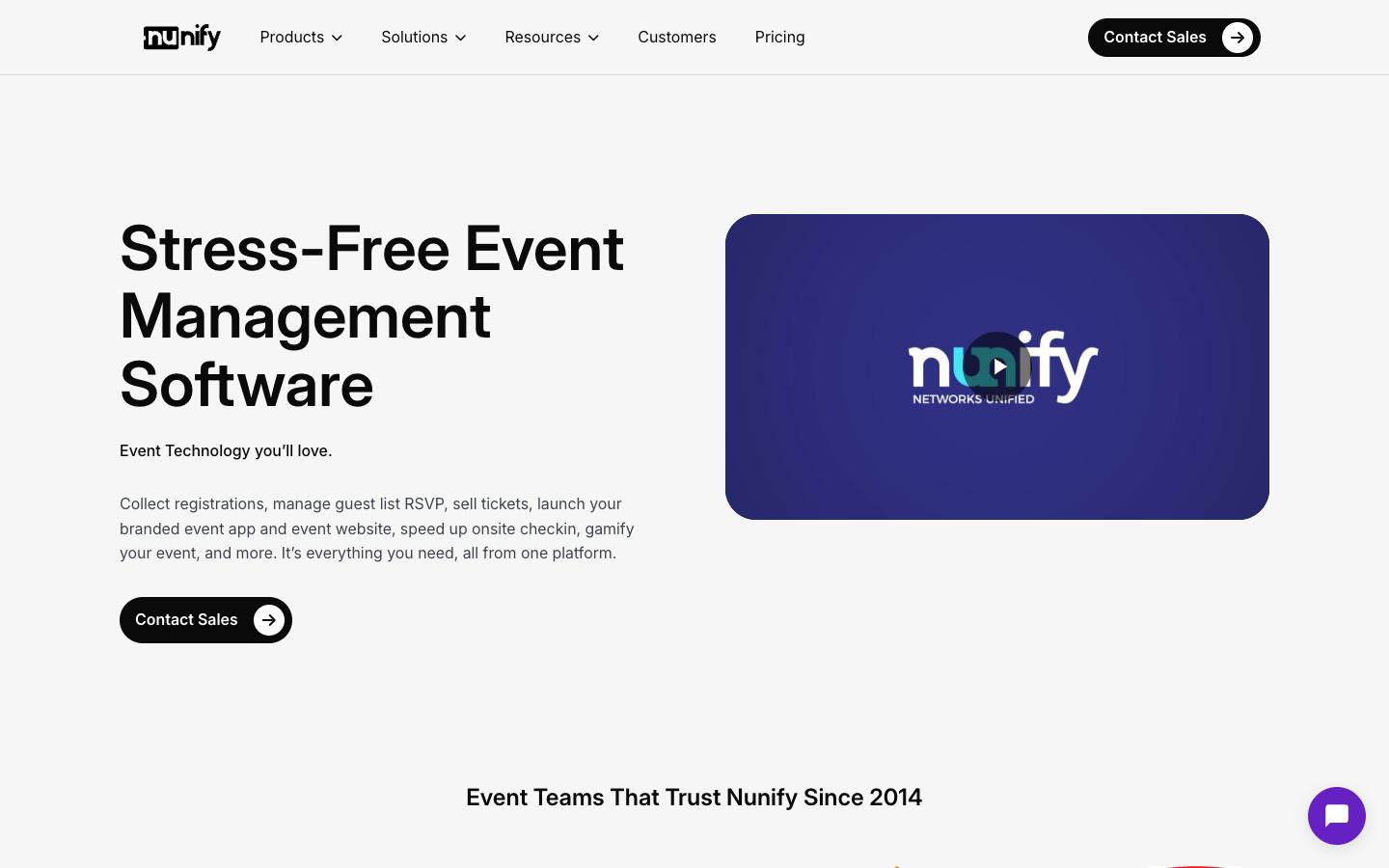
Nunify is a do-it-yourself event platform whose app covers AI matchmaking, video meetings, speed networking, polls, Q&A and leaderboards, alongside registration, check-in and badge printing. It publishes flat monthly plans with unlimited events and registrations.
More on NunifyLess on Nunify
Founded: 2014 · HQ: Austin, Texas · Team: 11-50 people · Formats: In-person, Virtual, Hybrid, Webinar
Nunify was founded in 2014, is based in Austin, Texas, and has 11 to 50 employees. Its pricing page lists flat monthly plans with unlimited events and registrations (checked October 2026): Essential at $24 a month for registration and invitations, Elevate at $49 a month for up to 150 check-ins with badge printing, and Engage at $99 a month for up to 150 attendees per event with the iOS, Android and web app. Higher attendee tiers are selectable on the same page, and Engage has a 15-day free trial.
The Engage app is where networking happens: AI matchmaking suggests people, attendees can start video meetings, and organizers can run speed networking rounds and leaderboards to push activity. Invitations can go by email or WhatsApp. Its attendee app holds 4.8 out of 5 from 971 App Store ratings, and Capterra shows 4.81 from 16 reviews. It documents HubSpot, Salesforce and Eventbrite connectors plus Zapier, and its MCP server lets AI assistants manage events. Its security page attributes SOC and ISO 27001 compliance to its hosting data centers. Named customers include Amazon, Google, Honda and Dell.
- 4.8 from 971 App Store ratings
What stands out
- Engage plan with the attendee app from $99 a month
- AI matchmaking, video meetings and speed networking in the app
- HubSpot, Salesforce and Eventbrite connectors
Worth checking
- Plans are tiered by attendees or check-ins per event
- Paid ticketing adds a platform fee on top of Stripe fees
Best suited for. Nunify fits small marketing and community teams running frequent events that want networking features at a low, predictable monthly price. Large conferences with complex sponsor meeting programs will outgrow it and should compare Grip or Swapcard.

7. Talque, best for German-speaking conferences and trade fairs that want EU-hosted networking
From €3,000/year
- Price
- From €3,000/year
- App Store
- 4.9/5 from 69 ratings
- Languages
- German, English
- Security
- DPA
- Customers include
- Deutsche Messe (HANNOVER MESSE), LEARNTEC, AFCI
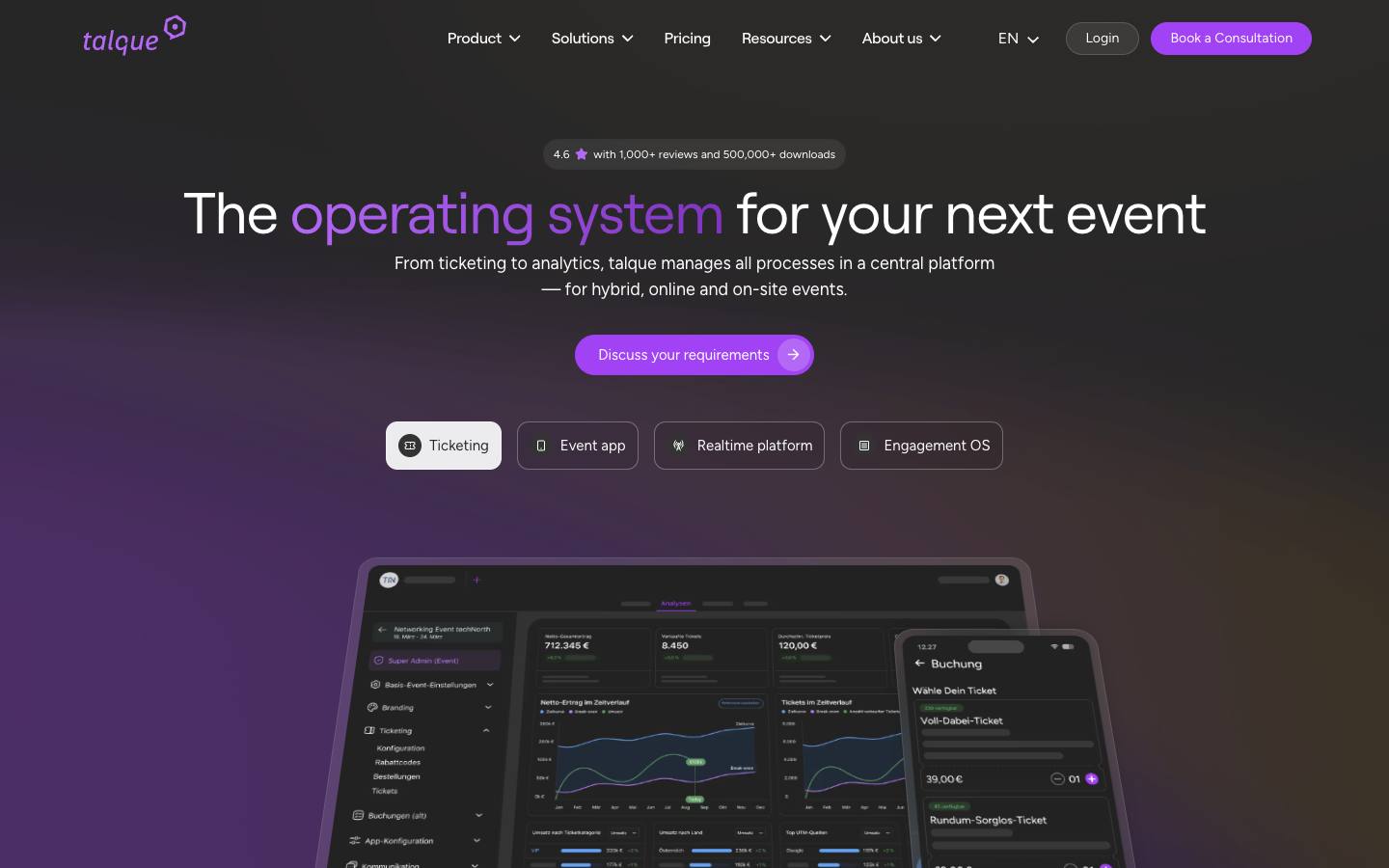
talque is a Berlin event platform covering ticketing, a white-label event app, agenda and speakers, exhibitor profiles, matchmaking, chat and meeting booking. Annual plans with unlimited events start at €3,000, and its Pro plan adds the extended networking features.
More on TalqueLess on Talque
Founded: 2014 · HQ: Berlin, Germany · Team: 11-50 people · Formats: In-person, Virtual, Hybrid
talque is run by Real Life Interaction GmbH, founded in 2014 in Berlin, and has 11 to 50 employees. Its German-language pricing page lists Essential from €3,000 a year with unlimited events and 250 participants included, expandable to 499 at €3 per extra participant, and Pro from €7,000 a year with extended networking features and 500 participants included, expandable to 3,000 at €2 each; Enterprise is custom (checked October 2026). A toggle shows single-event pricing as well.
Networking covers AI-assisted matchmaking suggestions, chat and meeting booking between attendees, with exhibitor and sponsor profiles, lead generation and sponsor ROI reporting in the same app. Customers include the Munich Security Conference, heise, Messe Augsburg, LEARNTEC, KU Leuven and the Marché du Film. The talque app holds 4.93 out of 5 from 69 App Store ratings (checked October 2026). Integrations include Stripe Connect, Zapier, Zoom, Vimeo, pretix, Aditus and a public API with webhooks.
- 4.93 from 69 App Store ratings
What stands out
- Matchmaking, chat and meeting booking between attendees
- Published annual plans with unlimited events
- EU hosting and a GDPR-first approach
Worth checking
- No security certifications such as ISO 27001 are named
- Few named integrations beyond Stripe, Zapier and its API
Best suited for. talque fits German-speaking conference, trade fair and association organizers who want EU-hosted networking and published annual pricing. If you need named CRM connectors or audited certifications, check Brella or Swapcard too.
8. Braindate, best for learning-focused conferences that want topic-led peer conversations
Quote only
- Price
- Quote only
- Customers include
- C2 Montréal, TED, Paris Peace Forum
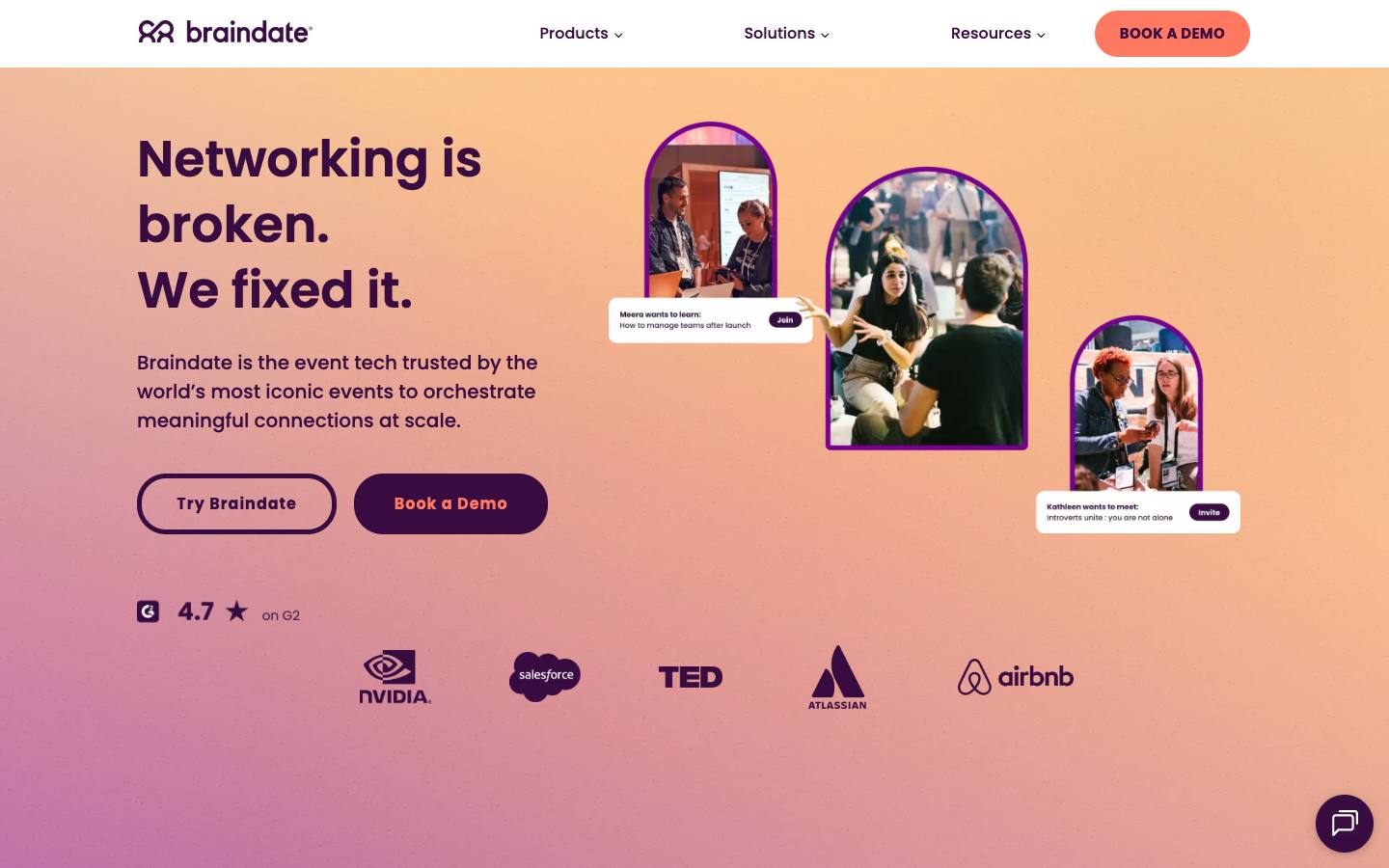
Braindate, created by Montréal events and learning company e180, flips networking from who you meet to what you want to talk about. Attendees post topics in a topic market, and others book one-on-one or small-group conversations with them, in person or online.
More on BraindateLess on Braindate
HQ: Montréal, Canada · Formats: In-person, Virtual
Braindate is based in Montréal and has been used at events such as C2 Montréal, TED, the Paris Peace Forum and EA Ignite. Pricing isn't published, and its public site doesn't list integrations or security details, so plan on a sales conversation for all three.
It works differently from the other apps here. Instead of browsing attendee profiles and sending cold meeting requests, attendees publish topics they'd like to discuss, browse other people's topics and book a conversation. Bookings happen at set times, one-on-one or in small groups, usually in a branded lounge at the venue staffed by learning concierges who help people choose conversations and handle tech support. Virtual and hybrid events can run the same format online. Because the conversation has a stated subject, it suits people who find open networking awkward and helps first-time attendees get involved. The trade-off is that it needs space and staff onsite, and it runs alongside your registration platform and event app rather than replacing them.
- Used at C2 Montréal, TED and the Paris Peace Forum
What stands out
- Attendee-generated topic market for conversations
- 1:1 and small-group bookings at set times
- Trained learning concierges onsite or online
Worth checking
- A networking add-on, not a full event platform
- Pricing, integrations and security details aren't public
Best suited for. Braindate fits learning-focused conferences, user conferences and association meetings that want structured peer conversations around topics. If your goal is sales meetings between buyers and sponsors, a matchmaking-led app such as Brella or Grip will fit better.

9. Airmeet, best for virtual and hybrid events where social networking formats matter
From $167/month
- Price
- From $167/month
- Try it
- Free trial
- Capterra
- 4.4/5 from 189 reviews
- App Store
- 4.7/5 from 672 ratings
- Syncs with
- Salesforce, HubSpot, Dynamics, Marketo
- Security
- SOC 2 Type II, ISO 27001, SAML SSO
- Customers include
- Capgemini, Jardines, RPG Group
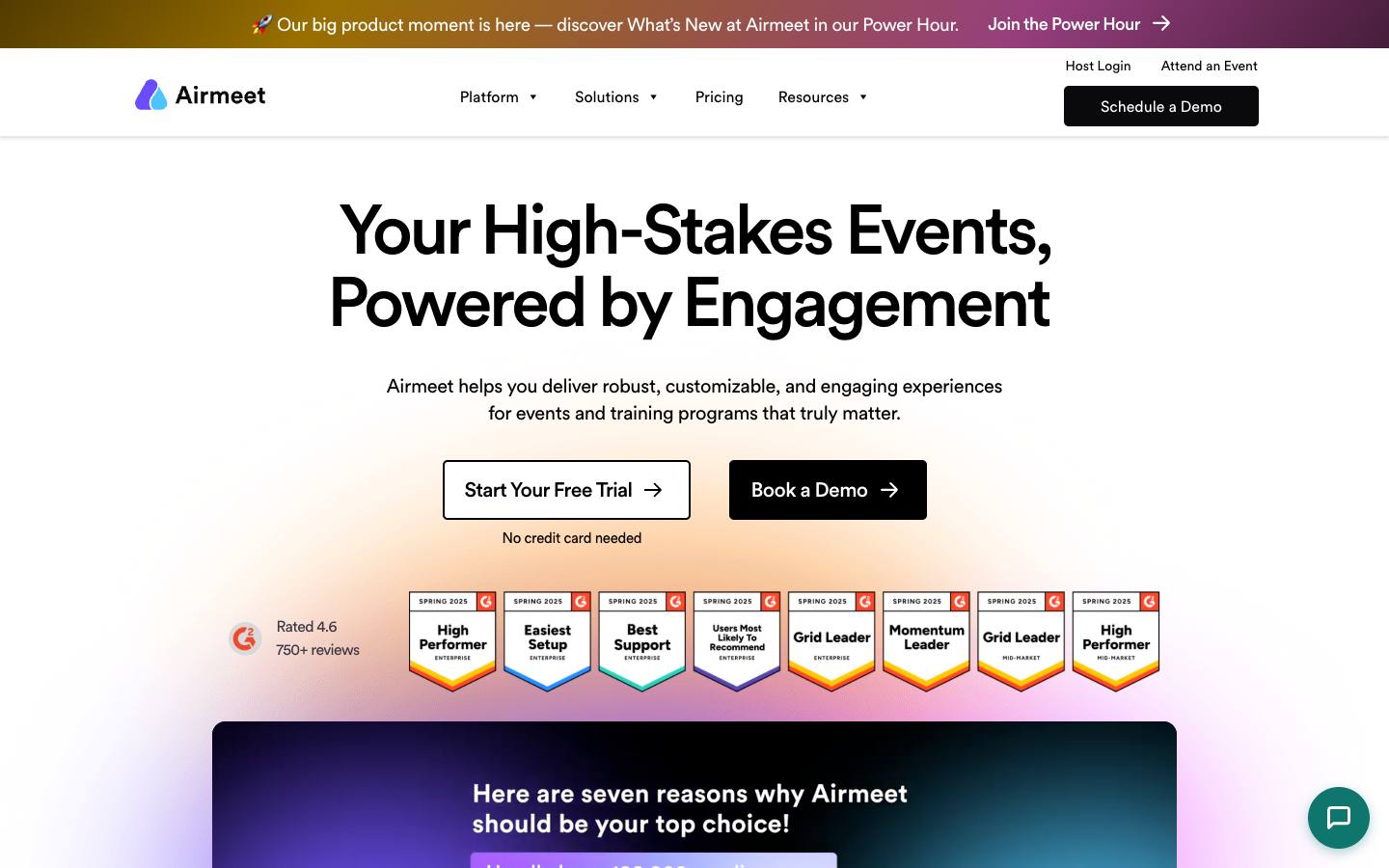
Airmeet is a virtual-first event and webinar platform known for social networking formats: speed networking, lounges with virtual tables, fluid spaces and breakout rooms. It serves marketing teams running online conferences and community meetups, with a self-serve webinar tier and quoted event plans.
More on AirmeetLess on Airmeet
Founded: 2019 · HQ: Covina, California · Formats: Virtual, Hybrid, Webinar
Airmeet was founded in 2019 and has raised about $50 million according to CB Insights. Its pricing page lists Premium Webinars from $167 a month billed yearly or $199 monthly, with two team members and audiences from 100 attendees per webinar, scalable to 10,000; the Events plan, which adds multi-track sessions and in-person, virtual and hybrid formats, is quoted (checked October 2026).
Networking is the reason most teams shortlist it. Lounges with virtual tables let attendees drop into small conversations, speed networking pairs people for timed one-on-one video chats, and fluid spaces and breakouts keep groups moving between sessions. It rates 4.37 out of 5 from 189 Capterra reviews, and its app holds 4.73 from 672 App Store ratings. Integrations include Salesforce, HubSpot, Marketo, Oracle Eloqua, Microsoft Dynamics and Zapier, and analytics can show HubSpot deal data next to attendee engagement. Customers include Kaiser Permanente, Comcast, Capgemini and ADP. Its AirGenie tools turn sessions into summaries, blogs and social posts.
- ISO 27001:2022 and SOC 2 Type II
What stands out
- Speed networking, lounges and table-based networking
- Premium Webinars from $167 a month billed yearly
- Broad CRM and marketing automation integrations
Worth checking
- In-person tools are limited to hybrid add-ons, not full onsite check-in
- Branding, SSO and some hybrid features are paid add-ons
Best suited for. Airmeet fits B2B marketing and community teams running virtual or hybrid events where attendees should mingle, not just watch. For in-person conferences with onsite networking and meeting booking, choose an app such as Brella or Swapcard.

10. Meetaway, best for associations and universities running stand-alone virtual speed networking
From $110/month
- Price
- From $110/month
- Try it
- Free trial
- Languages
- English
- Security
- SAML SSO
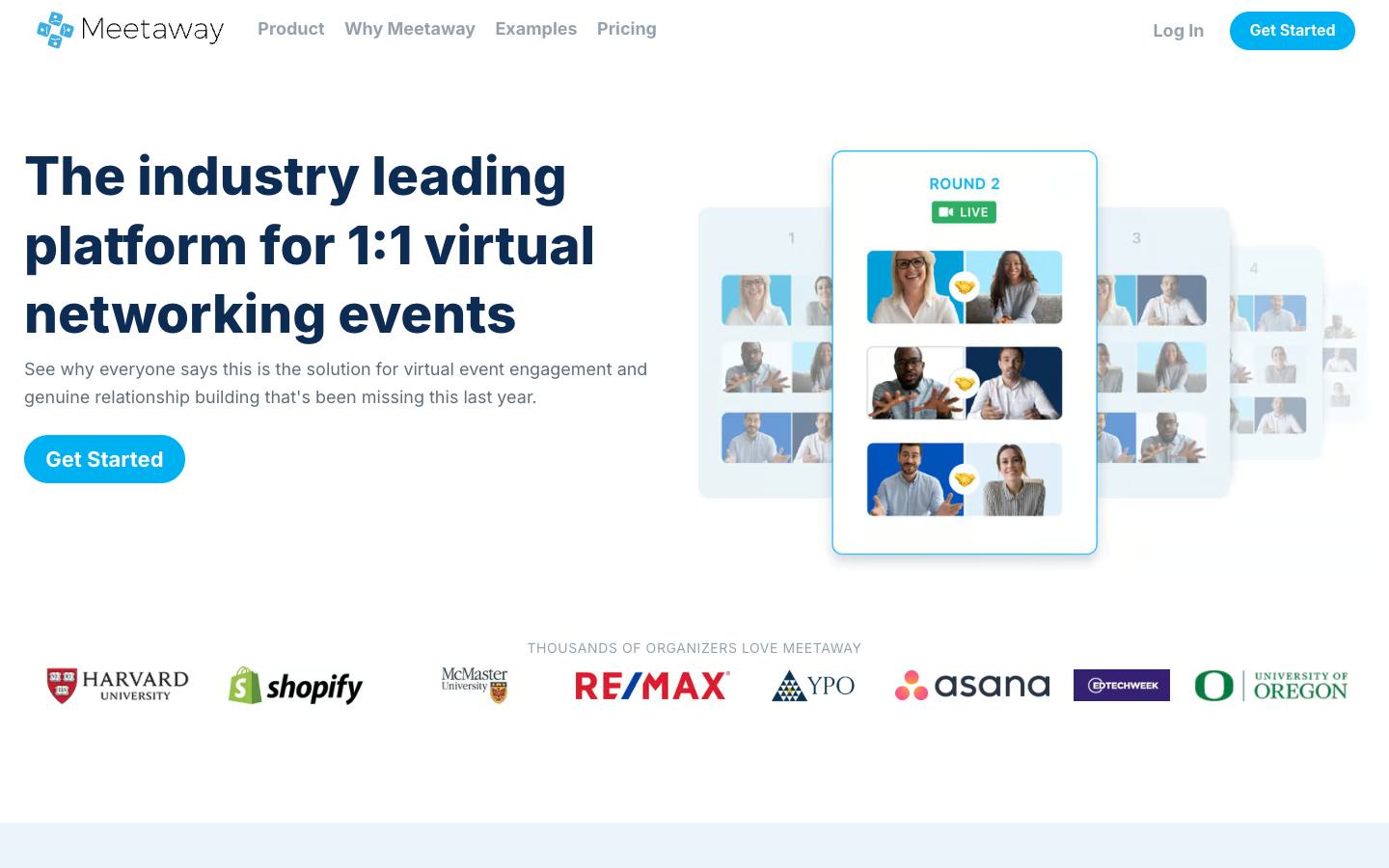
Meetaway runs virtual speed networking in the browser: attendees say who they want to meet, and the platform matches them into a sequence of timed one-on-one video calls. It can run as a stand-alone networking event or as a networking block inside a larger virtual conference.
More on MeetawayLess on Meetaway
HQ: Boston, MA · Formats: Virtual, Webinar
Meetaway is based in Boston. Our pricing research recorded three annual-billed plans, all with unlimited events (checked October 2026): Essential at $110 a month, Pro at $172 a month with buyer and seller matching, tags and sponsor and VIP matching, and Premium from $375 a month with white-label, Okta SSO and localization. Monthly billing costs about 25% more, and a free demo event with Pro features is offered.
It does one thing: structured virtual networking. Organizers set match groups such as buyers and sellers, custom tags and meet or avoid preferences, then attendees move automatically through short video calls, with optional extensions when a conversation is going well. A speaker or panel segment can lead straight into networking, and sponsors and VIPs can choose who they meet. Registration runs on its own pages or through third-party tools, including an auto-generated Eventbrite page, and it lists Cvent, Brella, Zapier and a REST API. A live dashboard shows who's meeting, with downloadable lists and wrap-up surveys afterwards. Few named customers or security certifications are published.
- Works with Eventbrite, Cvent and Brella
What stands out
- Timed one-on-one video rotations with automatic matching
- Buyer and seller match groups, tags and meet or avoid preferences
- Flat monthly plans with unlimited events
Worth checking
- Virtual only; not built for in-person events
- White-label, SSO and localization are limited to the top plan
Best suited for. Meetaway fits associations, universities and B2B communities that want regular virtual speed networking without a full virtual event platform. If your events are in person, look at WITR or a full networking app instead.
11. WITR, best for meetups and small in-person events that want networking without an app download
From £50/event
- Price
- From £50/event
- Try it
- Free trial
- Languages
- English
- Security
- DPA
- Customers include
- Barclays Eagle Labs, Codebase Stirling, Hashtag Events
WITR, short for Who's In The Room, is a no-app networking tool for in-person events. Attendees scan one QR code to see a live list of who's present, each person's asks and offers, and AI-suggested connections, then follow up afterwards. It's priced per event from £50.
More on WITRLess on WITR
HQ: Scotland, UK · Formats: In-person
WITR is built by Scottish startup WITR Networks Ltd. Its pricing page lists £50 per event including 50 attendees, then £1 for each extra attendee up to 1,000 a day, with multi-day events priced per attendee per day and every feature included; a prepaid wallet works in GBP, EUR or USD. Book a free onboarding call and it sets up your first event with promotional credits (checked October 2026).
The design removes the biggest barrier to networking apps: getting people to install something. Attendees join from their phone browser, see who's actually in the room and what each person is looking for or offering, and get AI Smart Connections with conversation starters. Organizers and sponsors get Impact Analytics on attendance, intent, follow-ups, profile views and LinkedIn clicks, plus anonymized post-event reports, and sponsor banners track consent-based opt-ins. Custom registration questions, CSV export and an API cover the basics. Customers include Hashtag Events, Barclays Eagle Labs, TechScaler and Codebase Stirling, which reflects its fit for meetups, community events and smaller conferences.
- First event free after an onboarding call
What stands out
- Single QR code, no app download
- Live attendee list with asks and offers
- £50 per event including 50 attendees, then £1 each
Worth checking
- Early-stage company with a mostly UK customer base
- No registration or ticketing at scale, and few integrations
Best suited for. WITR fits community managers and field marketers running frequent meetups, breakfasts and small conferences who want networking with zero app friction. Large conferences that need meeting scheduling and sponsor packages should choose a full app.

12. Sena, best for B2B conference organizers who want a WhatsApp concierge that steers attendees to people and sponsors
From €3,000/event
- Price
- From €3,000/event
- Languages
- Any language (stated)
- Security
- DPA
- Customers include
- FOST, Hub Institute, Les Entrepreneurs Haute-Garonne
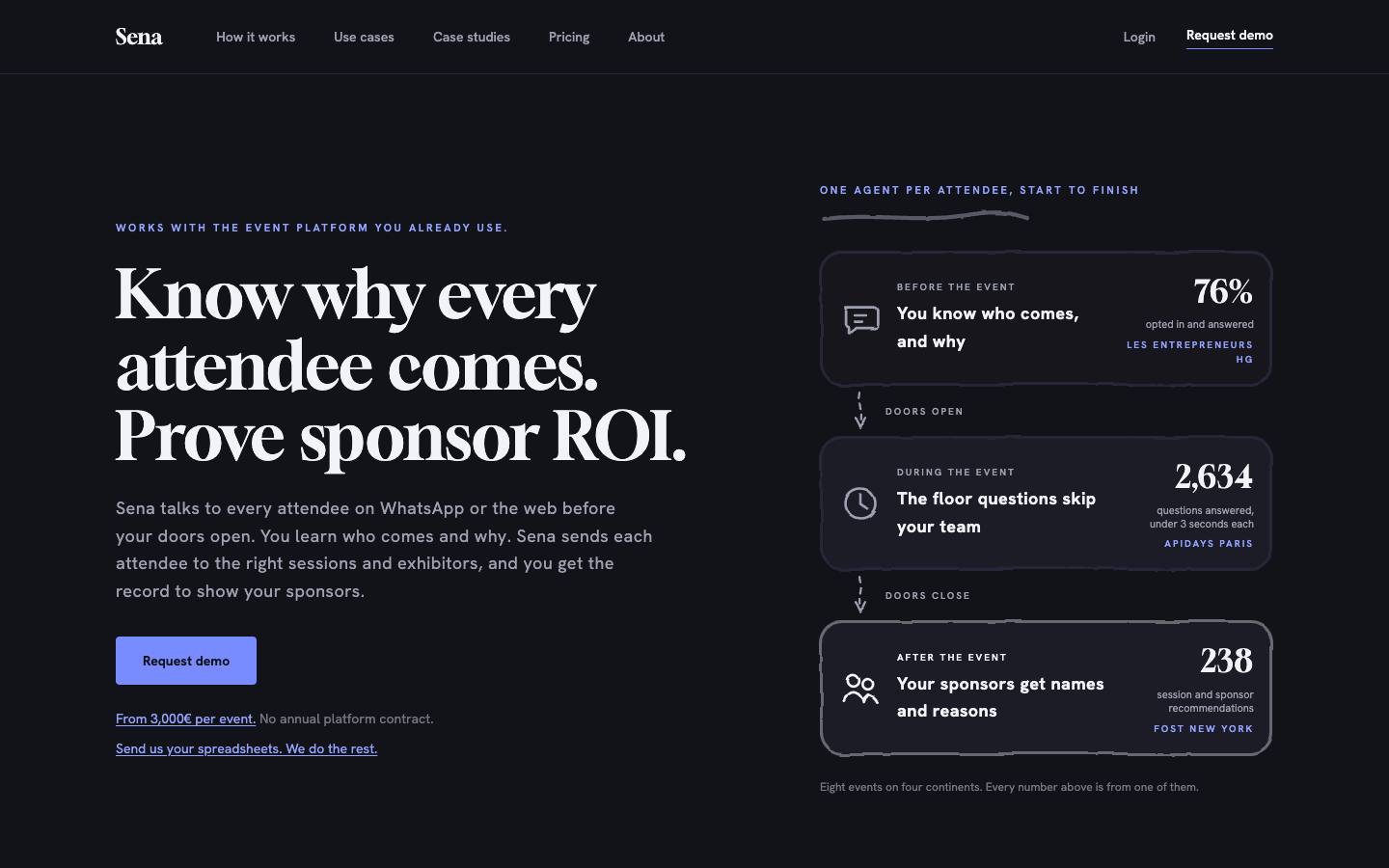
Sena messages registrants on WhatsApp or the web before an event to learn why they're coming, then recommends sessions, sponsors and people to meet and answers questions on the floor. After the event it reports attendee intent and the recommendations made, aimed at proving value to sponsors.
More on SenaLess on Sena
HQ: Remote (Sena Technologies, Inc. · Team: 2-10 people · Formats: In-person
Sena is a small team of 2 to 10 people. Its pricing page lists €3,000 or $3,000 per event for up to 500 registrants, with WhatsApp messages, a live attendee helpdesk and a post-event report included, and €5,000 or $5,000 for large events up to 1,500 registrants; bigger or multi-conference programs are quoted. There are no per-seat fees and no annual contract (checked October 2026).
It approaches networking as a conversation rather than a directory. Before the event, a short WhatsApp or web chat collects each attendee's goals in any language, and Sena uses that intent to recommend people, sessions and sponsors. During the event it answers practical questions such as rooms and schedules. Afterwards, organizers get a summary of who came, why, where they were sent and which questions went unanswered, which helps sponsor renewals. It imports data from existing platforms and lists Cvent, Eventbrite and Swapcard. Customers include FOST, Apidays Paris and VivaTech with Hub Institute. It depends on attendees sharing phone numbers and opting in to WhatsApp.
- Post-event intent report for sponsors
What stands out
- Runs on WhatsApp, so there's no app to download
- Captures attendee intent from text, voice notes or photos
- €3,000 or $3,000 per event up to 500 registrants
Worth checking
- Early-stage company with a small number of events delivered
- Doesn't handle registration, check-in or lead scanning
Best suited for. Sena fits conference organizers who already have registration and an app but want a lightweight concierge that drives introductions and proves sponsor value. If attendees in your market don't use WhatsApp, a browser tool such as WITR is the closer fit.
Picks 6 to 12 are folded to keep the list short. Open any of them, or compare them all in the table above.
Also worth considering
Jublia, LetzFair, Meetmaps, ExpoPlatform, b2match, Converve, Eventify, CrowdComms, Gatherly, Erleah, Articuler, Krowden, MatchPoint
The best event networking apps by use case
| If you need | Company size | Look at |
|---|---|---|
| B2B conference that sells tickets on who attendees will meet | Mid-market, Enterprise | Brellanetworking-first app with sponsor meeting booking |
| Trade show organizer selling exhibitor networking packages | Mid-market, Enterprise | Swapcardexhibitor lead center and a $610 a year self-service entry |
| Association or academic conference that wants community-style networking | Startup, Mid-market, Enterprise | Whovacommunity boards, meet-ups and messaging in a widely used app |
| Large exhibition running roundtables, speed networking and hosted buyer meetings | Enterprise | Gripmany meeting formats and registration-system connectors |
| Small team running frequent events on a monthly budget | Startup, Mid-market | NunifyAI matchmaking and speed networking from $99 a month |
| User conference that wants topic-led peer learning | Mid-market, Enterprise | Braindateattendee-posted topics and staffed conversation lounges |
| Community manager running monthly in-person meetups | Startup, Mid-market | WITRone QR code, no app, from £50 an event |
| Online community or association running virtual networking sessions | Startup, Mid-market | Meetawaytimed one-on-one video rotations with unlimited events |
What results look like
Figures customers report in the vendors' own published case studies. They describe one customer each, not what every buyer should expect.
8,500
Meetings over 3 years
TechCrunch Disrupt with Brella · Case study
4,500
Active platform users
Bosch with Swapcard · Case study
90%
App adoption rate
University of New South Wales with Whova · Case study
44%
Meetings year-on-year increase
Clarion Events with Grip · Case study
471%
Increase in user-generated content
Atlas Copco with Eventee · Case study
300+
Printed binders eliminated
Clinisys with Nunify · Case study
How to choose
Background on what these tools do, how we ranked them and what to check before you buy. Open any topic.
What event networking apps actually are (and what they aren't)
An event networking app helps attendees find, contact and meet the people worth their time at a conference, trade show or community event. The core pieces are searchable attendee profiles, suggestions based on interests or goals, in-app chat, meeting requests with times and places, and reminders that make meetings actually happen. Some tools add speed networking rotations, topic-based conversations, virtual lounges or a chat concierge on WhatsApp, and most give organizers analytics on connections and meetings made.
It isn't the same as a full event app, which also carries the agenda, live polling, sponsors and push notifications; our guide to the best event apps covers those platforms. It also isn't hosted buyer or partnering software that builds pre-arranged meeting schedules between buyers and suppliers, which our best event matchmaking software guide covers. In practice the categories overlap, and several picks here do all three, but the weighting is different: this guide judges tools on the attendee networking experience.
For B2B event teams, networking apps do three jobs. They raise the value of a ticket, since meeting peers and prospects is often the main reason people attend. They give sponsors and exhibitors a way to book meetings with relevant attendees rather than waiting at the booth. And they leave a record of who met whom, which marketing and sales can use for follow-up and for reporting event influence on pipeline.
How we ranked these event networking apps
We compared each app on the parts of the networking experience that buyers can check before signing, using vendor sites, pricing pages, App Store and Capterra listings and our own profiles, all checked in October 2026.
1. Networking depth
We checked feature pages for attendee profiles, suggestions, chat, 1:1 and group meeting booking, meeting locations and speed networking.
2. Published pricing
We recorded whether each vendor publishes a price and what its entry plan includes, from its pricing page.
3. Attendee adoption friction
We noted whether attendees need a native app download or can join in a browser, by QR code or through WhatsApp.
4. CRM and registration connections
We checked integration pages for named Salesforce, HubSpot and registration-system connectors, plus APIs.
5. Review footprint
We used App Store and Capterra ratings and review counts from our review data, checked in October 2026.
6. Data protection
We recorded security certifications and hosting claims from vendor security pages and our security research.
More on our process in the methodology.
Choose the networking format first
Start with how you want people to meet. Open networking, where attendees browse profiles, chat and request meetings, suits most conferences and is the core of Brella, Swapcard, Whova, Eventee and talque. Structured formats such as roundtables, speed networking and pre-scheduled meetings suit commercial events, where Grip covers the widest range. Topic-led conversations suit learning events (Braindate), timed video rotations suit online sessions (Meetaway, Airmeet), and no-app tools suit meetups (WITR, Sena). If you need buyer and supplier schedules built by the organizer, use our best event matchmaking software guide instead.
Typical pricing for event networking apps
Published prices in our data run from WITR at £50 an event and Nunify's Engage plan at $99 a month, through Meetaway from $110 a month and Airmeet's Premium Webinars from $167 a month, to Swapcard from $610 a year, Eventee from $1,499 an event or $2,999 a year, talque from €3,000 a year and Sena at €3,000 an event (checked October 2026). Brella, Grip, Whova and Braindate quote on request, usually scaled by attendee count, events per year and modules. Watch for volume-based add-ons, sponsor meeting modules and white-label apps, which are often priced separately.
What to ask vendors before you buy
Ask what share of attendees typically activate networking at events like yours, and what the organizer does to drive it. Ask how profiles are built (registration fields, LinkedIn import or a short chat), how suggestions are made and whether you can control who sees whom. Check meeting logistics: assigned tables or locations, calendar sync, reminders and no-show tracking. Ask whether sponsors can message attendees and under what consent rules, how meeting and connection data export to Salesforce or HubSpot, and which security documents the vendor can share.
How networking apps differ from event apps and matchmaking software
A full event app carries the agenda, polls, sponsors and push notifications, with networking as one feature; our best event apps guide covers those. Matchmaking software builds structured meeting programs between defined groups, often with hosted buyers and meeting matrices, and is covered in our best event matchmaking software guide. Networking apps sit between them: they focus on helping every attendee find and meet the right people. Several picks, including Swapcard, Whova and Grip, span all three, so compare them on the job you care about most.
Plan for adoption, not just features
The best networking feature fails if attendees don't open it. Collect goals and interests in registration so profiles aren't empty, open networking a week or two before the event, and send reminders with suggested people. Give meetings a physical home with marked tables or a lounge, and brief sponsors on how to request meetings politely. No-app tools such as WITR and Sena cut friction for one-day events, while branded native apps pay off for multi-day conferences where attendees use the app all day.
Where this fits in your event tech stack
Event networking apps sit between registration and CRM in a B2B event stack. They take attendee profiles from a registration platform such as Swoogo, Cvent, Bizzabo or Eventbrite (Grip, Brella and Meetaway list those connectors), and send meeting and connection data on to Salesforce or HubSpot, which Brella, Grip, Nunify and Airmeet connect to natively. Swapcard and Whova include their own registration, so they can be the system of record for smaller programs. Exhibitor lead retrieval and badge scanning usually sit next to networking, and teams that want structured buyer and supplier meetings add dedicated matchmaking software on top.
FAQ
What is the best event networking app?
What is the best app for networking events?
How much does an event networking app cost?
How do event networking apps match attendees?
What is the difference between an event networking app and event matchmaking software?
How do you get attendees to use a networking app?
How do networking apps connect to Salesforce or HubSpot?
Do event networking apps work for virtual events?
Get a free event networking apps shortlist
Reading reviews only gets you so far. The right pick depends on your events, your team and the systems it has to sync with.
Our shortlist finder asks a few questions and matches you with tools that fit, using the same verified data as this guide.
You'll see published prices, security documents and CRM integrations side by side, and you can save tools to compare later.
It's free, there's no sign-up, and no vendor gets your details.
Ready? Build your shortlist in two minutes, or try the free event software RFP builder.
Get a free shortlistKeep reading
Ratings link to their source and are shown as published on the date of our last check. Read our methodology.