 vs

Amego vs Jujama
Both are in our Event apps category. Amego is best for enterprise user conference and internal event teams that need a premium branded app on top of Cvent, RainFocus or Swoogo; Jujama is best for life sciences and pharma companies running partnering events, investor meetings or conferences.
The short answer: Amego is a branded event app with AI scheduling and sponsor tools that sits on top of registration platforms such as Cvent, RainFocus and Swoogo, with published plans from $2,499 per year and a free Spark tier. Jujama, a Scranton company founded in 2009, pairs an event app with a virtual platform and partnering-style meeting tools, and quotes prices on request. Amego fits in-person tech events; Jujama fits life sciences conferences.
Built from each vendor's own website and our research profiles. How we research
Side by side
“Not published” means we couldn't find it on the vendor's own pages.
AmegoJujamaStrengths and considerations
Amego
What stands out
- Agentic AI built into the attendee app, including location-triggered recommendations
- Transparent published pricing with a free entry tier, unusual for enterprise event apps
- Integrates with the major enterprise registration platforms rather than replacing them
- In-house design studio and live event-day support
Worth checking
- Not a registration or event management platform; needs to be paired with one
- AI usage is credit-based, with overages billed monthly
- SSO and regional hosting are Enterprise features
Jujama
What stands out
- Deep life sciences references and partnering-style meeting tools
- Flexible video approach that plugs in the organizer's own provider
- Combines in-person app and virtual platform
Worth checking
- Pricing not published
- Few named software integrations (no CRM listed)
- Security certifications aren't described
Notable customers
Organizations each vendor names on its own website: customer stories first, then testimonials and logos.
Amego
The main difference between Amego and Jujama
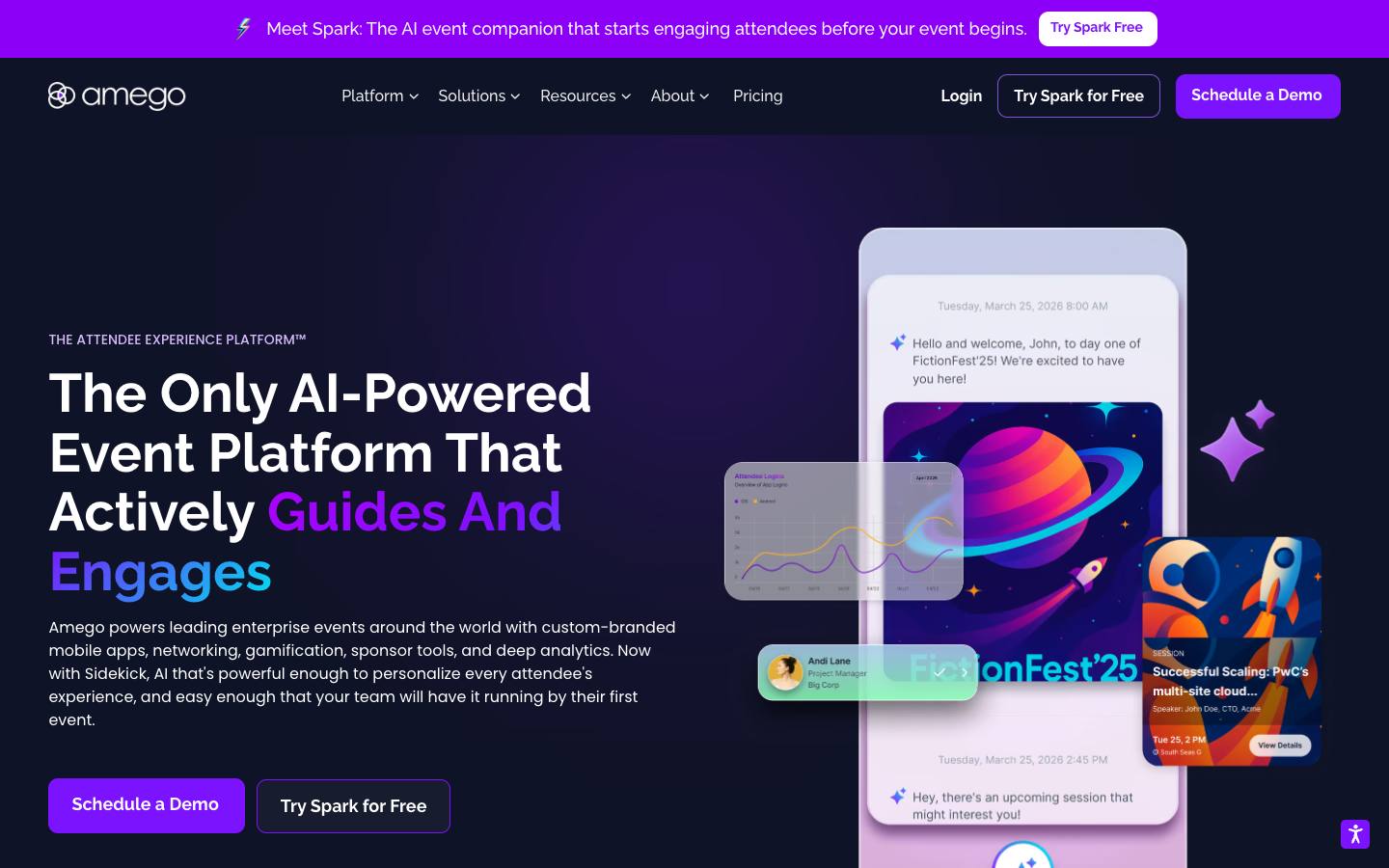
The main difference is the audience each was shaped for. Amego targets enterprise tech companies, agencies and associations that run registration elsewhere and want a polished attendee app on top. Its Sidekick AI layer builds personalized schedules, sends just-in-time session alerts, and matches attendees to sponsors by venue location. It's an in-person product and isn't a registration or event management platform, so it has to be paired with one.
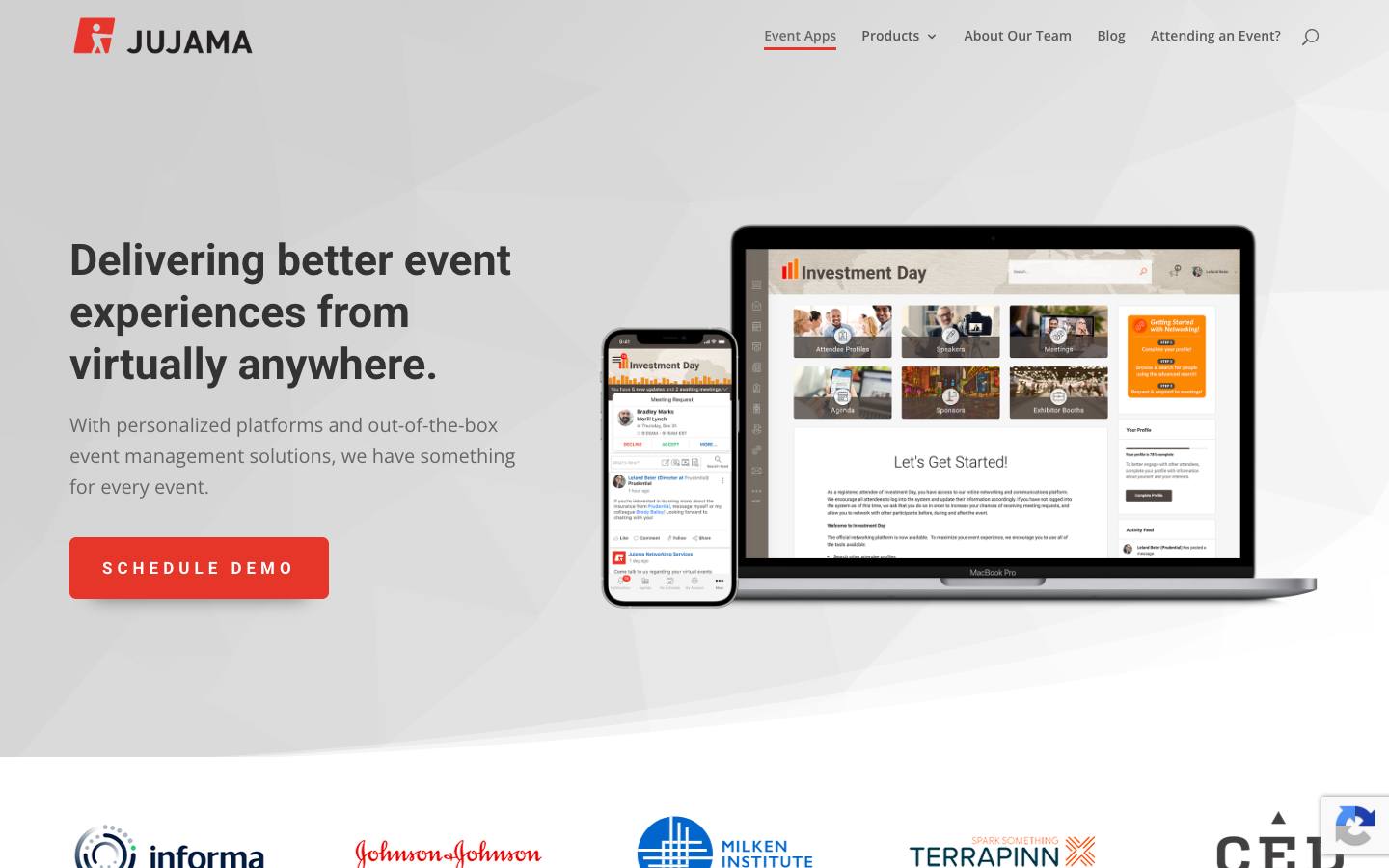
Jujama is built around partnering and conference meetings, with a reference list heavy on pharma and life sciences: Merck, AstraZeneca, AbbVie and Johnson & Johnson among them. It offers a mobile and desktop app, matchmaking based on shared interests, one-to-one and group messaging, meeting scheduling with built-in video calls, and a virtual platform with exhibitor booths. It runs in-person, virtual and hybrid events.
Amego vs Jujama pricing
Amego publishes four plans in US dollars, all with unlimited events (checked October 2026). Spark is free, with 1,000 AI credits, unlimited attendees and an AI Q&A embed for your website. Base starts at $2,499 per year, billed annually, for 500 attendees, 5,000 AI credits, a branded event app and push notifications. Elevate starts at $4,999 per year for 750 attendees and adds networking and meetings and gamification. Enterprise is by contact. Lead scanning is a $199 per device add-on, and AI use is credit-based with overages billed monthly.
Jujama doesn't publish a price. Pricing is custom, by demo request or phone, and we didn't find a free plan or trial. Without a quote there's no basis for calling either cheaper, so budget the Jujama conversation around your event formats and size.
Features and integrations
Both provide agendas, speaker profiles, push notifications, sponsor placements and networking tools. Amego adds Quest gamification, native maps with multi-floor venue layouts and beacon support, polls and Q&A, and badge-scanning lead capture. It lists 17 integrations, including Cvent, RainFocus, Swoogo, Braindate, Pointr and ExpoFP, and connects to registration platforms rather than directly to CRMs. It documents a SOC 2 Type II audit and says it's aligned with GDPR. SSO and regional hosting are Enterprise features.
Jujama's virtual sessions use the organizer's preferred video or streaming provider, and its exhibitor booths hold documents, videos, products and live chat. It lists 3 integrations: YouTube, LinkedIn sharing and Twitter sharing, and we didn't find a CRM connector. Its privacy policy covers GDPR transfers and states Data Privacy Framework certification, and we didn't find other security documentation on its public pages.
Which should you choose?
Choose Amego if you run in-person user conferences or internal events with registration already on Cvent, RainFocus or Swoogo, and you want AI-guided attendee journeys and measurable sponsor engagement. Its customers include ServiceNow, Google Cloud, Atlassian and Twilio. It's a company founded in 2021 with 11-50 employees, based in West Palm Beach.
Choose Jujama if you organize partnering events, investor meetings or life sciences conferences that need matchmaking and meeting scheduling, or you need one vendor for the in-person app and a virtual or hybrid program. A client concierge handles training, support and project coordination for each event. Its customers include Merck, Informa, Terrapinn and the Milken Institute.