 vs

ADDCAL vs CalendarLink
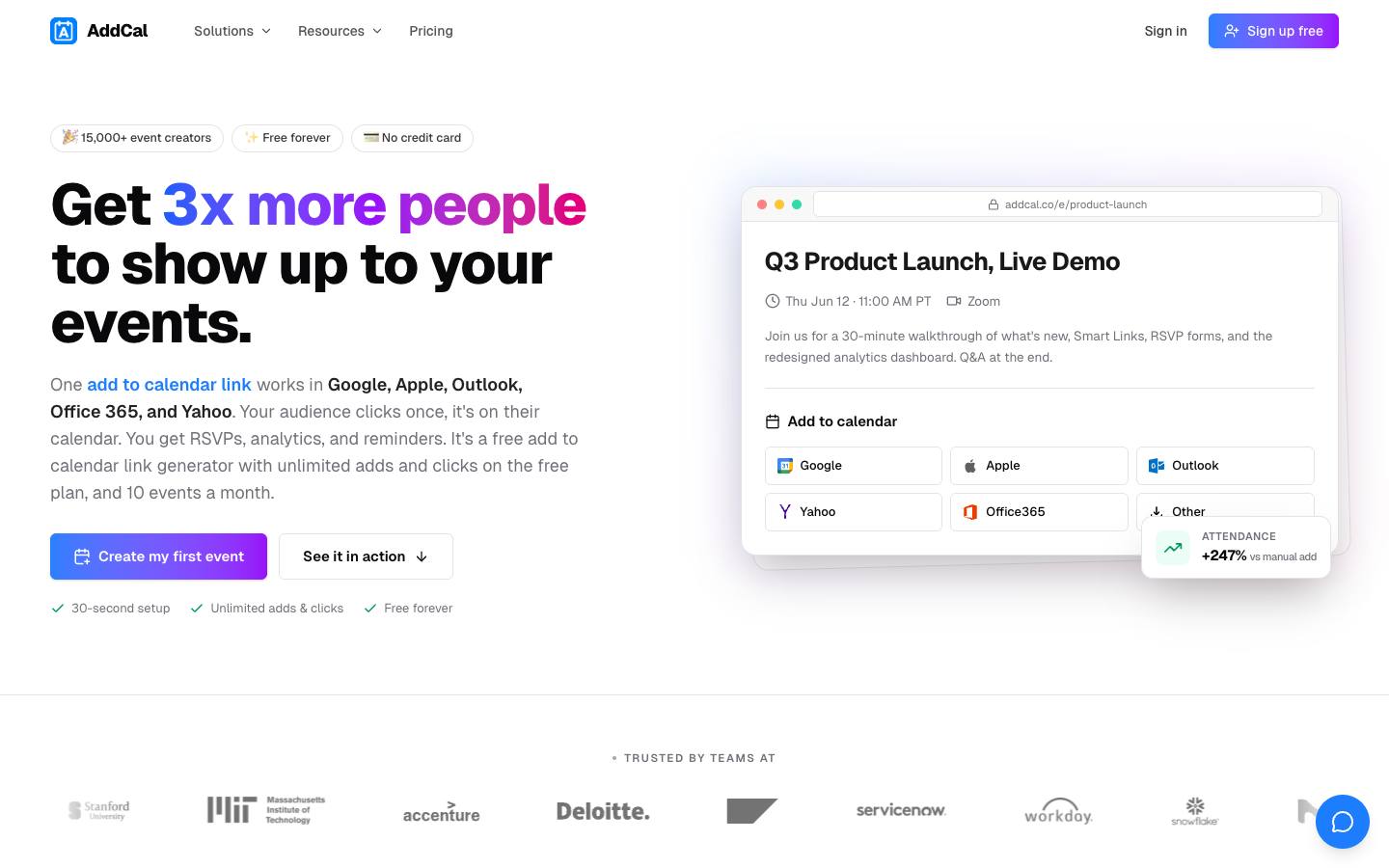
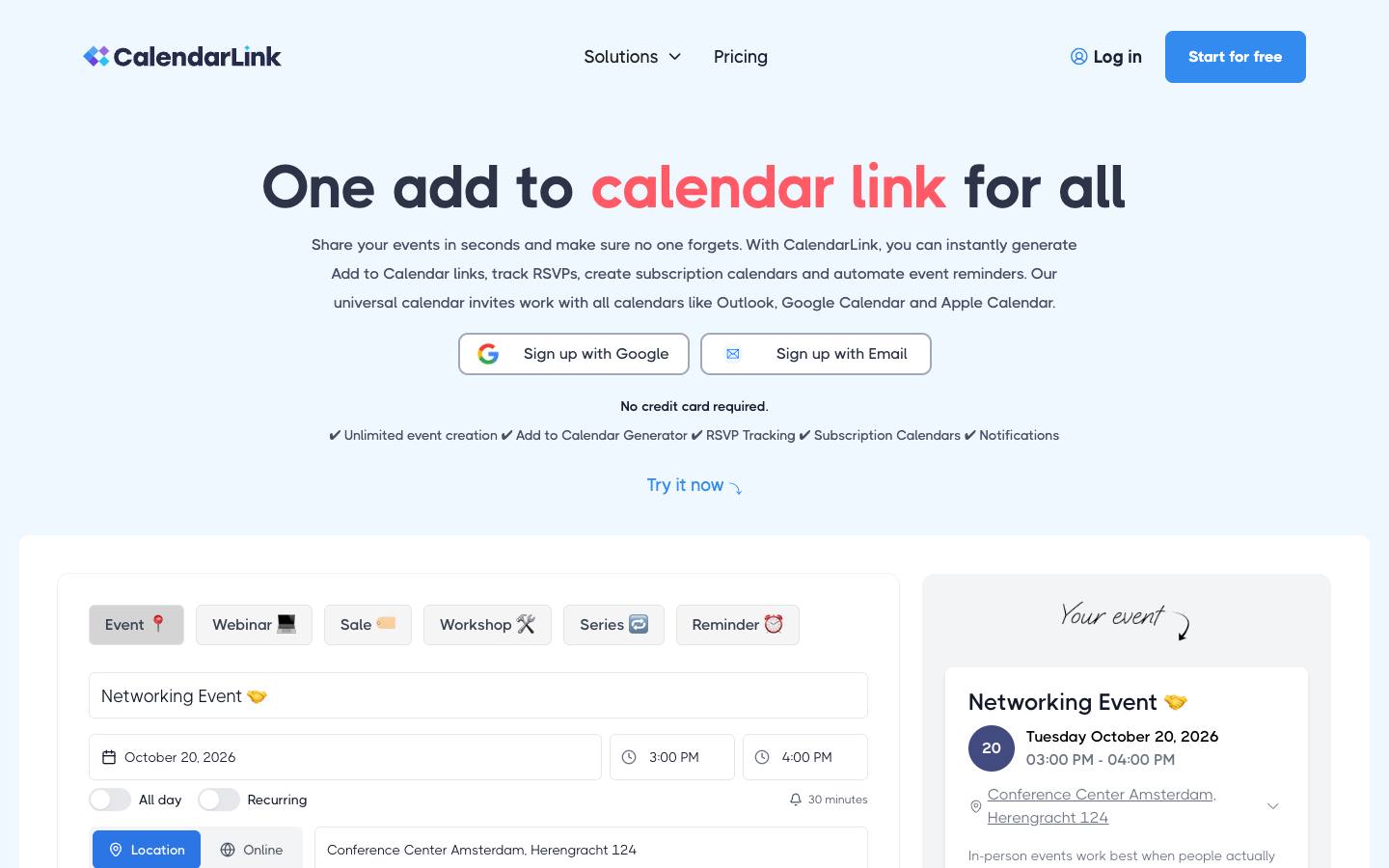
Both are in our Event promotion & referral category. ADDCAL is best for marketing and community teams promoting webinars and recurring events by email; CalendarLink is best for webinar and event marketers who want registrants to save events to their calendars from emails and pages.
The short answer: ADDCAL and CalendarLink both make add-to-calendar links with RSVPs and subscription calendars. ADDCAL starts at $12/month billed yearly, connects natively to HubSpot, has a REST API on every plan and lists 11 integrations. CalendarLink starts at $19/month billed yearly, lists 26 integrations (Salesforce and Pipedrive via Zapier or Make), and sells a one-off single-event licence. ADDCAL is the cheaper start; CalendarLink fits wider tool stacks.
Built from each vendor's own website and our research profiles. How we research
Side by side
“Not published” means we couldn't find it on the vendor's own pages.
ADDCALCalendarLinkStrengths and considerations
ADDCAL
What stands out
- Generous free plan and low paid tiers
- Offers one-click import from AddEvent
- Links remain editable after distribution
Worth checking
- No named customer logos or case studies on the site
- Only Zapier and Zoom integrations are listed
- Company and leadership details aren't published
CalendarLink
What stands out
- Solves a specific attendance problem (getting events onto calendars) cheaply
- Single-event licence suits occasional organisers
- Works alongside any registration or webinar platform
Worth checking
- Point tool; doesn't handle registration pages, ticketing or event delivery
- Company ownership, location and security details aren't published
- Trial length is stated inconsistently on the pricing page (7 vs 14 days)
The main difference between ADDCAL and CalendarLink
The two products do the same job, so the difference is price structure and integration reach. Each produces one link that adds an event to Google, Apple, Outlook and other calendars, and each offers RSVP collection, subscribable calendar feeds and analytics. Both run in-person, virtual and webinar events and are self-serve.
ADDCAL (formerly Calndr.link) adds capacity caps with waitlists, Smart Links that generate events from URL parameters or webhooks, embeddable public calendars and one-click import from AddEvent. CalendarLink adds automated reminders, including for recurring events, and calendar links that adapt to each person's time zone. CalendarLink is a point tool that doesn't handle registration pages or ticketing, and ADDCAL's features center on links, RSVPs and calendars, so either one sits beside a webinar or registration platform.
ADDCAL vs CalendarLink pricing
ADDCAL's Premium plan is $12/month billed yearly, or $15 billed monthly, and Business is $20/month billed yearly (checked October 2026). The free plan covers 10 events a month and 50 RSVPs per event. Business gives unlimited RSVPs and subscribers, and Enterprise is quoted. Contracts are month-to-month and there's no trial.
CalendarLink starts at $19/month billed yearly on Startup, with yearly billing saving 20% (checked October 2026). Its free plan allows unlimited events, 50 adds per event, 10 RSVPs per event and 10 subscribers, without analytics. Startup raises that to 1,000 adds, 100 RSVPs and 100 subscribers, while Business allows unlimited adds and 10k RSVPs. A 7-day trial is available, and a single-event licence at $99 suits occasional organizers. Enterprise starts at about $199 a month.
At the entry level ADDCAL costs less and its free plan allows more RSVPs per event. The pricing page of CalendarLink also shows figures in euros, so confirm the currency at checkout.
Features and integrations
ADDCAL lists 11 integrations. HubSpot, Zoom, Zapier and an MCP server are native, Mailchimp and Klaviyo connect through Zapier, and n8n and Make connect through its API. The REST API is on every plan, including Free, and webhooks for RSVPs and subscribers are on Business. It also offers one-click import from AddEvent, with migration help on Business.
CalendarLink lists 26 integrations, among them Mailchimp, ActiveCampaign, Brevo, Slack, Zoom, Typeform, Webflow, Shopify and Stripe. HubSpot, Salesforce and Pipedrive connect via Zapier or Make, and most listed apps work by pasting calendar links rather than through native connectors. API and MCP access begin on Startup. If you need Salesforce, CalendarLink is the one that lists it; ADDCAL doesn't.
On security, ADDCAL publishes a DPA, a sub-processors page and a plain-language security page, and says Stripe handles card data. CalendarLink states it is hosted in the EU and GDPR-compliant. We didn't find a SOC 2 report on either vendor's public pages.
Which should you choose?
Choose ADDCAL if you want the lowest paid price, a free plan with 50 RSVPs per event, API access on every plan, or a native HubSpot connection. It suits marketing and community teams promoting webinars and recurring events by email, and teams moving off AddEvent. It's an Australian company founded in 2020, and its site doesn't show named customers.
Choose CalendarLink if you want one-off pricing for a single event, built-in reminders, a 7-day trial, or a long integration list that includes Salesforce and Pipedrive through Zapier or Make. It also targets enterprise teams, while ADDCAL targets SMB and mid-market. Its company ownership and location aren't published.