 vs

AgendaForge vs Sessionize
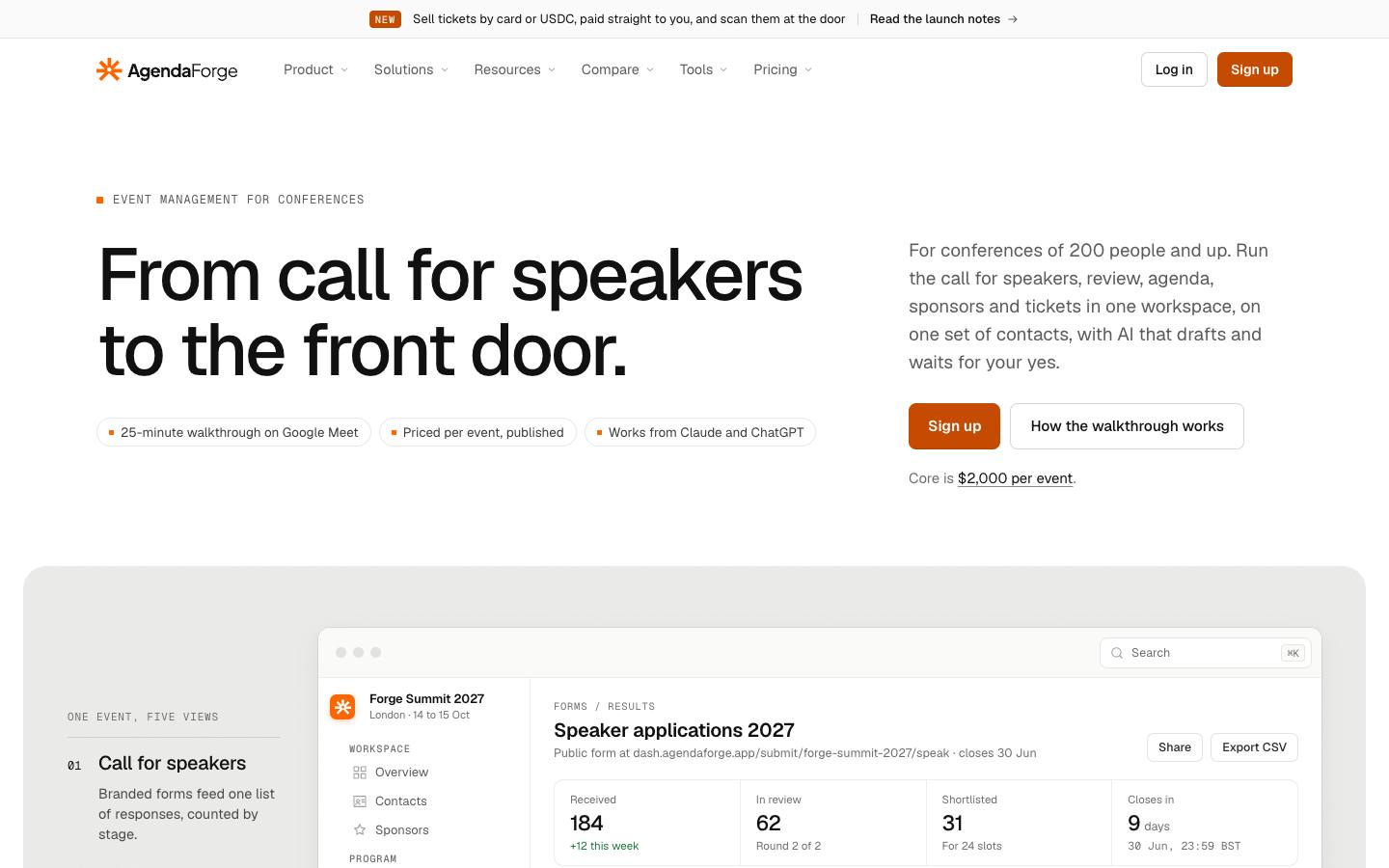
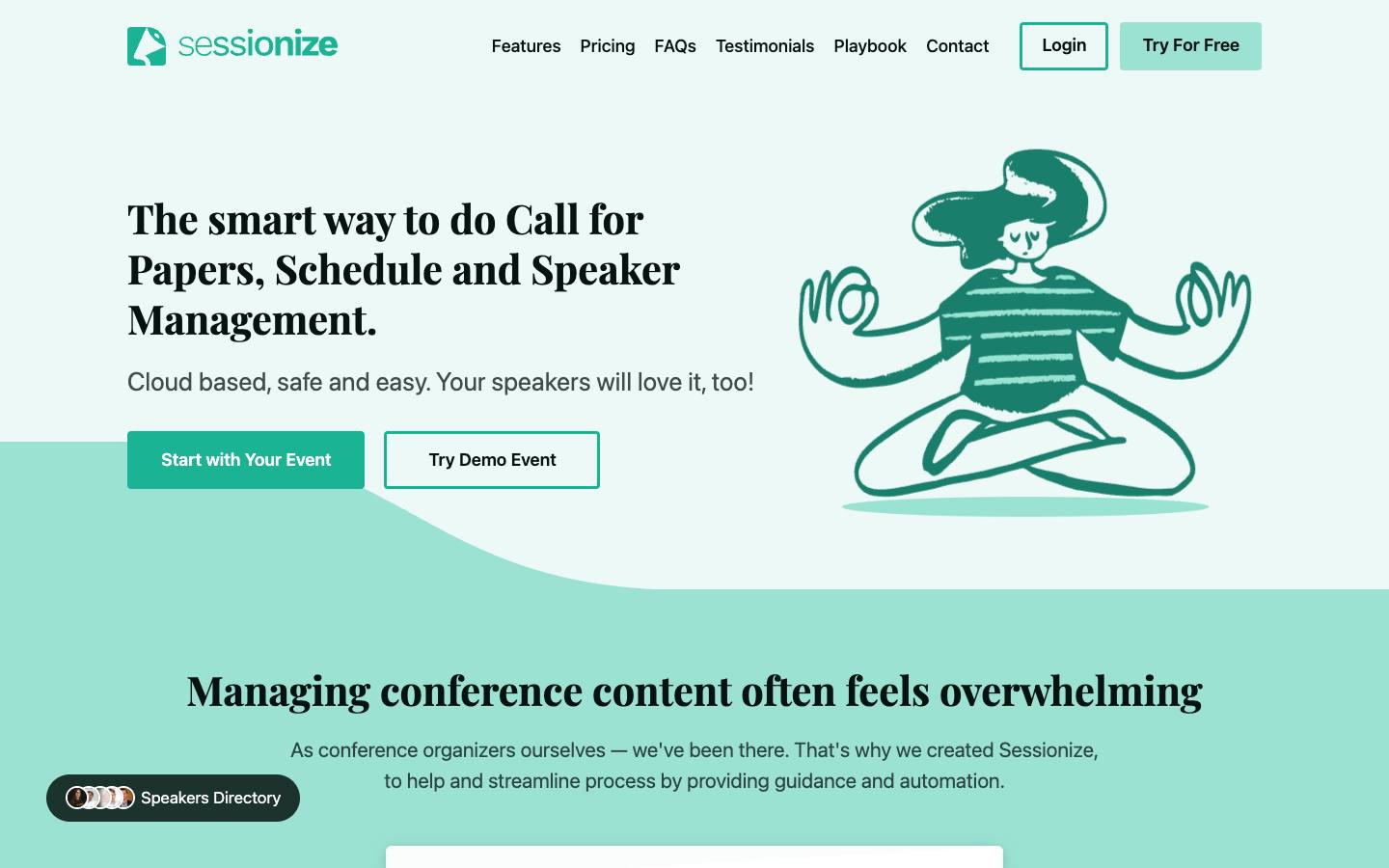
Both are in our Agenda & speaker management category. AgendaForge is best for independent and community conference organizers running speaker calls and multi-track agendas; Sessionize is best for tech and developer conferences that run open calls for speakers.
The short answer: AgendaForge and Sessionize both run calls for speakers and agendas, but AgendaForge goes wider and costs far more per event. AgendaForge charges $2,000 per event for Core and $4,000 for Pro, and adds sponsor intake, ticketing, check-in and an MCP server for AI assistants. Sessionize charges $499 per professional event, is free for community events and stays focused on speakers and schedules. Pick Sessionize to keep costs down, AgendaForge to consolidate tools.
Built from each vendor's own website and our research profiles. How we research
Side by side
“Not published” means we couldn't find it on the vendor's own pages.
AgendaForgeSessionizeStrengths and considerations
AgendaForge
What stands out
- Published flat per-event pricing
- Agent-ready design with an MCP server and approval workflow
- Covers speaker, sponsor, ticketing and check-in workflows in one tool
Worth checking
- Very early-stage vendor with a handful of customers and a one-person LinkedIn presence
- No CRM or marketing automation integrations beyond Zapier/Make and the API
- EU data residency costs extra
Sessionize
What stands out
- Flat per-event price that's low compared with full event platforms
- Large public speaker directory, useful for sourcing speakers
- Widely used in developer communities, so many speakers already have profiles
Worth checking
- Content and agenda only; registration, ticketing and marketing need other tools
- No security certifications are listed in its trust center
- Small team according to LinkedIn data
Notable customers
Organizations each vendor names on its own website: customer stories first, then testimonials and logos.
The main difference between AgendaForge and Sessionize
The two overlap on the speaker workflow. AgendaForge offers branded submission forms with rubric scoring and optional blind review, a drag-and-drop agenda that flags double-booked speakers, and a passwordless speaker portal. Sessionize offers a configurable call for speakers, collaborative session voting, speaker profiles and a drag-and-drop schedule that can be embedded or exported as JSON, XML or iCalendar.
Beyond that, AgendaForge tries to be the event workspace for in-person conferences: sponsor tiers and intake forms, a hosted ticket page with promo codes and waitlist, and check-in by browser, iPad kiosk or mobile app. Its AI Event Coordinator drafts emails and changes, and outside assistants such as Claude or ChatGPT can work on events through an MCP server, with every change held for human approval. Sessionize leaves registration and ticketing to other tools, but gives attendees a web and mobile schedule app and runs a public speaker directory for sourcing speakers.
AgendaForge vs Sessionize pricing
Both charge per event and publish their prices. AgendaForge costs $2,000 per event for Core and $4,000 for Pro, which adds priority and dedicated support and EU data residency as a paid add-on. Beyond an included ticket allowance, a 1% fee capped at $20 applies per paid ticket. It has no free plan or trial, and a few early customers get discounted founding rates (checked October 2026).
Sessionize costs $499 plus tax per professional event occurrence, with all features and priority email support. Non-commercial community events are free, five or more events a year are quoted as bulk codes, and a full test mode needs no credit card (checked October 2026). For a single conference, Sessionize costs roughly a quarter of AgendaForge Core, so the extra spend only makes sense if you'd use the sponsor, ticketing and check-in modules.
Features and integrations
AgendaForge lists 12 integrations: Luma, Ticket Tailor, Stripe, Slack, ClickUp, Google Sheets, Zapier, Make, an n8n node, a REST API and HMAC-signed webhooks. It has no native CRM connector. Sessionize lists 4, built on website embeds and a read-only API with no write access or webhooks, and no CRM connector either.
On security, AgendaForge documents a GDPR page with a DPA and SCCs on request, a subprocessor table and a dated changelog; we didn't find a SOC 2 report on its public pages. Sessionize publishes a DPA, a subprocessor page, EU data centers in Ireland and the Netherlands and a trust center, and we didn't find SOC 2 there either.
Which should you choose?
Choose AgendaForge if you organize an in-person conference of a few hundred attendees or more, want speakers, sponsors, tickets and check-in in one tool, and like the idea of AI assistants working on your event under approval. It's a one-person company with Stable Summit as its listed customer.
Choose Sessionize if you run developer or community events, need virtual or hybrid support, or already have registration covered and want a proven speaker and schedule tool at a flat fee. Its listed customers include Microsoft, JetBrains and NDC Conferences.