 vs

AgendaForge vs Sessionboard
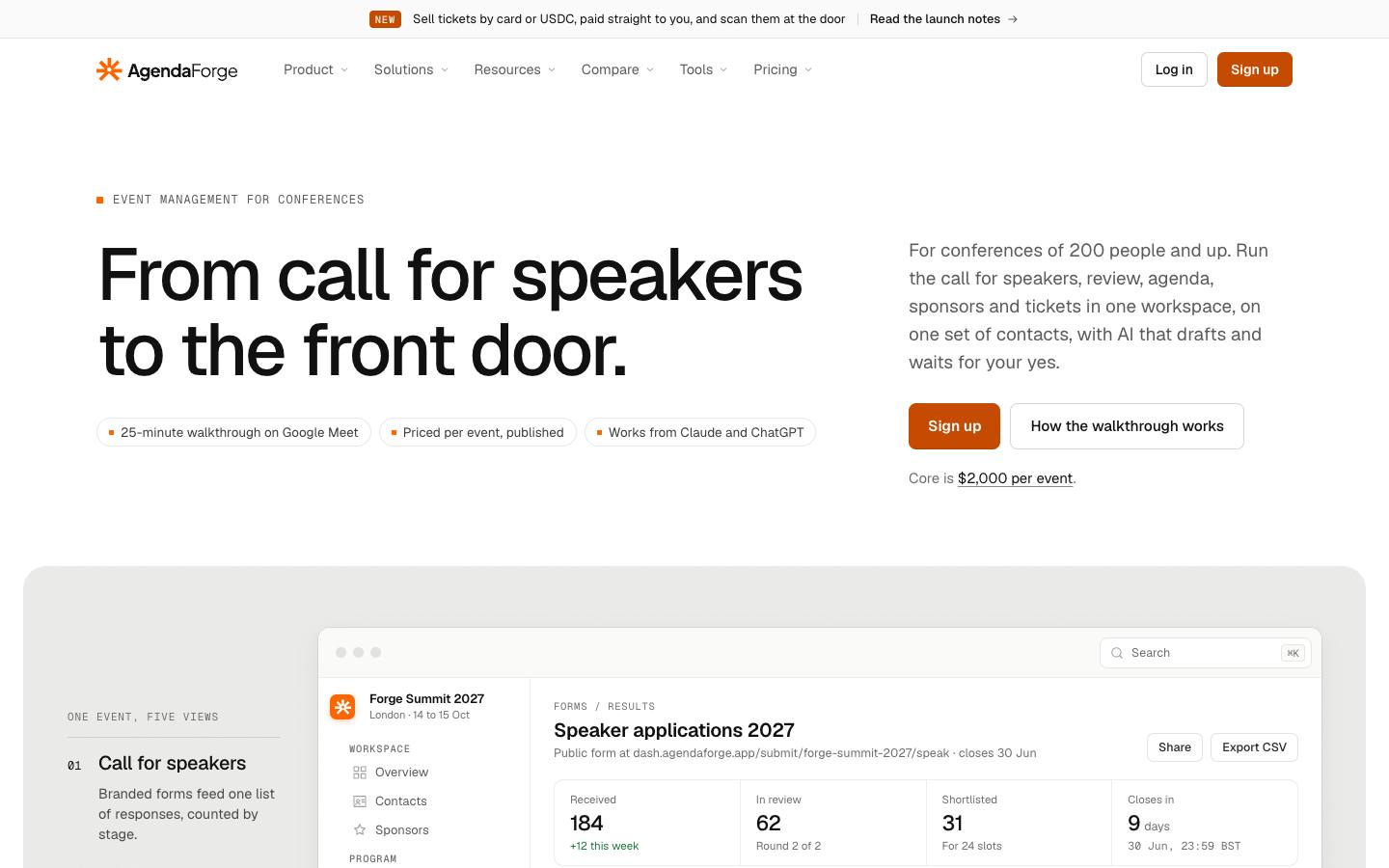
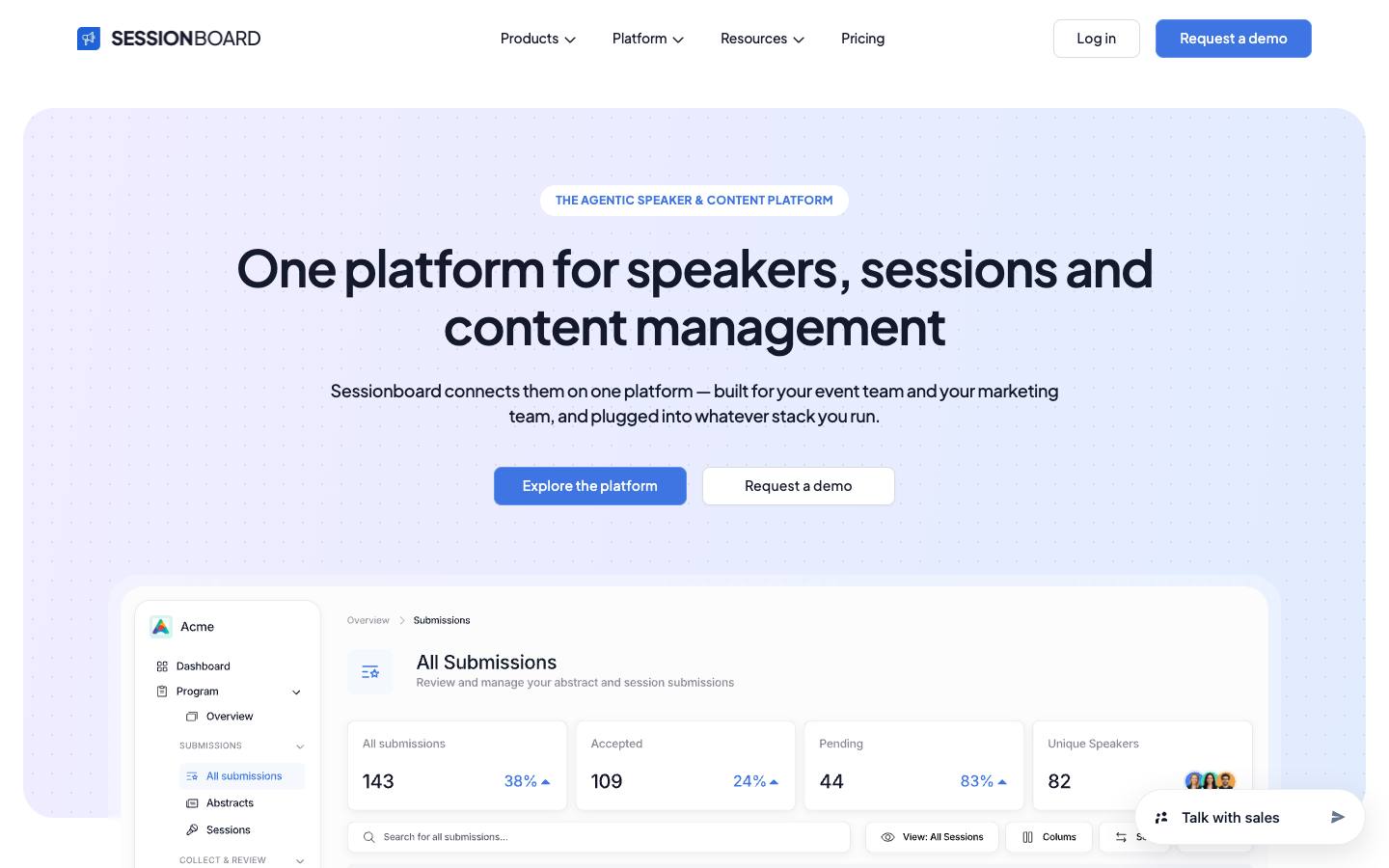
Both are in our Agenda & speaker management category. AgendaForge is best for independent and community conference organizers running speaker calls and multi-track agendas; Sessionboard is best for Content-heavy conferences and associations that run large calls for papers and speaker programs.
The short answer: AgendaForge is a one-person, in-person conference tool charging $2,000 per event (Core) or $4,000 (Pro), covering speaker calls, agendas, sponsors, ticketing and check-in. Sessionboard is a content platform with a 50-integration catalog, SOC 2 Type II and plans from $985/year for one event. Pick AgendaForge for a single community conference with flat pricing; pick Sessionboard for a recurring, content-heavy program.
Built from each vendor's own website and our research profiles. How we research
Side by side
“Not published” means we couldn't find it on the vendor's own pages.
AgendaForgeSessionboardStrengths and considerations
AgendaForge
What stands out
- Published flat per-event pricing
- Agent-ready design with an MCP server and approval workflow
- Covers speaker, sponsor, ticketing and check-in workflows in one tool
Worth checking
- Very early-stage vendor with a handful of customers and a one-person LinkedIn presence
- No CRM or marketing automation integrations beyond Zapier/Make and the API
- EU data residency costs extra
Sessionboard
What stands out
- One of the broadest integration catalogs among speaker-management tools, spanning registration, AMS, LMS and video platforms
- Treats session content as a marketing asset with transcription and repurposing built in
- Agentic AI features aimed at program management workloads
Worth checking
- Not a registration or ticketing system; it complements one
- No security certifications published beyond GDPR/CCPA statements
- Pricing requires a sales conversation
Notable customers
Organizations each vendor names on its own website: customer stories first, then testimonials and logos.
The main difference between AgendaForge and Sessionboard
AgendaForge bundles the whole conference workflow for one event at a time, while Sessionboard manages speaker and session content across many events. AgendaForge covers the call for speakers with rubric scoring and optional blind review, a drag-and-drop agenda builder that flags double-booked speakers, a passwordless speaker portal, sponsor intake, hosted ticketing and check-in on browser, iPad kiosk and mobile app. An AI Event Coordinator drafts emails and changes for human approval, and an MCP server lets assistants such as Claude and ChatGPT work on events.
Sessionboard handles calls for papers, abstracts, awards, speaker records and portals, agendas and website embeds on one record, and adds a speaker CRM, transcription and repurposing tools, and AI agents for review and scheduling. It complements a registration platform rather than replacing one. AgendaForge supports in-person events only; Sessionboard also covers virtual, hybrid and webinar formats.
AgendaForge vs Sessionboard pricing
AgendaForge, checked October 2026, charges per event: Core is $2,000 per event and Pro is $4,000 per event, with priority and dedicated support on Pro. A 1% fee, capped at $20 per paid ticket, applies beyond an included ticket allowance, EU data residency is a paid add-on on Pro, and there's no free trial.
Sessionboard, checked November 2026, sells annual plans for its Sessions product. Starter is $985/year ($99/month billed monthly) for one event in 12 months with up to 25 speakers per event, and Growth is $2,485/year ($249/month billed monthly) for three events with up to 75 speakers per event; both include unlimited seats. Pro and Enterprise are priced per event and quoted. Other products carry separate plans, such as Marketing and Awards from $945/year. Run the numbers on events per year: one event costs less on Sessionboard Starter, while a speaker-heavy event above 25 speakers needs Growth.
Features and integrations
Sessionboard lists 50 integrations, spanning Cvent, Bizzabo, Swoogo, RainFocus, Zoom and association systems such as iMIS and Fonteva, plus Salesforce and HubSpot, though CRM integrations sit on the Enterprise level. AgendaForge lists 12, with native connectors for Luma, Ticket Tailor, Slack, ClickUp and Google Sheets, plus Zapier, Make, an n8n node, a REST API and signed webhooks. It has no native CRM connector.
Both document a public REST API and webhooks. On security, Sessionboard documents SOC 2 Type II (report on request), a public DPA, a sub-processor list and separate US and EU regions. AgendaForge documents a DPA with standard contractual clauses and a sub-processor table, and EU residency costs extra on Pro. We didn't find a SOC 2 report for AgendaForge.
Which should you choose?
Choose AgendaForge if you organize an independent or community conference of roughly 200 attendees or more and want speakers, sponsors, tickets and check-in in one place at a flat per-event price. Stable Summit is a named customer. The vendor is early-stage with one employee, so check continuity plans before committing.
Choose Sessionboard if you run a content-heavy association or enterprise program, need virtual or hybrid formats, want a speaker CRM and repurposed session content, or must connect to an existing registration platform. Its customers include Google, Informa, Financial Times and HIMSS Global Health Conference & Exhibition. Confirm what you need from the quote on Pro or Enterprise.