 vs

WebinarGeek vs Webinly
Both are in our Virtual, webinar & streaming category. WebinarGeek is best for European B2B marketing teams running recurring lead-generation webinars; Webinly is best for Solo operators and small teams selling courses or services through webinars who want CRM and follow-up in the same tool.
The short answer: WebinarGeek is a Dutch webinar platform for European B2B teams, from €59/month billed yearly (Premium, 75 viewers) with HubSpot and Salesforce connectors as add-ons. Webinly is a 2022 London startup that bundles a CRM, email, WhatsApp and checkout with the webinar room, from $390 a year, for creators selling through webinars. Choose WebinarGeek for CRM-connected lead generation with EU hosting; choose Webinly to run funnels and sales from one tool.
Built from each vendor's own website and our research profiles. How we research
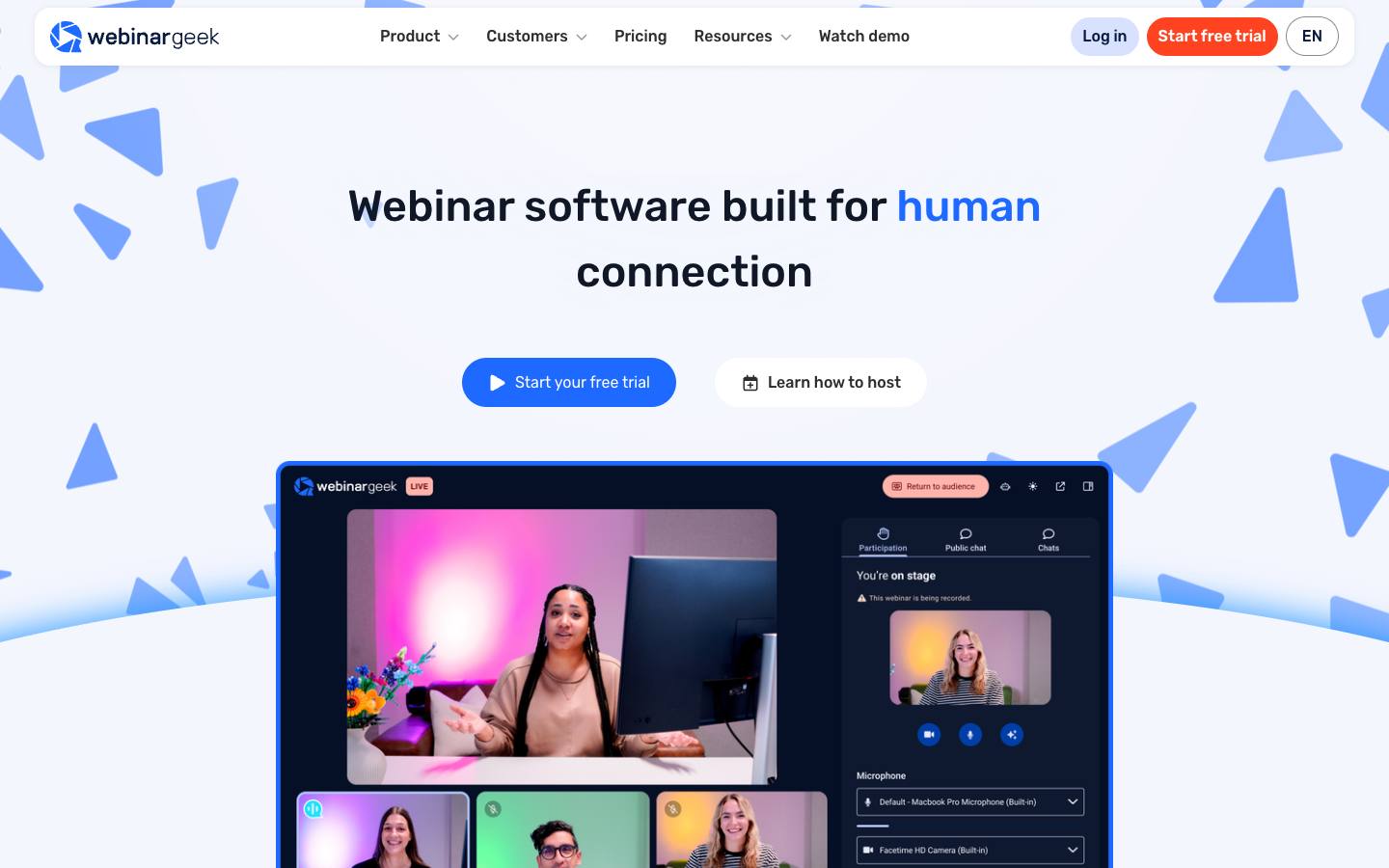
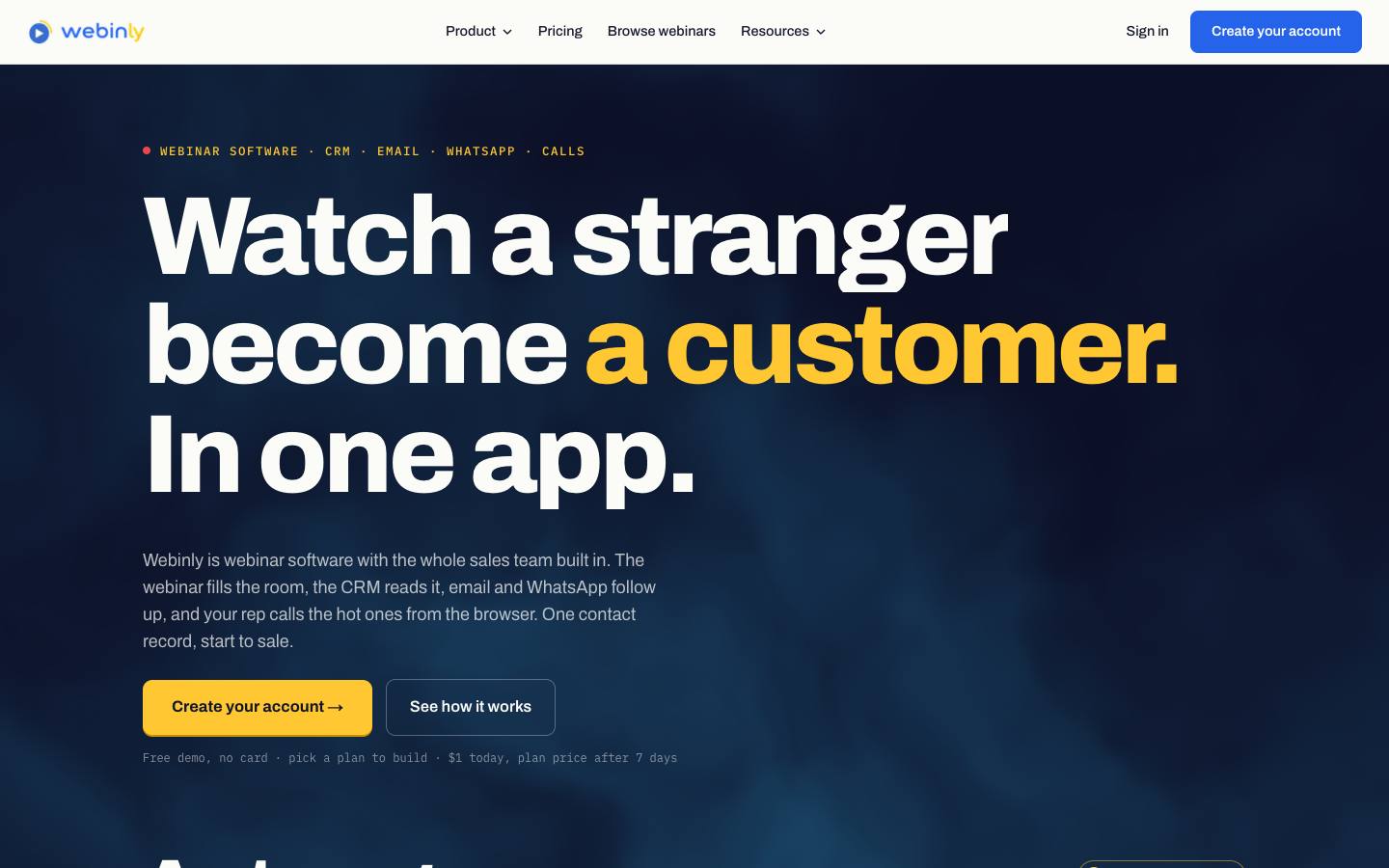
Side by side
“Not published” means we couldn't find it on the vendor's own pages.
WebinarGeekWebinlyStrengths and considerations
WebinarGeek
What stands out
- European company with data hosted in EU datacenters (Amsterdam and Frankfurt)
- Strong support for evergreen automated and on-demand webinars
- Transparent euro pricing tied to viewer capacity
Worth checking
- Webinar-focused; not built for in-person event registration or onsite operations
- No ISO 27001 or SOC 2 certification is stated on its security page
- CRM connectors cost extra on the entry plan
Webinly
What stands out
- Bundles CRM, email, WhatsApp, calling and checkout with the webinar room
- Usage-based overages rather than hard caps
Worth checking
- Very early-stage company with a small published customer base
- Aimed at creator-style selling rather than B2B event marketing with Salesforce or HubSpot sync
- Starter plan has no live webinars
Notable customers
Organizations each vendor names on its own website: customer stories first, then testimonials and logos.
Webinly
None found on its website.
The main difference between WebinarGeek and Webinly
The main difference is what surrounds the webinar. WebinarGeek, founded in 2015 in Zoetermeer, Netherlands, covers live, automated, on-demand, paid and hybrid webinars with registration pages, reminders, analytics and CRM connectors, and hosts data in Amsterdam and Frankfurt. Webinly bundles a built-in CRM with lead scoring, email marketing, WhatsApp no-show reminders, browser calling and in-room checkout with order bumps and upsells into the webinar tool itself.
That makes WebinarGeek the better match for B2B marketing teams who feed leads into an existing stack, and Webinly the match for solo operators and small teams who sell courses or services through webinars. Webinly is aimed at SMBs and runs webinars and virtual events; WebinarGeek spans SMB to enterprise.
WebinarGeek vs Webinly pricing
WebinarGeek publishes two plans (checked October 2026). Premium is €59/month billed yearly (€99 billed monthly) for a base of 75 viewers, scaling up to 1,000, with 100 presenters on stage, 8-hour sessions, 1 user, custom branding and live captions. Enterprise is €349/month billed yearly for up to 5,000 viewers, a custom domain, 3 users, an SLA, a dedicated CSM and Salesforce and HubSpot included. Add-ons start at €10/month, an optional two-hour onboarding costs €495, and a 14-day free trial is available.
Webinly publishes three plans (checked October 2026). Starter is $32.50/month ($390 billed yearly) for one automated or evergreen webinar at a time and 300 evergreen viewers a month; it has no live webinars. Pro is $132.50/month ($1,590 billed yearly) and adds live broadcasting with rooms of 300 and unlimited webinars. Scale is $290.83/month ($3,490 billed yearly) with rooms of 1,000, a custom domain and the API. The first plan costs $1 for 7 days, and usage beyond the caps is billed as overage.
Webinly starts cheaper, but live webinars begin at Pro, so compare WebinarGeek Premium against Webinly Pro for a like-for-like live event.
Features and integrations
WebinarGeek lists 21 integrations, among them HubSpot, Salesforce, Pipedrive, ActiveCampaign, Mailchimp and Zapier, plus webhooks and an API with public docs. HubSpot and Salesforce are paid add-ons on Premium and included on Enterprise. Webinly lists 17, with Stripe, Google Calendar, ActiveCampaign, GoHighLevel and Teachable connecting natively. It has no built-in HubSpot or Salesforce connection, so those CRMs connect through signed webhooks on every plan or the REST API on Scale.
Both offer AI features. WebinarGeek analyzes sessions and viewer behavior and sells an AI Assistant add-on for repurposing recordings. Webinly adds an AI chat assistant, chat translation into 12 languages, an AI page builder and automation drafting. WebinarGeek's attendee pages come in English, Dutch, German, Spanish and French, against English, Arabic and French for Webinly.
On security, WebinarGeek documents a DPA in its terms, a subprocessor list and EU hosting, and we didn't find SOC 2 or ISO 27001 on its public pages. For Webinly we didn't find security documents beyond its API and webhooks.
Which should you choose?
Choose WebinarGeek if you run recurring lead-generation webinars, need Salesforce or HubSpot sync, want EU data hosting, or need phone support and an SLA on Enterprise. Its customers include Databricks, Deutsche Post DHL and Telia Company.
Choose Webinly if you sell through webinars, want checkout, WhatsApp follow-up and a CRM without paying for separate tools, and can live with email-only support. It's a very young company with a small team, so confirm roadmap and data handling before committing.