 vs

WebinarGeek vs WebinarJam
Both are in our Virtual, webinar & streaming category. WebinarGeek is best for European B2B marketing teams running recurring lead-generation webinars; WebinarJam is best for small businesses, coaches and course creators using webinars as a sales channel.
The short answer: WebinarGeek is a Dutch webinar platform with EU data hosting that runs live, automated, on-demand and hybrid sessions from €59/month billed yearly, with HubSpot and Salesforce as add-ons. WebinarJam, published by Genesis Digital LLC in Las Vegas, runs live and replayed webinars from $39/month billed annually and builds timed sales offers into the room. WebinarGeek suits European B2B marketing teams; WebinarJam suits teams selling directly through webinars.
Built from each vendor's own website and our research profiles. How we research
Side by side
“Not published” means we couldn't find it on the vendor's own pages.
WebinarGeekWebinarJamStrengths and considerations
WebinarGeek
What stands out
- European company with data hosted in EU datacenters (Amsterdam and Frankfurt)
- Strong support for evergreen automated and on-demand webinars
- Transparent euro pricing tied to viewer capacity
Worth checking
- Webinar-focused; not built for in-person event registration or onsite operations
- No ISO 27001 or SOC 2 certification is stated on its security page
- CRM connectors cost extra on the entry plan
WebinarJam
What stands out
- Transparent self-serve pricing
- Sales features such as timed offers built into the room
Worth checking
- Session length is capped by plan (1–4 hours)
- Geared to marketers selling online, with few B2B CRM integrations named beyond ActiveCampaign and Zapier
- Attendee caps top out at 5,000
Notable customers
Organizations each vendor names on its own website: customer stories first, then testimonials and logos.
WebinarJam
None found on its website.
The main difference between WebinarGeek and WebinarJam
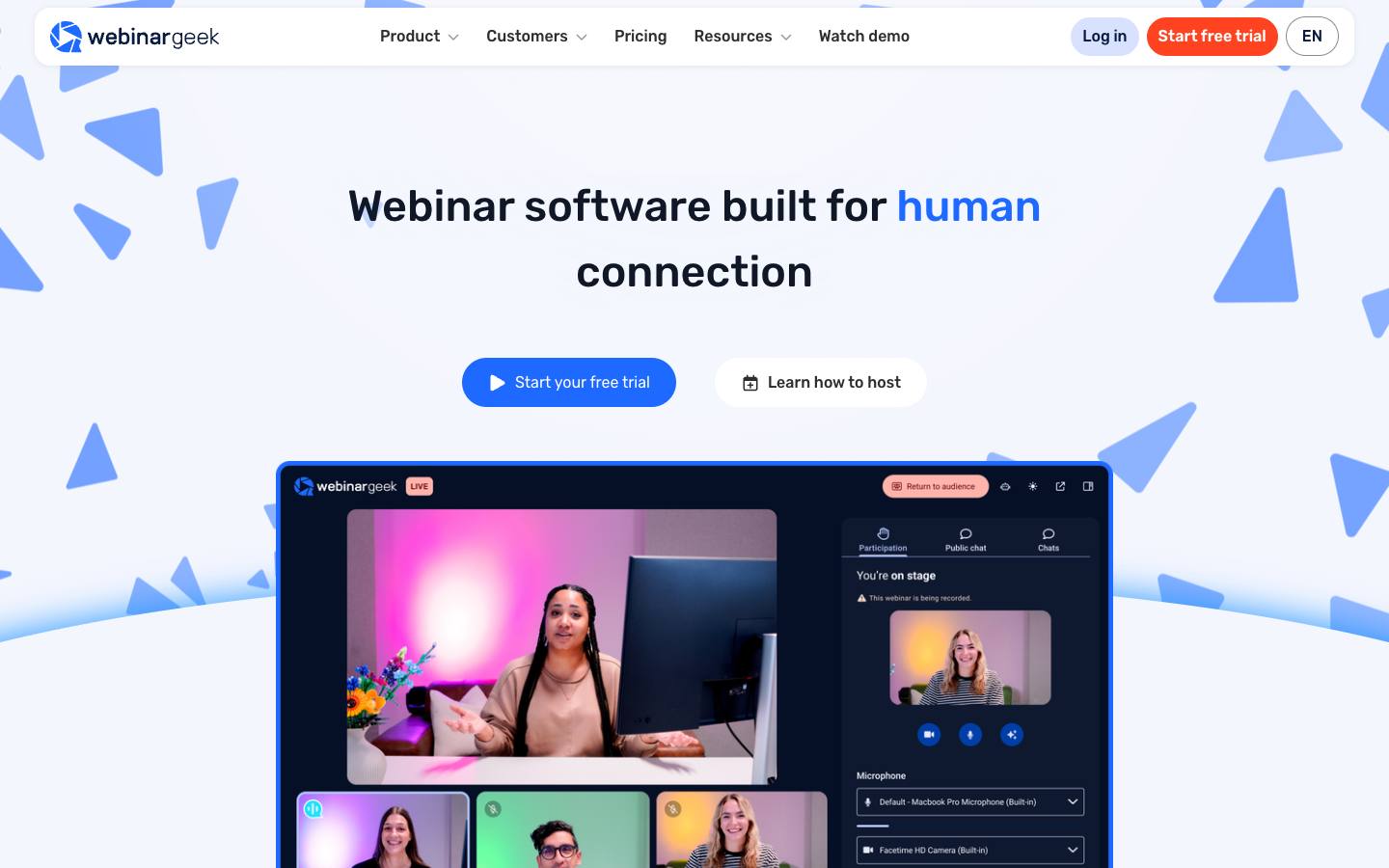
WebinarGeek is built for B2B lead generation with European data handling, and WebinarJam is built for selling. WebinarGeek, founded in 2015 in Zoetermeer, Netherlands, runs live, automated, on-demand, recurring, paid and hybrid webinars with registration pages, reminder emails, per-attendee analytics and restreaming. Its servers sit in Amsterdam and Frankfurt, and its customers include Databricks, Deutsche Post DHL, Telia Company and Baumer Group.
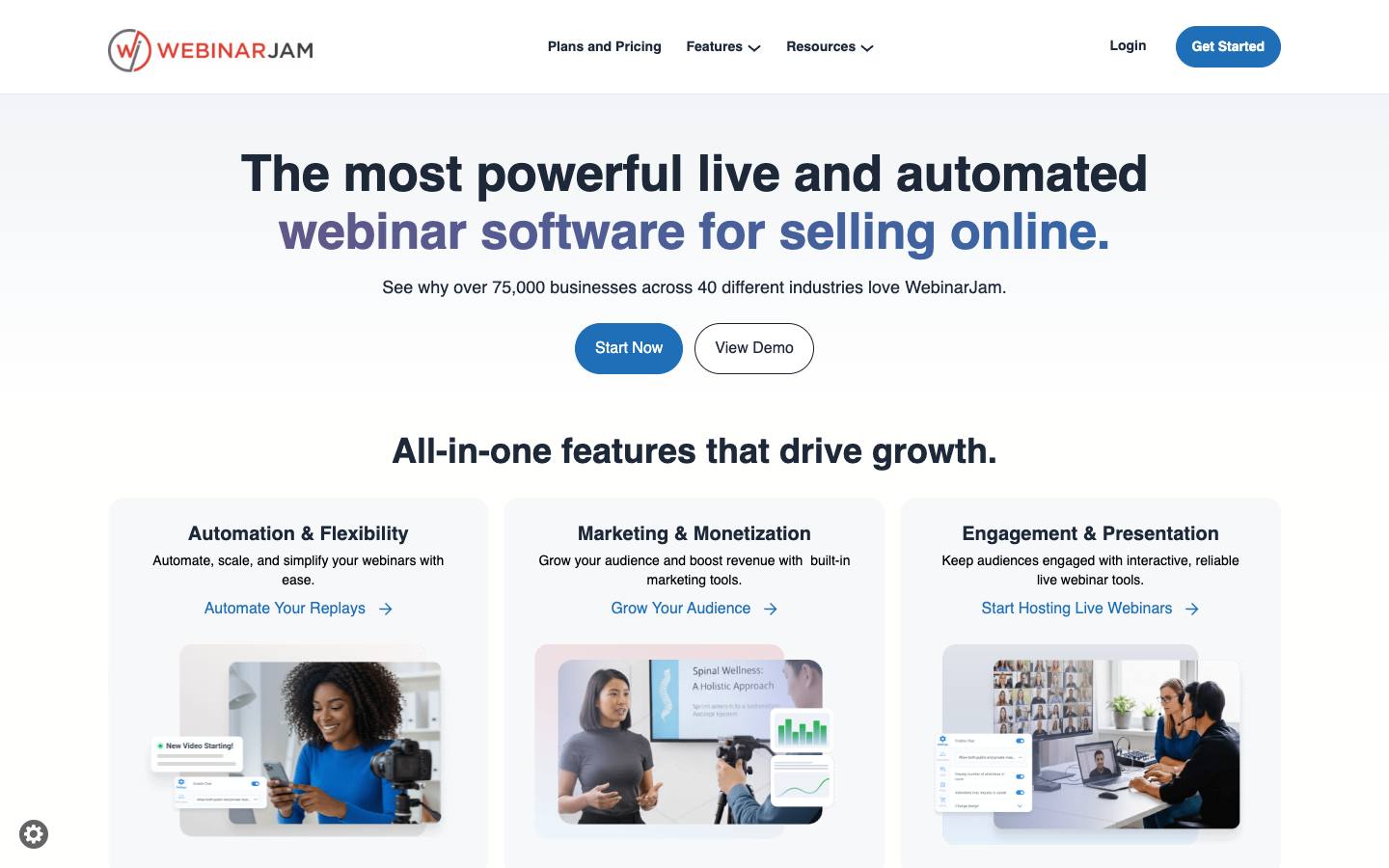
WebinarJam is owned by Genesis Digital LLC, which also owns EverWebinar and Kartra. It offers browser-based live rooms, automated replays and timed purchase offers shown during the presentation, and it's aimed at coaches, course sellers and small businesses. It covers webinar and virtual formats; WebinarGeek adds hybrid.
WebinarGeek vs WebinarJam pricing
Both publish prices and scale them by audience size. WebinarGeek's Premium is €59/month billed yearly (€99 billed monthly) for a base of 75 viewers, rising as you add capacity up to 1,000, with add-ons from €10/month; Enterprise is €349/month billed yearly for up to 5,000 viewers, 3 users, a custom domain and the Salesforce and HubSpot connectors. An optional two-hour onboarding costs €495. WebinarJam's Starter is $39/month billed annually ($49 monthly) for 100 attendees, 1 host and 1-hour sessions. Basic is $79 for 500 attendees, Professional $229 for 2,000 and Enterprise $379 for 5,000, all billed annually. Prices checked October 2026.
WebinarJam's annual billing saves up to 22%, and Basic and above include EverWebinar for automated sessions. WebinarGeek offers a 14-day trial. WebinarJam's 14-day trial costs $1, and it adds a 30-day money-back guarantee, and neither product has a free plan. Prices checked October 2026.
Features and integrations
The integration gap is the practical difference for B2B teams. WebinarGeek lists 21 integrations, including HubSpot, Salesforce, Pipedrive, ActiveCampaign, Mailchimp, Zapier, Stripe and Mollie. On Premium, HubSpot and Salesforce are paid add-ons, while Enterprise includes them. It also documents webhooks and a public API. WebinarJam lists 20 integrations, mostly email and marketing platforms such as ActiveCampaign, Keap, Ontraport, AWeber and GetResponse. It says it has no native HubSpot integration, so HubSpot and Salesforce connect through Zapier or n8n, which need a paid plan.
On security, we didn't find a SOC 2 Type II report or ISO 27001 certificate on either vendor's public pages. WebinarGeek publishes a subprocessor list and says it stores user data in Amsterdam, and WebinarJam provides a DPA on request. WebinarGeek also includes live captions on Premium and offers attendee pages in several languages on Enterprise.
Which should you choose?
Choose WebinarGeek if you're a European B2B marketing team that wants evergreen and on-demand webinars alongside live ones, EU-hosted data and direct CRM connectors. Budget for the add-on fees on Premium, or for Enterprise, if HubSpot or Salesforce sync matters.
Choose WebinarJam if webinars are mainly a sales channel for you and you want timed offers in the room, published prices and email-platform integrations. Check session limits first, because they run from 1 to 4 hours by plan.