 vs

TRAKKER vs Zenus
Both are in our Measurement & analytics category. TRAKKER is best for trade show organizers and venues wanting floor-level attendee flow analytics; Zenus is best for trade show organisers needing hard engagement data to support exhibitor and sponsor renewals.
The short answer: TRAKKER is a 2025 Berlin startup that tracks visitor movement with on-site positioning sensors, quoted per square meter per day against your floor plan. Zenus, founded in 2015 and based in Austin, uses cameras for anonymous impressions, dwell time and sentiment, with Dell, PCMA and IAEE among its customers. Neither publishes a price. Choose Zenus for a track record, TRAKKER for opt-in, stand-level flow data.
Built from each vendor's own website and our research profiles. How we research
Side by side
“Not published” means we couldn't find it on the vendor's own pages.
TRAKKERZenusStrengths and considerations
TRAKKER
What stands out
- Measures what happens between entry and exit on the show floor, not just check-ins
- Consent-tiered design with no facial recognition and no personal data by default
- Can run inside an organizer's existing event app via SDK
Worth checking
- Very early-stage company (founded 2025) with only an anonymised case study and illustrative metrics published
- No named customers yet
- Requires on-site deployment and floor-plan based quoting
Zenus
What stands out
- Provides objective, sensor-based engagement data rather than self-reported surveys or badge scans
- Claims anonymous analysis without collecting personal data
- Recognised with event-industry innovation awards
Worth checking
- Camera-based analytics may need legal and attendee-communication review in some regions, even when anonymous
- No formal security certifications listed
- Hardware deployment adds onsite logistics and cost
Notable customers
Organizations each vendor names on its own website: customer stories first, then testimonials and logos.
TRAKKER
None found on its website.
The main difference between TRAKKER and Zenus
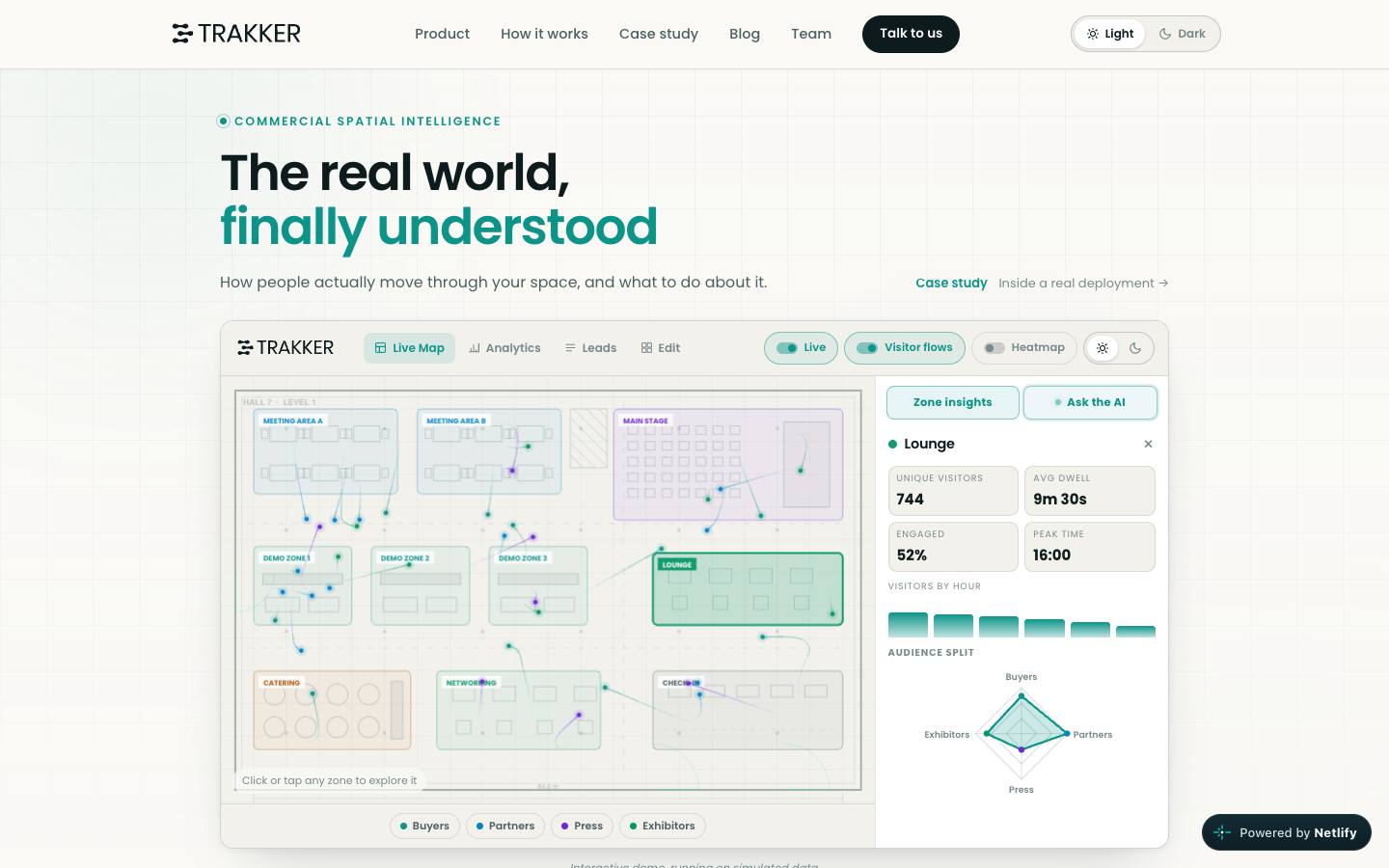
TRAKKER measures where badge-carrying visitors go, while Zenus measures how crowds look and react. TRAKKER uses sub-meter positioning to attribute visits to an individual stand, classifies approach, glance, dwell, hesitation, return and bounce patterns, and shows heatmaps, engagement funnels and a ranked visitor table live. Visitors opt in by scanning a badge QR code, with no app download.
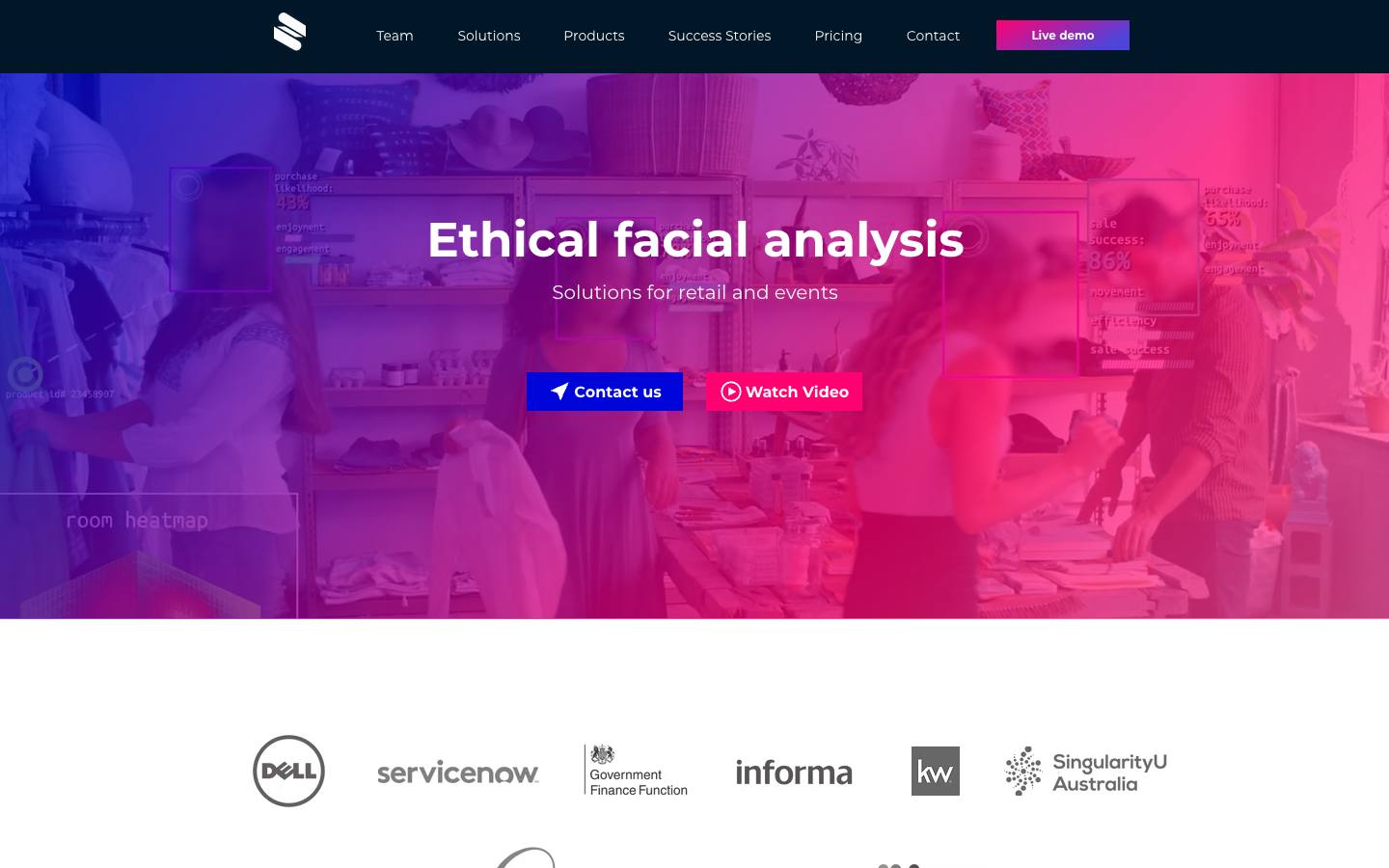
Zenus places smart cameras around floors and booths to measure impressions, dwell time, age range, sex and positive sentiment, without storing identifiable personal data. It adds return-on-engagement reports for organizers, sponsors and exhibitors, plus exhibitor lead capture and dynamic booth displays. Both serve trade show organizers and exhibitors, so they compete for the same budget, but the data differs: consented, per-visitor journeys on one side, anonymous group metrics on the other.
TRAKKER vs Zenus pricing
Neither vendor publishes a starting price, so you'll need quotes for the same event. TRAKKER prices on usage per square meter per day, quoted against your floor plan, and says a single hall for a single day is possible. It also offers pilot and design-partner slots.
Zenus quotes depend on camera coverage. It offers a free consultation and a floor-plan coverage estimator that works out how many cameras an event needs. Hardware is part of the cost: you can use its plug-and-play camera kit or connect existing cameras, and it says a camera takes under 12 minutes to set up.
Neither has a free plan or free trial. Ask each for a price on your largest hall, since both scale with floor area or camera count.
Features and integrations
TRAKKER lists 4 integrations, all of them its own data routes: a REST API, webhooks, exports to CRM, BI tools and data warehouses, and an SDK that lets it run inside an organizer's existing event app. Its optional visitor co-pilot app gives attendees routing, nearby recommendations and a post-event recap. It also has a natural-language assistant for questions about zones, dwell time and leads, and intent inference that predicts where visitors are heading. It runs in-person events only.
Zenus lists 2 integrations: its API, for building custom applications on the analytics, and existing customer cameras connected to its device. Results appear on a live dashboard. Neither product names a CRM connector, and neither lists Salesforce or HubSpot. Zenus covers in-person and virtual events.
On compliance, TRAKKER documents GDPR-by-design with a four-tier consent model, a DPA signed before go-live and customer-chosen server locations. Zenus documents CCPA service-provider status, and we didn't find a SOC 2 report for either on public pages (checked October 2026). Camera-based analytics may need legal and attendee-communication review in some regions.
Which should you choose?
Choose Zenus if you're a large organizer or exhibitor who wants a vendor with years behind it. Founded in 2015 and venture-backed ($3.2M seed in 2022, checked October 2026), it shows Freeman, Informa, PCMA, IAEE, IMEX Group, Oracle and PwC among its customers, and it has help desk support Monday to Friday, 9am to 5pm CT with after-hours handling for severity 1 and 2 issues.
Choose TRAKKER if you want stand-level visit attribution, consented visitor data and exports into your own BI stack, particularly with European privacy requirements. Weigh the risks: it's a company of 2 to 10 people founded in 2025, it has no named customers yet, and it requires on-site sensor deployment quoted against the floor plan. The founding team supports planning and live execution directly.