 vs

Tagvenue vs WIFT
Both are in our Venue sourcing category. Tagvenue is best for event and office managers sourcing venues for meetings, offsites, dinners and parties in major cities; WIFT is best for venue sourcing specialists and planners comparing hotel meeting rooms for produced general sessions.
The short answer: Tagvenue and WIFT both sit in venue sourcing but do different jobs. Tagvenue is a marketplace listing more than 22,000 spaces where planners search, compare and book, free for planners. WIFT is a single-purpose web tool that calculates how many people a meeting room holds once stage, screens and aisles are counted. Teams could shortlist on Tagvenue and check fit with WIFT.
Built from each vendor's own website and our research profiles. How we research
Side by side
“Not published” means we couldn't find it on the vendor's own pages.
TagvenueWIFTStrengths and considerations
Tagvenue
What stands out
- Large venue inventory with especially deep coverage in London
- Transparent upfront pricing and verified reviews for venue comparison
- Free to use for planners, with no membership fees for venues
Worth checking
- A venue sourcing marketplace, not event management or marketing software for planners
- Coverage is concentrated in six countries and strongest in UK cities
- Commission rate charged to venues isn't published
WIFT
What stands out
- Solves one specific sourcing problem: overstated venue capacity
- Built by founders from live event production and event software backgrounds
Worth checking
- Single-purpose planning tool rather than an event management platform
- Very early-stage company with no named customers or integrations
- Pricing model beyond the free trial isn't published
Notable customers
Organizations each vendor names on its own website: customer stories first, then testimonials and logos.
The main difference between Tagvenue and WIFT
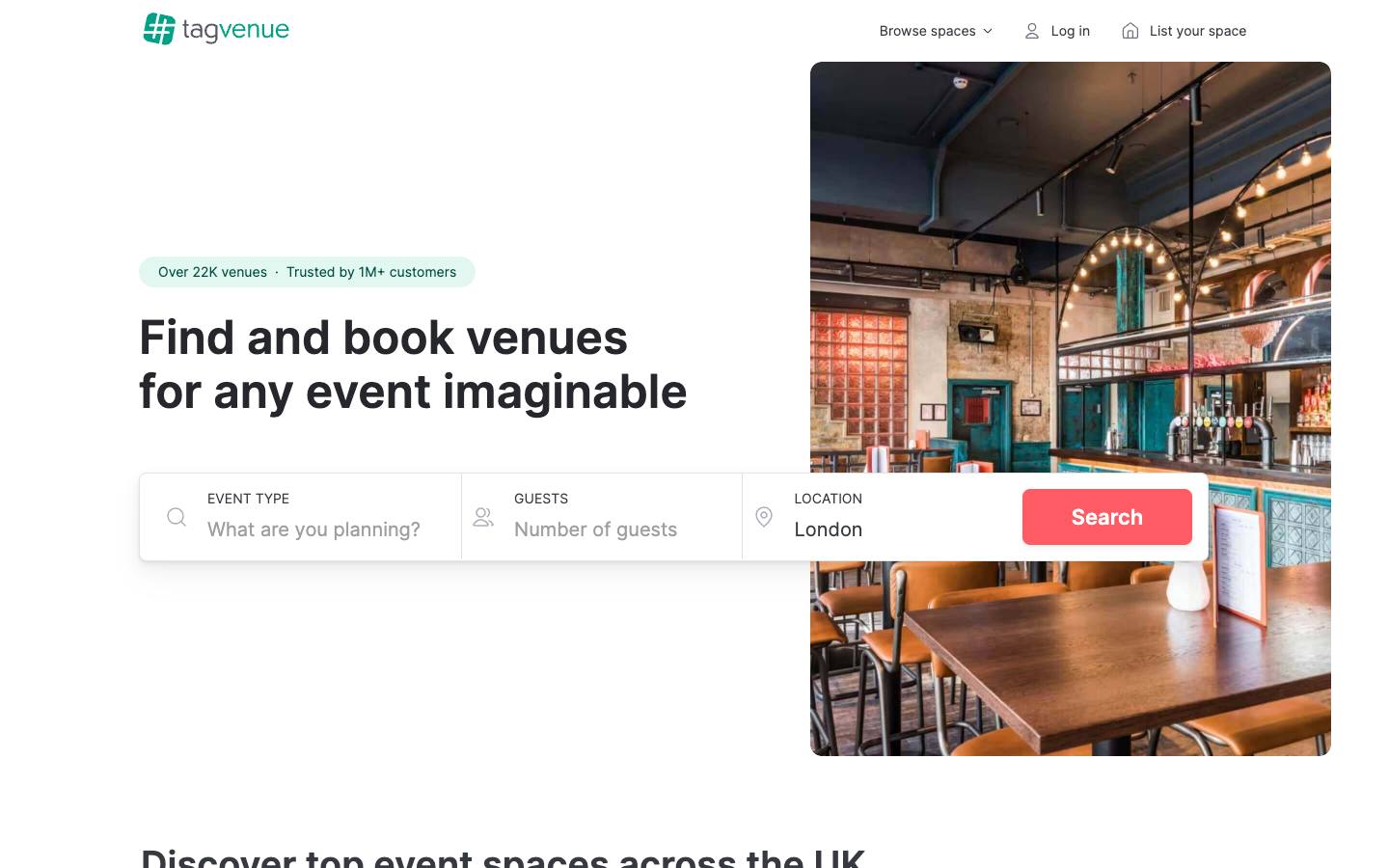
These two don't compete head to head. Tagvenue, founded in London in 2015, is where you find a room: you filter by event type, guest count, location, budget and cancellation terms, see indicative prices and venue response times, message the venue manager and pay through a free account. It reports more than 100,000 verified reviews and coverage across the UK, Ireland, the US, Canada, Australia and Singapore, with the deepest inventory in London.
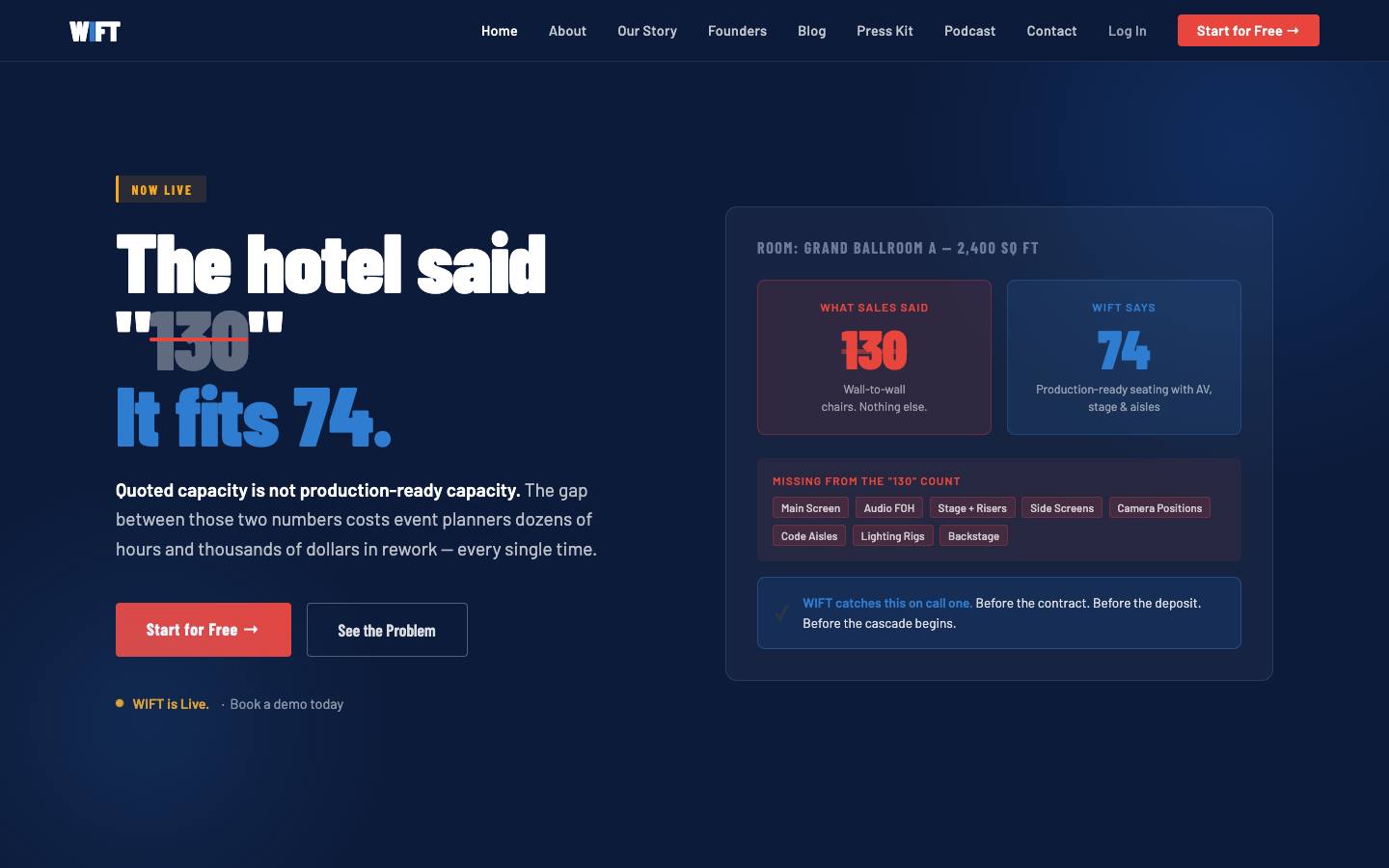
WIFT, a Minnesota company founded in 2026, doesn't find venues at all. You enter a room's square footage, dimensions and seating configuration plus your production needs (stage, screens, front-of-house audio, camera positions, code-compliant aisles) and it returns a production-ready capacity and a shareable fit-check diagram. It targets the gap between the seating-only number a venue quotes and what a produced general session can really hold.
Where each one fits in a venue search
Use Tagvenue when you're sourcing meeting, offsite, dinner or conference space in the cities it covers and want upfront pricing and reviews. It's free for planners; venues list at no cost and pay a commission after the event, at a rate Tagvenue doesn't publish. It offers a free plan but no free trial, and it lists 4 integrations on the venue side: Stripe, Google Calendar, Microsoft Outlook and iCal.
Use WIFT when you've already got a hotel meeting room in mind and need to confirm a staged session will fit before signing a contract, especially if an AV team is involved. WIFT doesn't publish a starting price; it offers a 7-day free trial with no credit card, and subscriptions run month to month or annually. As an early-stage company it names no customers and lists only Stripe, for billing.
Use both in sequence: shortlist spaces on Tagvenue, then run the finalists through WIFT before you commit. Neither replaces registration or marketing software, and Tagvenue itself is a marketplace rather than planner-side event management software.