 vs

Peerspace vs WIFT
Both are in our Venue sourcing category. Peerspace is best for teams booking small offsites, workshops or pop-ups in unconventional spaces; WIFT is best for venue sourcing specialists and planners comparing hotel meeting rooms for produced general sessions.
The short answer: Peerspace and WIFT do different jobs in venue sourcing. Peerspace is a marketplace where you book unique spaces by the hour, priced per listing by each host. WIFT is a web tool that calculates how many attendees a hotel meeting room holds once stage, screens and aisles are counted, with a 7-day free trial. Use WIFT to vet a room, Peerspace to book a space.
Built from each vendor's own website and our research profiles. How we research
 wift.aiVisit ↗
Side by side
“Not published” means we couldn't find it on the vendor's own pages.
PeerspaceWIFTStrengths and considerations
Peerspace
What stands out
- Large inventory of non-traditional venues bookable by the hour
- Self-serve instant booking for small groups
- Bundled venue, food and service option introduced in 2026
Worth checking
- Filed for Chapter 11 (Subchapter V) in August 2026; check booking protections and contract terms
- A venue marketplace, not event management or registration software
- Venue quality and policies vary by individual host
WIFT
What stands out
- Solves one specific sourcing problem: overstated venue capacity
- Built by founders from live event production and event software backgrounds
Worth checking
- Single-purpose planning tool rather than an event management platform
- Very early-stage company with no named customers or integrations
- Pricing model beyond the free trial isn't published
The main difference between Peerspace and WIFT
Peerspace sells access to venues, while WIFT checks whether a venue fits your production. Peerspace is a marketplace for lofts, studios, rooftops, homes and meeting rooms, searched by activity, city and date, with hourly booking through the website or app and messaging to hosts about amenities and technical specs. In 2026 it added All Inclusive Venues, one reservation covering space, catering and service.
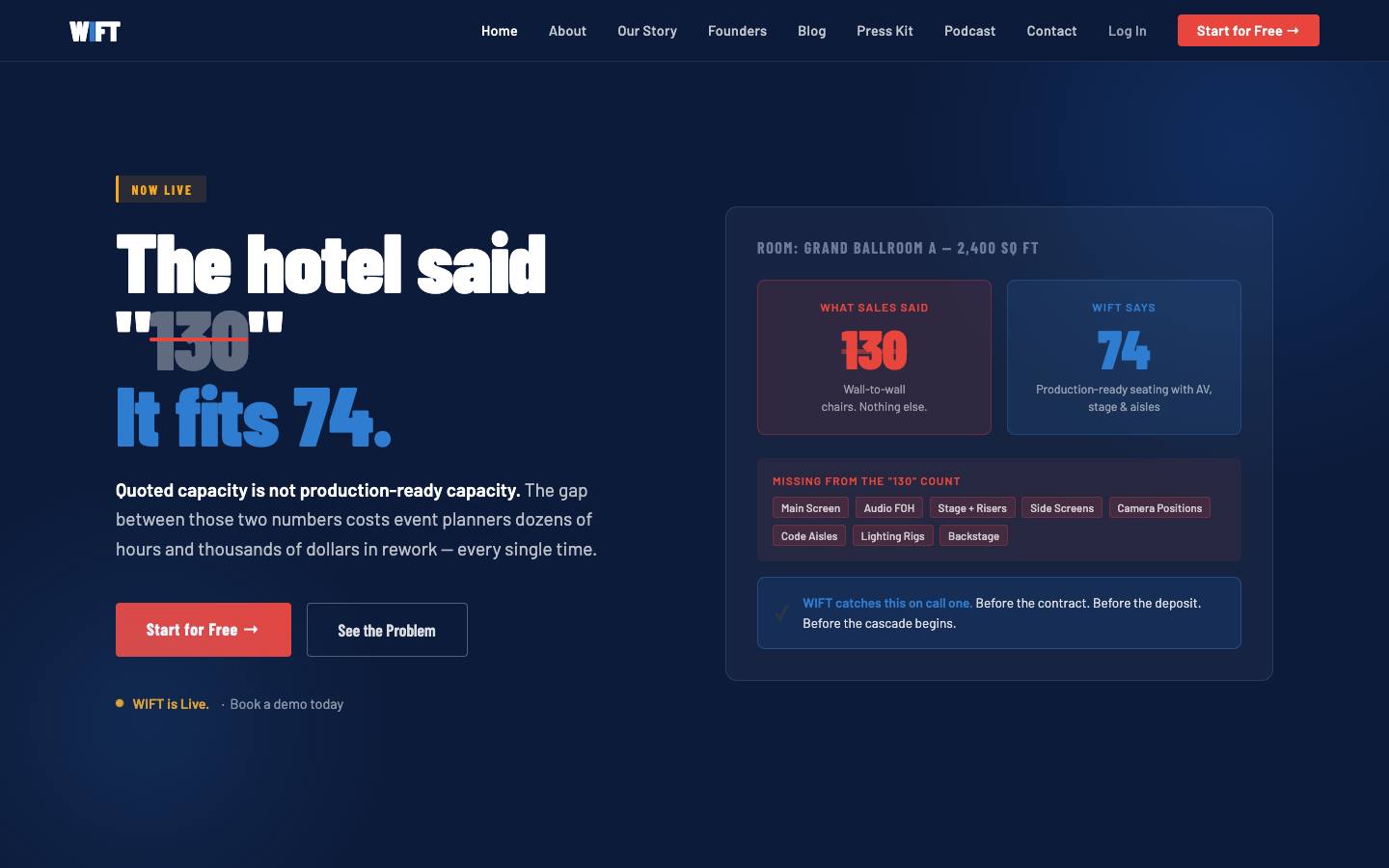
WIFT takes room dimensions, square footage and seating configuration, then calculates production-ready capacity after stage, screens, front-of-house audio, camera positions and code-compliant aisles. It exports a shareable fit-check diagram for clients, venues and AV teams. It doesn't book anything. It was founded in 2026 in Minnesota and is independent.
Peerspace is a better fit for small offsites, workshops, pop-ups and shoots in unconventional spaces. WIFT is aimed at planners and AV teams comparing hotel meeting rooms for produced general sessions, such as conferences and sales kickoffs.
Pricing and what to check
Neither publishes a starting price. Peerspace is priced per event: each host sets an hourly rate, and Peerspace adds service fees that aren't shown on its homepage. WIFT is priced per user, offers a 7-day free trial with no credit card, and sells month-to-month or annual subscriptions. Peerspace has no free trial.
The company filed a voluntary Subchapter V Chapter 11 case in August 2026, which the company said was to resolve pending litigation and wouldn't affect bookings. Check booking protections and contract terms before committing a large booking. Neither product lists a CRM or marketing integration, and we didn't find SOC 2 or ISO 27001 documents on either one's public pages.
When to use one, the other or both
Use both in sequence if you source hotel ballrooms and also book offbeat spaces. Run candidate rooms through WIFT before contracts are signed, so a quoted seating number doesn't shrink once the stage goes in, and use Peerspace when the brief is a small, informal gathering that a host can accommodate by the hour.
Neither replaces event management or registration software.