 vs

Sched vs SpeakerStacks
Both are in our Agenda & speaker management category. Sched is best for conferences and festivals with large, multi-track agendas; SpeakerStacks is best for B2B marketers and executives who speak at conferences and need to attribute pipeline to talks.
The short answer: Sched is a full agenda, registration and ticketing platform whose Launch plan lists at $100 a month billed annually for 250 attendees. SpeakerStacks does one narrow job, turning each speaking slot into QR-code lead capture, and has a free plan. They solve different problems, so conference organizers could use Sched to run the program and SpeakerStacks to measure what speakers generate.
Built from each vendor's own website and our research profiles. How we research
Side by side
“Not published” means we couldn't find it on the vendor's own pages.
SchedSpeakerStacksStrengths and considerations
Sched
What stands out
- Strong footprint in education and professional development, including FERPA-oriented features and ClassLink
- Unlimited events per plan with small events (under 50 attendees) free
- Published discounts for nonprofits, education and government plus a 60-day money-back guarantee
Worth checking
- Plan prices aren't displayed publicly; expect add-ons for native apps, support and reporting
- Few native CRM or marketing automation integrations for B2B marketing teams
- ISO 27001 is listed as pending; SAML SSO was marked coming soon
SpeakerStacks
What stands out
- Focused specifically on speaker-driven lead capture, a gap most event platforms leave open
- Organizer plan lets an event offer lead capture to every speaker as a value-add
- Low entry price with a free tier
Worth checking
- Native CRM sync is limited to HubSpot; other CRMs need Zapier or the API
- Early-stage company with organizer pricing marked as early access
- No named customers or security certifications on the site
Notable customers
Organizations each vendor names on its own website: customer stories first, then testimonials and logos.
The main difference between Sched and SpeakerStacks
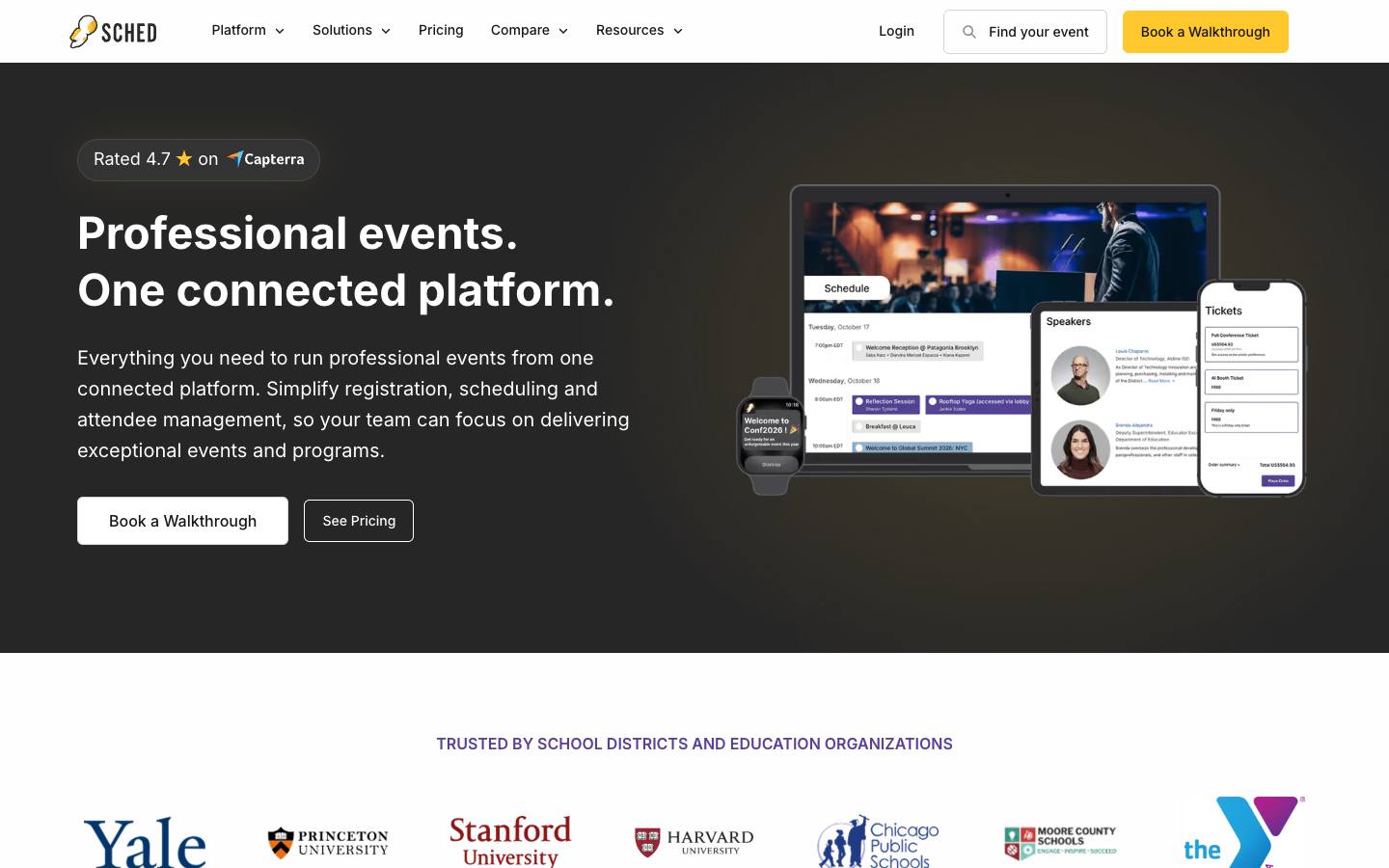
Sched builds the event itself: session schedules with speaker profiles, a call for papers, registration and ticketing, a website and web and mobile app, check-in with badges, and sponsor lead retrieval. It's strong in education and professional development, where it tracks attendance hours and issues certificates.
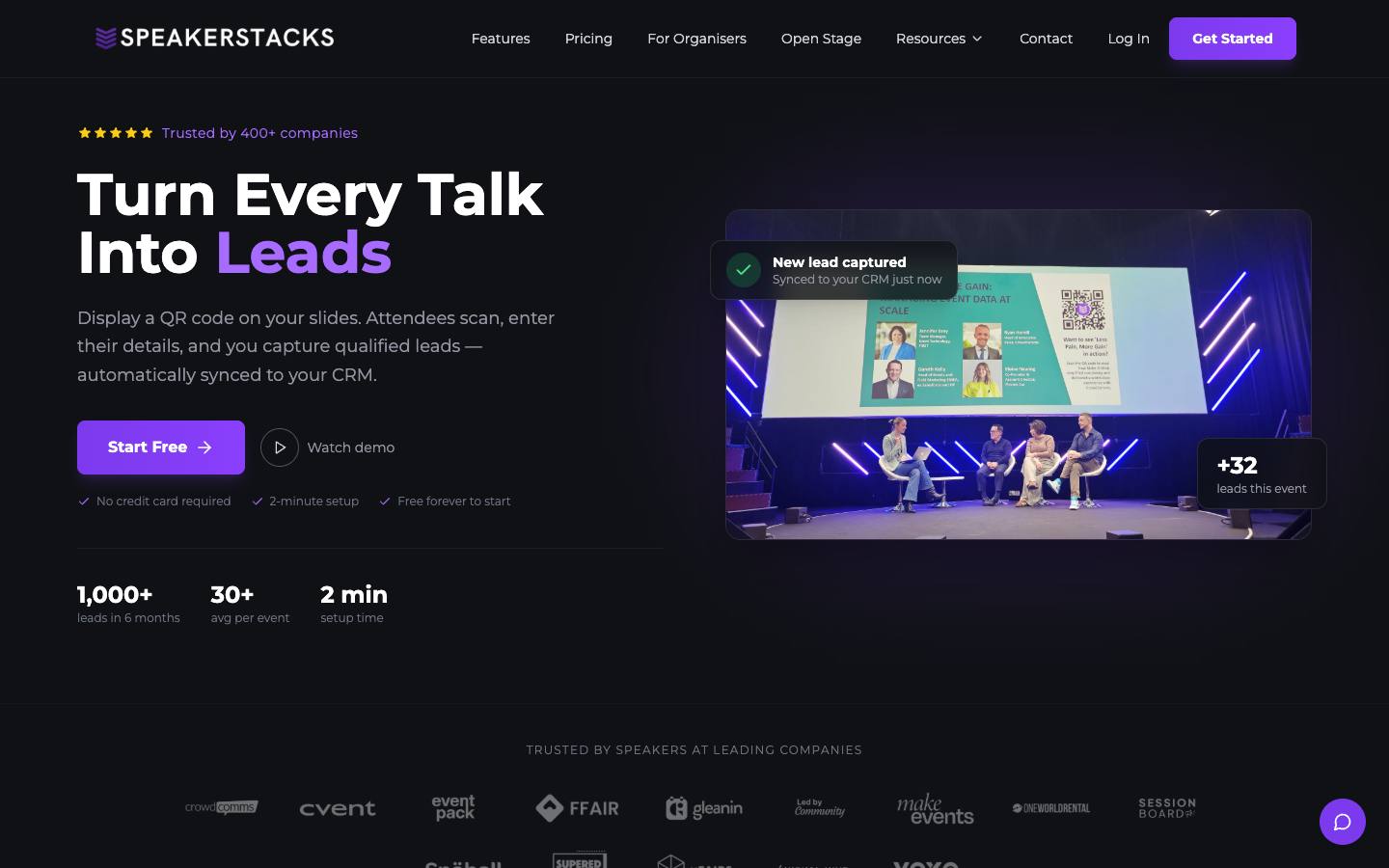
SpeakerStacks starts from the speaker. A speaker puts a QR code on a slide, attendees opt in on a branded landing page, and leads sync to the CRM with consent captured. An organizer plan lets an event invite every speaker and report by session. It doesn't sell tickets or build agendas, so the two don't substitute for each other.
Sched vs SpeakerStacks pricing
Sched's published Launch plan is $100 a month billed annually at 250 attendees, shown at $50 under a 50%-off promotion. Boost is $250 ($125 promo) and adds networking, badges and lead retrieval; Ultra is $376 ($188 promo) and adds onboarding and custom reporting. Enterprise is quoted. There's a free trial of unstated length (checked October 2026).
SpeakerStacks lists $49 a month for Professional/Teams and organizer plans from $1,249 a year, with euro prices shown where available. Its free plan covers one live session with three visible leads; unlocking the rest is a paid one-time fee. There's no free trial (checked October 2026).
Which to use, or both
Pick Sched to run a multi-track conference or professional development day. It lists integrations such as Eventbrite, Stripe and Zoom, but no CRM connectors, and it documents SOC 2 Type II.
Pick SpeakerStacks if your goal is pipeline from talks. It syncs natively with HubSpot and reaches other tools through Zapier or its API. It's an early-stage company with organizer pricing marked as early access.