 vs

Hyperspace vs Kaltura
Both are in our Virtual, webinar & streaming category. Hyperspace is best for teams wanting an immersive 3D virtual venue for conferences, expos or product demos; Kaltura is best for enterprises and universities that want webinars and virtual events tied into a central video library and portal.
The short answer: Hyperspace builds browser-based 3D virtual venues with avatars, now alongside AI roleplay training, and quotes prices on request. Kaltura runs webinars and virtual events on top of an enterprise video platform, with Webinars Business from $150/month billed annually and Marketo, HubSpot and Salesforce connections. Choose Hyperspace for an immersive 3D venue; choose Kaltura for webinars and on-demand video libraries.
Built from each vendor's own website and our research profiles. How we research
Side by side
“Not published” means we couldn't find it on the vendor's own pages.
HyperspaceKalturaStrengths and considerations
Hyperspace
What stands out
- Immersive 3D venues accessible in a browser and on VR headsets
- Same platform serves virtual events and AI-driven training
- No-code building with templates
Worth checking
- Homepage positioning now centres on AI roleplay and training, so event features may receive less investment
- Pricing isn't published
- Some VR/AR experiences need extra hardware
Kaltura
What stands out
- Built on a mature enterprise video platform, so event content flows straight into video portals and libraries
- Strong accessibility toolkit including captioning, dubbing and sign-language layouts
- Expanding agentic AI stack via acquisitions of eSelf.ai and PathFactory (announced March 2026)
- Published entry price for webinars
Worth checking
- Primarily a virtual/webinar product; no in-person registration, check-in or onsite tooling
- Few marketing integrations are named publicly beyond Marketo and HubSpot
- Kaltura is a multi-product video company, so the events product competes for roadmap attention
Notable customers
Organizations each vendor names on its own website: customer stories first, then testimonials and logos.
The main difference between Hyperspace and Kaltura
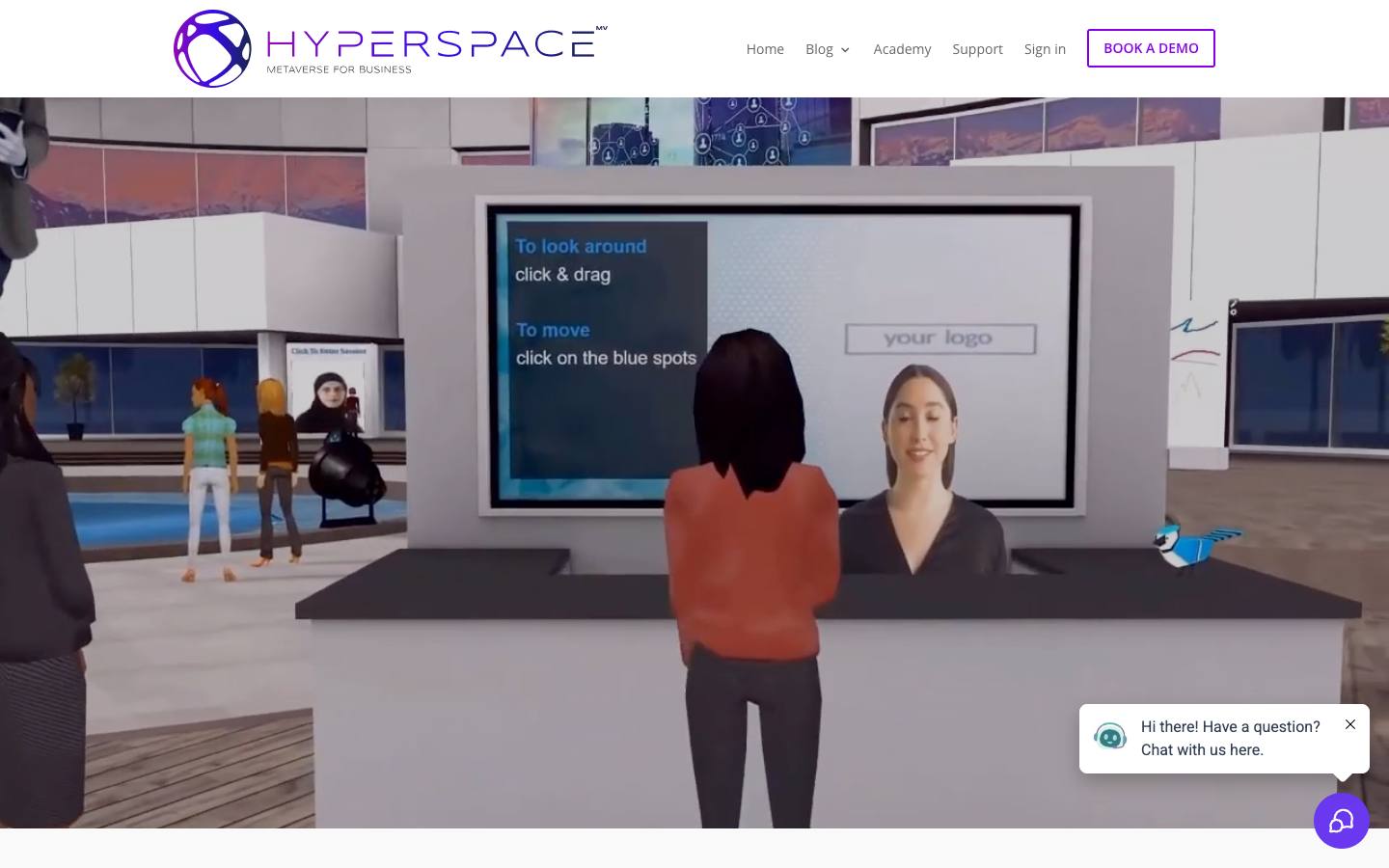
The main difference is the experience each one builds. Hyperspace is a no-code 3D space: attendees appear as avatars in themed venues with voice and text chat, breakout lounges, Q&A, polls and ticketing, and the spaces run in a browser on phones, laptops and VR or AR headsets. Its homepage now leads with AI-avatar roleplay and training, so buyers focused on events should ask how much of the roadmap still goes to them.
Kaltura treats an event as video content. Its Events Platform and Kaltura Webinars handle live, pre-recorded and simulive-to-live sessions, branded event sites and cross-event analytics, and then turn sessions into on-demand video managed in Kaltura's content platform. It also lists live and on-demand captioning, sign-language dual screens and dubbing. Kaltura is a public company founded in 2006 with 501-1,000 employees; Hyperspace is independent, based in Phoenix, and doesn't publish a founding year or headcount.
Both sit in the virtual, webinar and streaming category and both target mid-market and enterprise teams, but Kaltura also runs hybrid and in-person events and SMB fit, where Hyperspace lists virtual and webinar only.
Hyperspace vs Kaltura pricing
Hyperspace doesn't publish prices. Access starts with a demo request, there's no free plan or trial, and the site suggests beginning with a single-use-case pilot to scope the work. Budget by asking for a quote that names the number of events, attendees and any VR or training use.
Kaltura publishes webinar pricing, checked October 2026. Webinars Business is $150/month billed annually or $299/month billed monthly, and includes 2 admins, 5 speakers and moderators, 1,000 registrants, unlimited single-session webinars and the Marketo and HubSpot integrations. Enterprise is custom and adds 5+ admins, unlimited speakers, custom registrant limits, unlimited sessions and SSO. The full virtual events platform is also quoted, and webinars carry a 30-day money-back guarantee rather than a free trial. Kaltura's page labels annual billing as 25% off, though $150 against $299 works out to about half.
So a small webinar program can price Kaltura today, while a 3D venue from Hyperspace needs a sales conversation. Neither lists a free plan.
Features and integrations
The overlap is live engagement: both offer chat, Q&A and polling, and both support networking, through breakout lounges in Hyperspace and leaderboards, badges, quizzes and reactions in Kaltura. Hyperspace adds 50+ templates in a visual editor, custom 3D model import and ticket tiers with promo codes. Kaltura adds self-serve webinars with registration pages and email templates, heat-map analytics, an AI assistant for agendas and descriptions, and agentic avatars that answer audience questions in 50+ languages from approved content.
Integrations differ most. Hyperspace claims 100+ integrations with learning and business tools on its homepage but names none, apart from LMS embedding mentioned by a customer. Kaltura names Marketo, HubSpot and Salesforce, plus Microsoft Teams, Webex, SharePoint, Verbit, 3Play Media and LMS connections through KAF. It also has a public developer portal, though API access is an add-on on webinar plans.
On security, Kaltura documents ISO/IEC 27001:2022, a DPA with EU standard contractual clauses, regional EU hosting on request and a WCAG 2.2 AA accessibility statement. For Hyperspace we found only an enterprise SSO mention and a GDPR statement on the homepage. Neither shows a SOC 2 Type II report on public pages.
Which should you choose?
Choose Hyperspace if the venue itself is the point: a virtual conference, expo or product demo where attendees walk around as avatars, or an L&D team that wants events and scenario-based training on one platform. Customers include Novartis, Intuit, Fujitsu and Banco Santander. Plan for a quote, English-only interface and extra hardware for some VR experiences.
Choose Kaltura if webinars and virtual events should feed a lasting video library, if you need captioning, dubbing or sign-language layouts, or if your marketing stack runs on HubSpot, Marketo or Salesforce. Customers include Salesforce, Adobe, Bloomberg and Thomson Reuters. Kaltura is a virtual and webinar product with no onsite check-in tooling, so in-person events need a separate tool.