 vs

Dryfta vs Rhythm Software
Both are in our Abstract & conference management category. Dryfta is best for universities and scholarly associations running research conferences with calls for papers; Rhythm Software is best for professional and trade associations that want events tied directly to member data.
The short answer: Dryfta is a conference platform for research events, with abstract submission, blind peer review and published prices from $1,499/yr (Small) and $14,999/yr (Medium). Rhythm Software is an association management system with event apps added, quote-based, so meetings run on the member record. Pick Dryfta for scholarly conferences with calls for papers; pick Rhythm if your association wants one system for members and events.
Built from each vendor's own website and our research profiles. How we research
Side by side
“Not published” means we couldn't find it on the vendor's own pages.
DryftaRhythm SoftwareStrengths and considerations
Dryfta
What stands out
- Abstract submission, peer review and abstract-book publishing are core, not bolt-ons
- Optional on-premise, self-hosted deployment for institutions with strict data rules
- Published annual pricing tiers with stated capacity limits
Worth checking
- Best suited to academic and research conferences; corporate marketing teams may find CRM and pipeline features thin
- Several capabilities (virtual sessions, event app, white-label, SSO) cost extra on top of annual plans
- Company leadership, headquarters and size aren't disclosed on the website
Rhythm Software
What stands out
- Events, abstracts, exhibits and awards sit natively in the AMS on one member record
- Partner marketplace covering LMS, community and email tools common in associations
- Founders with long association-technology backgrounds
Worth checking
- Only relevant to associations; not a fit for corporate event marketing teams
- No native mobile event app described; relies on mobile-friendly microsites
- Pricing and security certifications aren't published
Notable customers
Organizations each vendor names on its own website: customer stories first, then testimonials and logos.
Dryfta
The main difference between Dryfta and Rhythm Software
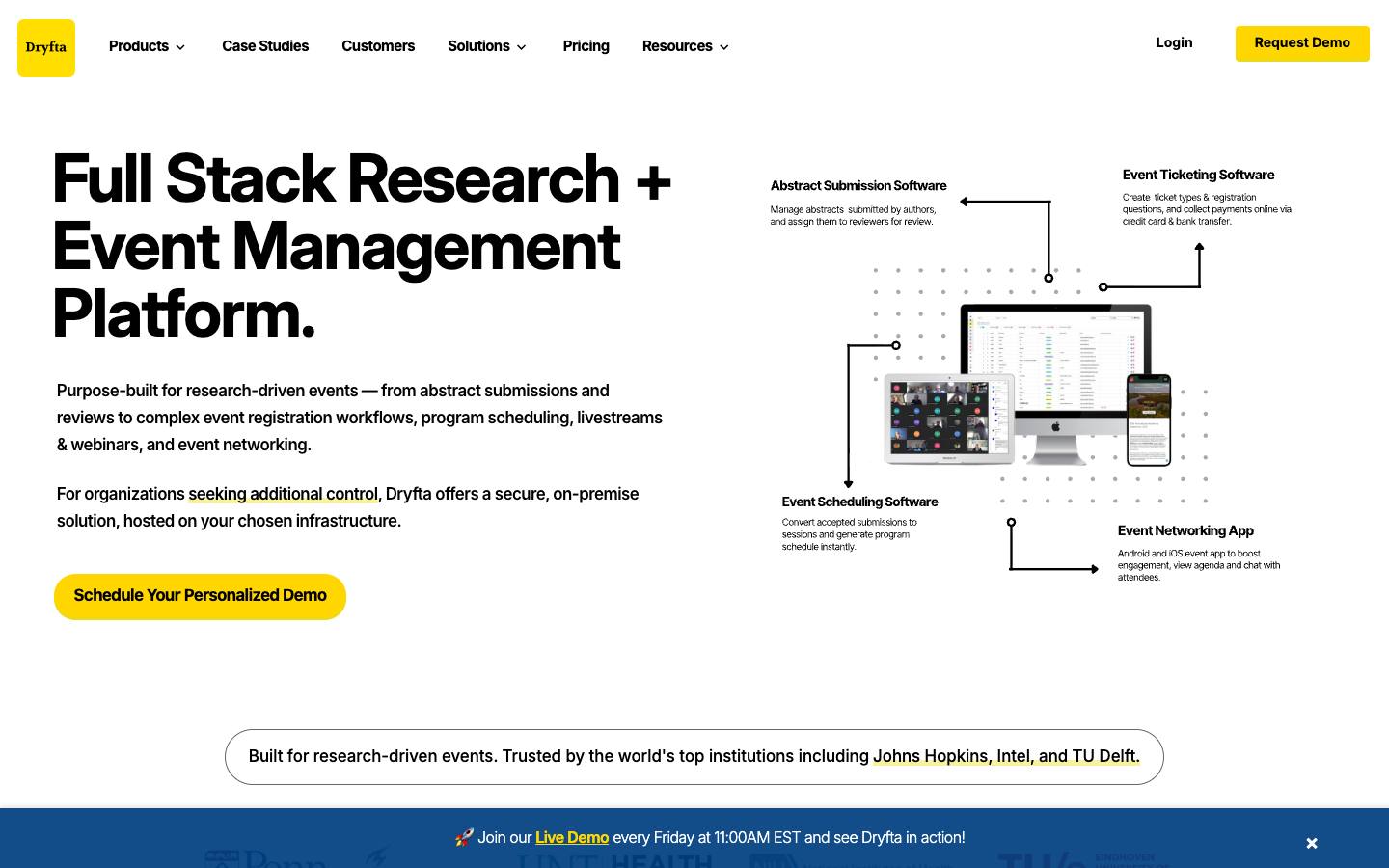
Dryfta starts from the abstract and the conference; Rhythm starts from the member and the association. Dryfta runs single-, double- or triple-blind peer review with automatic or manual reviewer assignment, turns accepted submissions into sessions in a drag-and-drop schedule builder, and publishes an abstract book. It adds registration and ticketing, certificates and CE credits, an event app and matchmaking, and an optional self-hosted deployment.
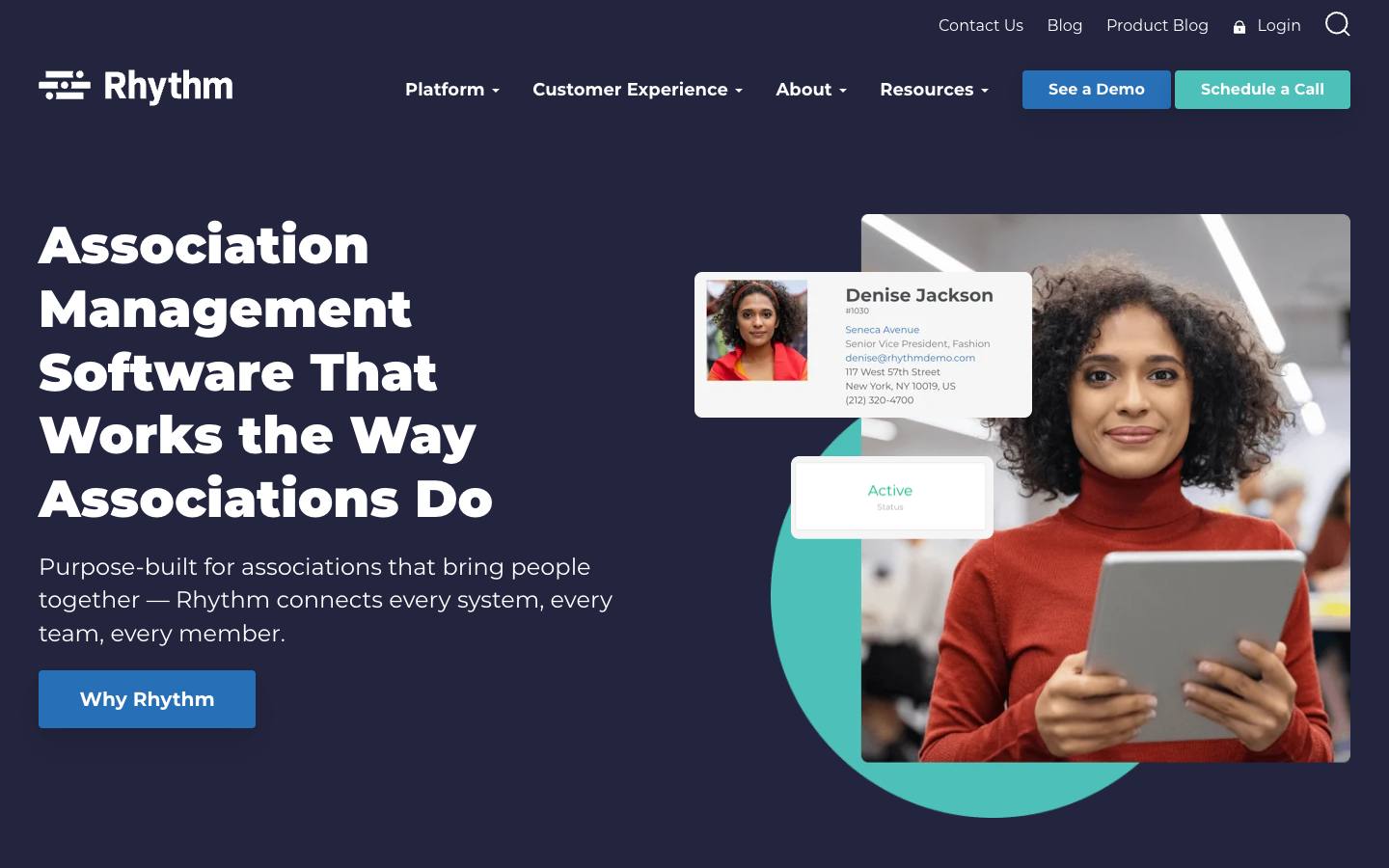
Rhythm is an AMS combining membership, CRM, finance and education, with event apps for registration packages, group registration, microsites, breakout sign-ups, abstracts, exhibits, sponsorships and awards. Its pitch is that events share the member record, so it fits associations replacing a legacy AMS. Dryfta runs in-person, virtual, hybrid and webinar events; Rhythm lists in-person and virtual.
Dryfta vs Rhythm Software pricing
Dryfta publishes annual plans (checked October 2026), with unlimited events on every plan. Small is $1,499/yr and covers 100 abstract submissions with unlimited reviews, 100 attendee registrations with online payments, 25 in-person sessions and 3,000 emails. Medium is $14,999/yr for 1,000 submissions, 1,000 registrations, 150 virtual or in-person sessions, a native iOS and Android app, and white-label with custom domain and SSO. Large is quoted, with unlimited submissions and registrations. There's a free trial, a pay-as-you-use credit option and a nonprofit discount on annual plans, and free setup and data migration on every plan.
Rhythm doesn't publish pricing, and the route in is a demo, so there's no number to compare. Rhythm's onboarding is a structured AMS implementation, and the timeline isn't published.
Features and integrations
Dryfta lists 20 integrations, including a native Salesforce sync, Zapier, Stripe, PayPal, Mailchimp, Constant Contact and Google Calendar, and documents a public API and SAML SSO. Rhythm lists 19, including Zoom, Mailchimp, ActiveCampaign, QuickBooks Online, Microsoft Outlook, Higher Logic and learning systems such as Canvas, with Salesforce and HubSpot reached through Zapier. Rhythm also documents a public REST API.
Dryfta publishes a VPAT, a sub-processor list and regional data hosting options, and its GDPR page references a Data Processing Addendum. We didn't find security certifications such as SOC 2 on Rhythm's public pages. Rhythm relies on mobile-friendly microsites rather than a native event app.
Which should you choose?
Choose Dryfta if you run research or scholarly conferences with a call for papers, blind review and an abstract book. Customers include the University of Pennsylvania, Johns Hopkins University, TU Delft, University of Edinburgh and NIH. Corporate marketing teams may find its CRM and pipeline features thin.
Choose Rhythm Software if you're a professional or trade association that wants members, finance and meetings in one system. It was founded in 2019 in Atlanta, and shows ISACS, Literacy Council and the Rubber Division of the American Chemical Society as customers. It isn't aimed at corporate event teams.