 vs

Converia vs Judgify
Both are in our Abstract & conference management category. Converia is best for universities, research institutes and scientific societies running multi-track congresses with calls for papers; Judgify is best for event organizers running industry awards alongside a conference.
The short answer: Converia manages a whole congress, from abstract review and programme planning to registration and invoicing, with plans from €49/month plus a ticket fee. Judgify runs awards, contests and abstract calls with private judging rounds and public voting, free on its Basic plan and from USD 699 per event on Pro. Choose Converia for multi-track scientific congresses; choose Judgify for an awards program or competition with public voting.
Built from each vendor's own website and our research profiles. How we research
Side by side
“Not published” means we couldn't find it on the vendor's own pages.
ConveriaJudgifyStrengths and considerations
Converia
What stands out
- Purpose-built for academic and scientific congress workflows such as abstract review and multi-track programmes
- Publishes transparent tiered pricing with low entry points
- Native German accounting interfaces (DATEV, SAP) and university SSO via Shibboleth
- EU hosting in an ISO 27001-certified data centre with contracts tailored to public-sector buyers
Worth checking
- Not designed for networking-only events, festivals or small meetings without programme complexity
- Per-ticket fees apply on top of the subscription for paid registrations
- Support and much of the documentation are German-first
Judgify
What stands out
- Purpose-built for awards and judging rather than general registration
- Free tier for small, free-to-enter programmes
- Supports both private judging and public voting
Worth checking
- Not a registration or event-management platform; pairs with other event software
- Onboarding fees on paid plans aren't disclosed
- No integrations are listed
Notable customers
Organizations each vendor names on its own website: customer stories first, then testimonials and logos.
Converia
The main difference between Converia and Judgify
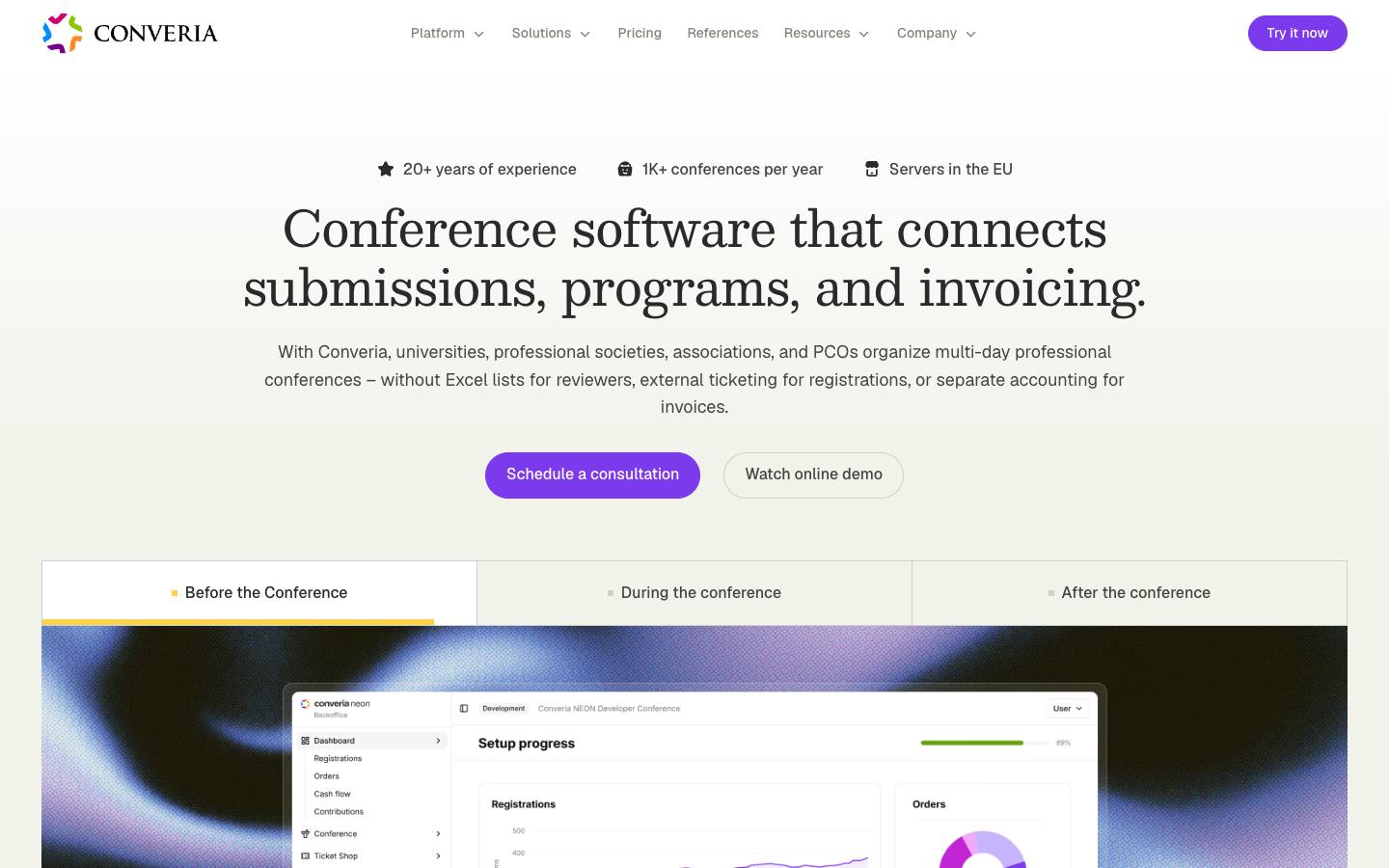
The main difference is what gets managed: Converia runs the congress itself, while Judgify runs the judging. Converia handles abstract submission, peer review with conflict-of-interest rules, parallel-track programme planning, registration, a ticket shop and tax-compliant invoicing on one dataset. Judgify collects entries, runs private judging rounds, supports public voting and produces scoring reports.
Both list abstract-style review, so they overlap when a society wants to collect and score submissions. Beyond that they diverge. Converia adds a conference app, QR check-in and badge printing, and runs in-person, virtual and hybrid congresses. Judgify runs virtual programs, offers awards landing pages with categories and custom entry rules, and is not a registration platform.
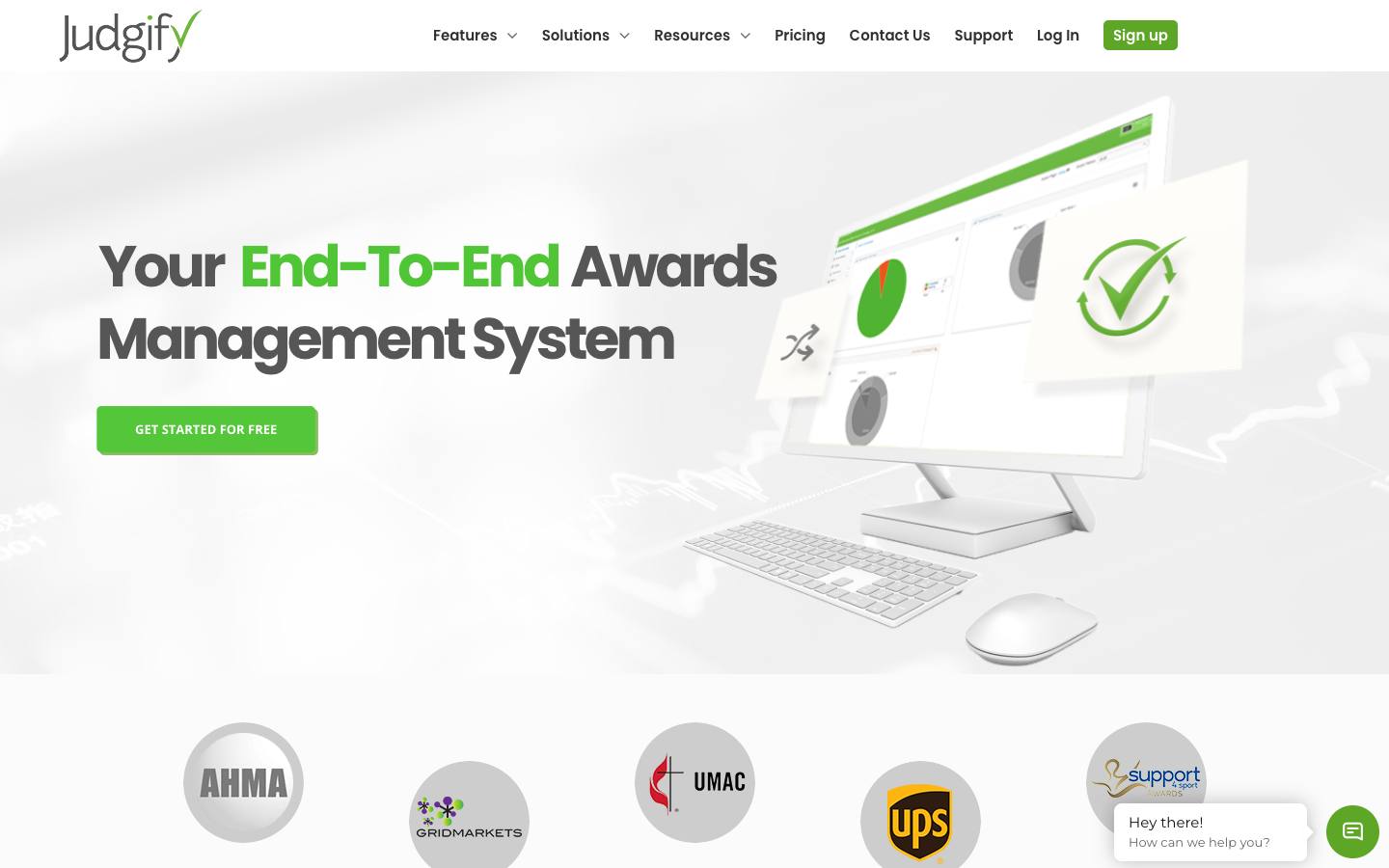
Converia is built in Weimar for German-speaking universities, societies and associations. Judgify is operated from Singapore and counts Clarion Events, Mubadala and UPS among its customers.
Converia vs Judgify pricing
Converia charges a monthly fee in an annual contract plus a share of ticket revenue (checked October 2026). Pro Starter is €49 per month net, for up to 150 participants and 50 talks, with a 2.5% ticket fee. Pro Plus is €149 per month and Pro Advanced is €349 per month; Flex plans for three or more events a year start at €129 per month. Ticket fees are capped at €15 per ticket, and it offers test access with no credit card.
Judgify is priced per event, and its Basic plan is free (checked October 2026). Basic covers 100 submissions per event, 5 categories and 1 private judging round, with self-serve support only. Pro is USD 699 per event plus an onboarding fee, with 500 submissions, 25 categories, 5 private judging rounds and 1 public voting round. Pro Unlimited is USD 2,399 a year plus onboarding. Enterprise is quoted, and a 3.5% fee applies on entry fees collected. The onboarding fees aren't disclosed.
Features and integrations
Converia lists 15 integrations: DATEV and SAP for accounting, Shibboleth, LDAP and OpenID Connect for sign-in, European payment providers such as Computop, Nexi and Payone, Apple Pay, Google Pay and a REST API. It states that data is stored in a European data centre, and it offers a DPA tailored to scientific, medical and public-sector clients.
Judgify lists 4 integrations, covering Google Analytics, Google Tag Manager, social login for public voting and card payment gateways. We didn't find a CRM connector, Zapier or a public API on its public pages. Judgify says it's ISO/IEC 27001 certified and PCI DSS compliant, with compliance certificates available on higher plans. We didn't find an ISO 27001 report on Converia's public pages.
Which should you choose?
Choose Converia if you run a multi-day scientific or association congress with a call for papers, parallel tracks, paid registration and invoicing that must flow into DATEV or SAP, and you want university single sign-on. Its customers include RWTH Aachen University, TUM and Messe München.
Choose Judgify if you run an industry awards program, competition or scholarship alongside a conference, want public voting, or need to start free with a small program. Check what the onboarding fee is on Pro before you commit.