 vs

Certain vs Planned
Both are in our AI for events category. Certain is best for enterprise marketing teams that want attendee engagement turned into scored sales signals in CRM; Planned is best for enterprises running hundreds or thousands of meetings and events a year that want centralized sourcing and spend visibility.
The short answer: Certain is an enterprise event management platform, founded in 1994, that scores attendee engagement as buying signals and routes them to Salesforce, HubSpot or Marketo. Planned, founded in 2017, centers on venue sourcing, contracting, payments and spend control for in-person programs, with 16 integrations. Neither publishes pricing. Choose Certain for marketing-led event intelligence, Planned for procurement-led event programs.
Built from each vendor's own website and our research profiles. How we research
Side by side
“Not published” means we couldn't find it on the vendor's own pages.
CertainPlannedStrengths and considerations
Certain
What stands out
- Treats in-event engagement as scored buying intent rather than just attendance data
- Decades of enterprise event management depth (founded 1994) alongside newer AI features
- Real-time CRM routing of signals during the event, not after it
Worth checking
- Pricing is fully custom and not published
- Published integration list is short (Salesforce, HubSpot, Marketo); confirm other connectors
- Founder-led, privately held company now run as a fully remote team; check support coverage for global events
Planned
What stands out
- Treats events as a governed spend category, connecting sourcing and payments to procurement and finance tools
- Combines agentic AI automation with optional human event experts
- Integrates event planning with corporate travel through a Spotnana-powered offering
Worth checking
- Pricing isn't published
- Registration and marketing tools are newer than the sourcing core; marketing teams should compare depth against dedicated event marketing platforms
- Only SOC 2 is cited on the security page
Notable customers
Organizations each vendor names on its own website: customer stories first, then testimonials and logos.
The main difference between Certain and Planned
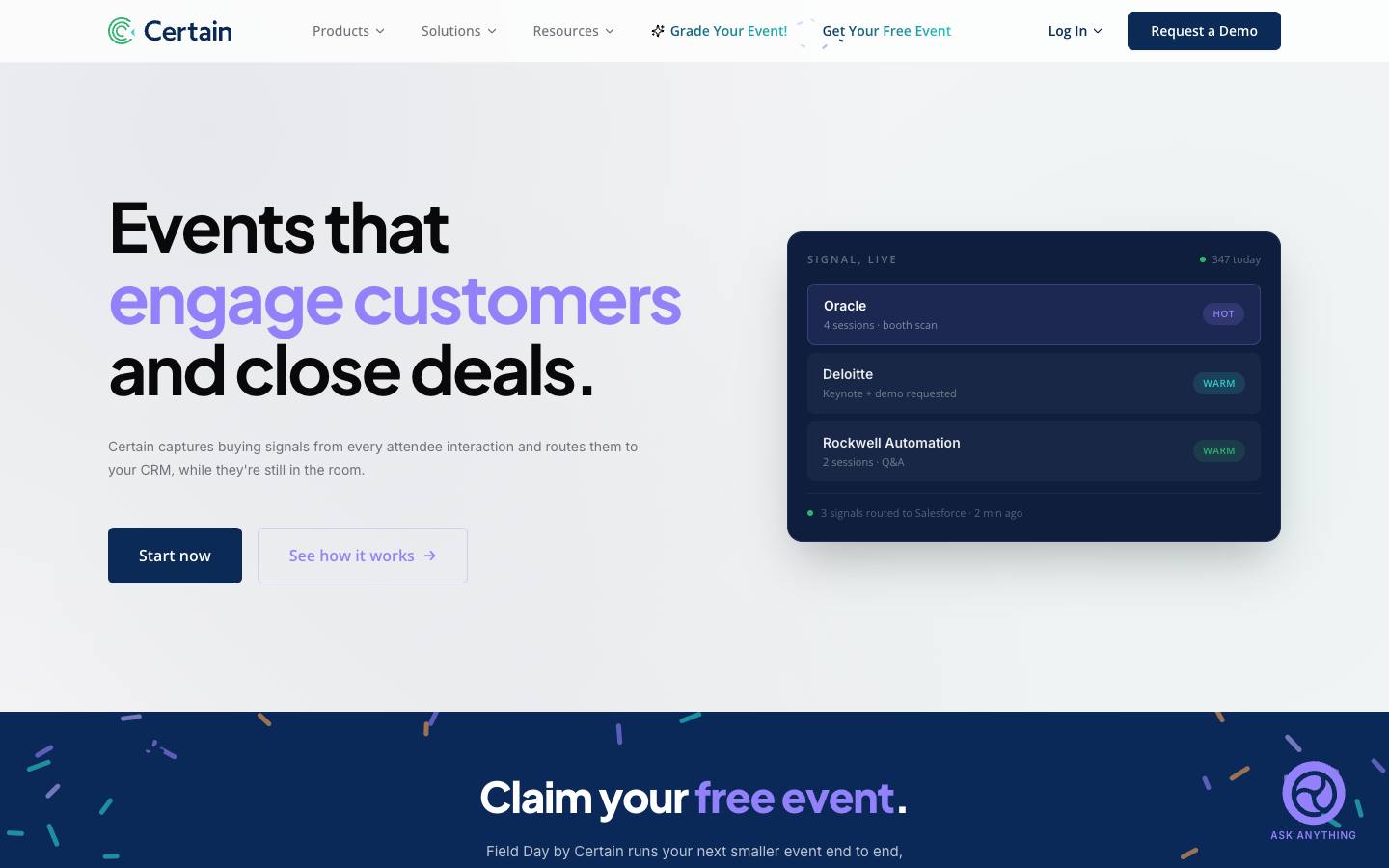
Certain is built around what attendees do at an event, and Planned is built around what the event costs and who supplies it. Certain handles registration, conference logistics and the Touchpoint mobile app, then tracks session, booth and content engagement, scores intent with AI and pushes those signals to CRM while the event is still running.
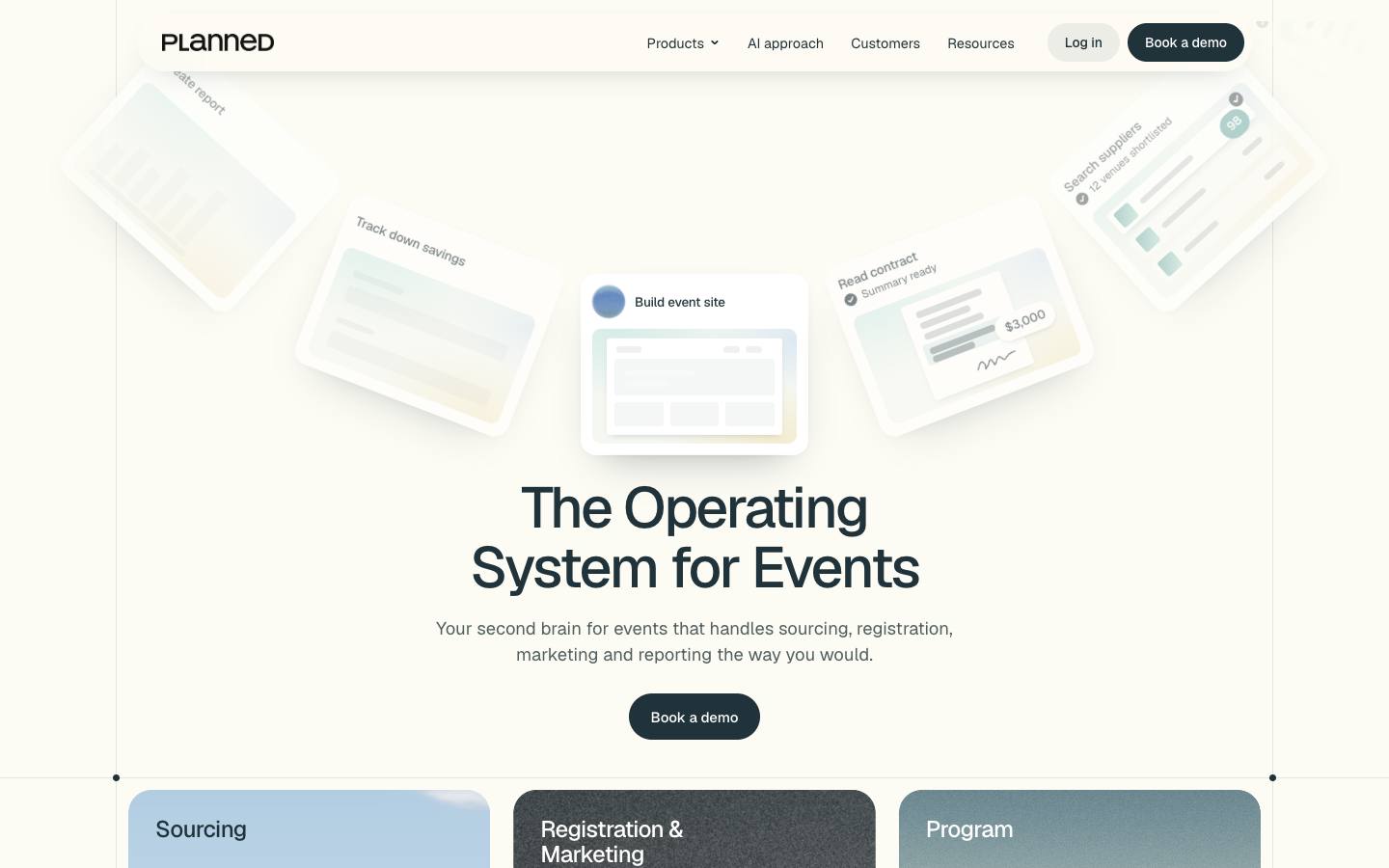
Planned runs venue and supplier sourcing through a marketplace, compares proposals, manages contracts and pays suppliers in the platform, including virtual cards. Registration, websites, badges and event apps sit alongside that core, with AI agents that gather quotes and update logistics and human experts for complex negotiations or VIP events. Both target enterprise teams, so they overlap on registration and field marketing, but they start from different buyers: marketing for Certain, procurement, finance and travel for Planned.
Certain vs Planned pricing
Neither product publishes a starting price, so there's nothing to compare numerically. Certain prices by event portfolio size and modules (event management, intelligence and signals, Touchpoint mobile), and its pricing page offers a custom quote. It also offers Field Day, a free offering for smaller events that covers registration through badge printing and data sync, though there's no free trial.
Planned has no public pricing page; it's sold to enterprise programs through a demo request and a sales conversation, and it has no free plan or trial. Because both are quote-only, ask each for the same scope, such as a set number of events a year, so the quotes are comparable.
Features and integrations
Certain names Salesforce, HubSpot and Marketo as direct connections, configured through no-code data flows, plus a public API 2.0 whose calls require a Certain login. Its list is short, so confirm any other connector you need. It also offers a live event dashboard showing hot leads synced and pipeline influenced, behavior-based follow-up, Greet check-in with badge printing, and an AI Event Advisor that recommends sessions to attendees. It runs in-person, virtual and hybrid events.
Planned lists 16 integrations, mostly spend and travel tools: SAP Concur, Cvent, Slack, Microsoft Teams, Brex, Ramp, Zip, Ironclad, Stripe and Spotnana, with Marketo the only marketing automation connector on the page. It also offers an MCP server for AI assistants. It runs in-person events only, and its registration and marketing tools are newer than its sourcing core, so marketing teams should test their depth.
On security, Certain documents SOC 2 Type II controls, PCI compliance for payment processing, a status page and GDPR and CCPA statements. Planned has a public security center with a sub-processor table, and we didn't find a SOC 2 Type II report on its public pages.
Which should you choose?
Choose Certain if your marketing team wants to know which attendees showed buying intent and get that into Salesforce, HubSpot or Marketo during the event, or if you run virtual and hybrid events alongside in-person ones. Its customers include Oracle, Deloitte and Thomson Reuters. It's an independent, privately held company, and the vendor operates as a fully remote team, so check support coverage for global events.
Choose Planned if you run many meetings and events a year and want sourcing, contracts, payments and policy compliance in one governed process tied to Concur and procurement tools. Its customers include Airbnb, Nike and EY. Some buyers will want to use both: Planned for sourcing and spend, a dedicated event marketing platform for engagement.