 vs

SimpleEvents.io vs Unbounce
Both are in our Event websites category. SimpleEvents.io is best for HubSpot-based marketing teams running workshops, meetups or field events; Unbounce is best for event and demand gen marketers who need fast, testable promo and registration landing pages outside their event platform.
The short answer: SimpleEvents.io and Unbounce do different jobs. SimpleEvents.io handles event registration and QR check-in synced to HubSpot, with a free plan and Pro at $50/month. Unbounce is a landing page builder with A/B testing, from $22/month billed annually, and has no ticketing or check-in. They can work together: Unbounce for promotion pages, SimpleEvents.io for the event itself.
Built from each vendor's own website and our research profiles. How we research
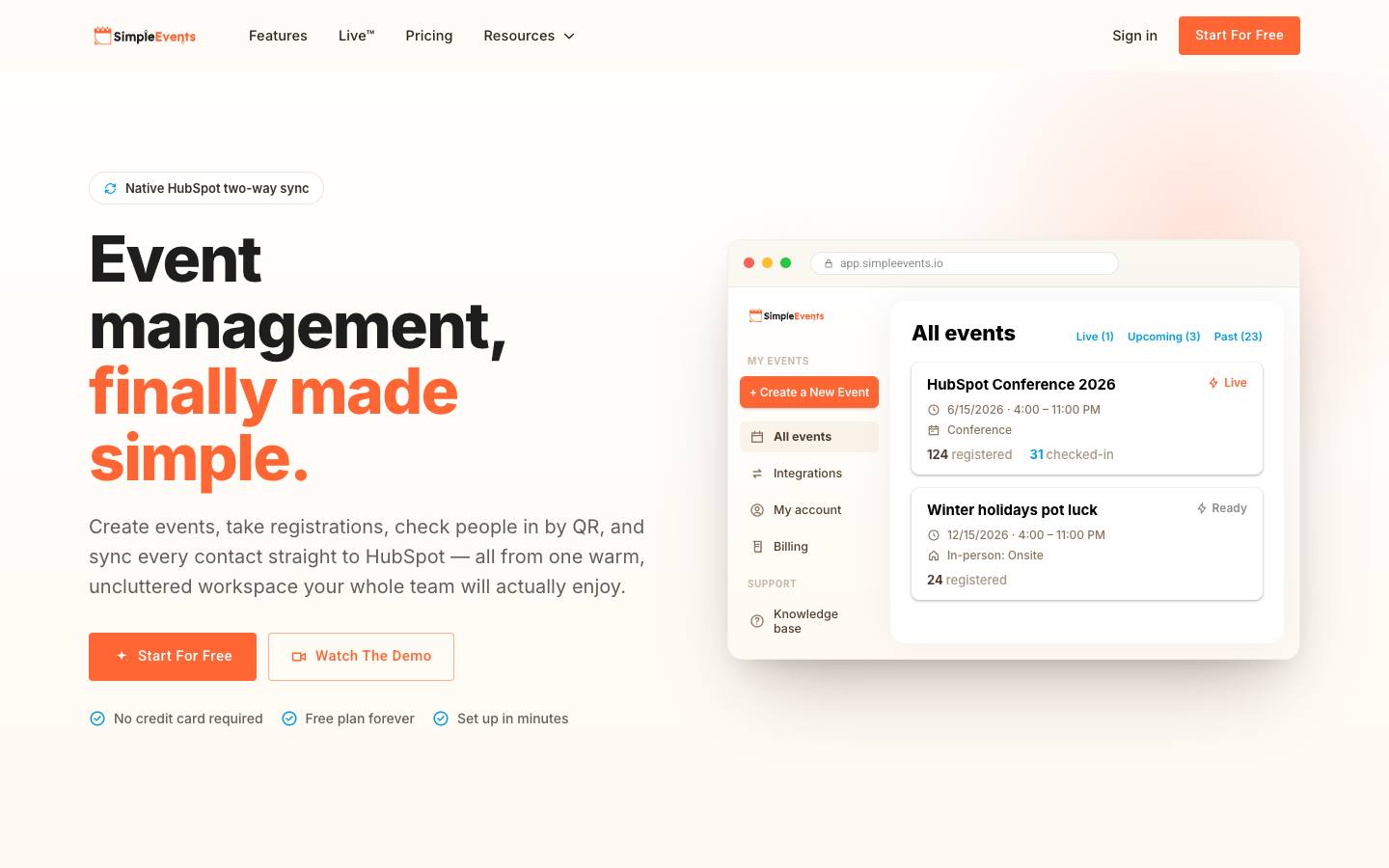
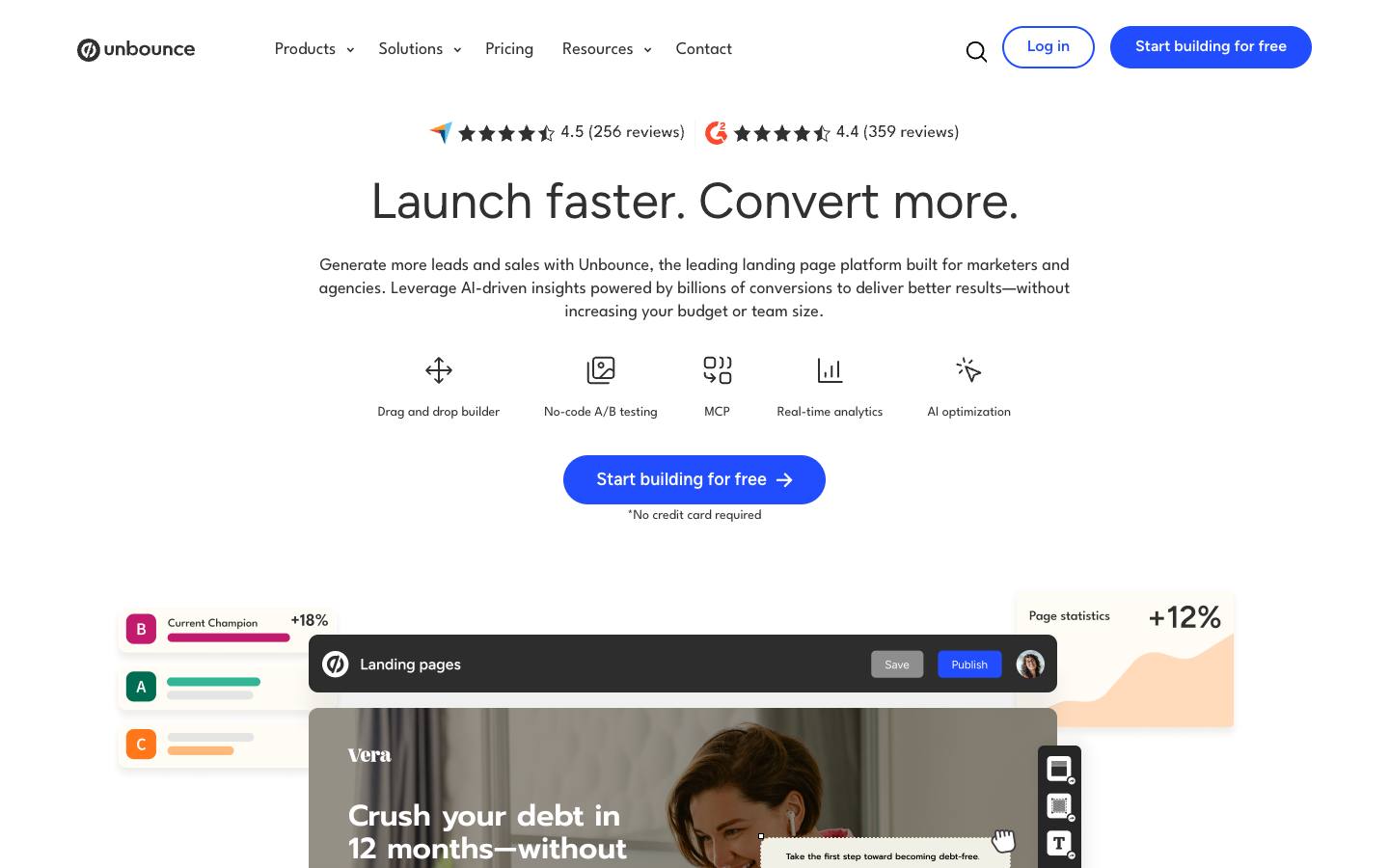
Side by side
“Not published” means we couldn't find it on the vendor's own pages.
SimpleEvents.ioUnbounceStrengths and considerations
SimpleEvents.io
What stands out
- Built around HubSpot data rather than its own CRM
- Usable free tier and transparent low pricing
- Quick setup aimed at non-specialist event owners
Worth checking
- Only HubSpot is supported as a CRM
- Not designed for large conferences (no agenda, sponsor or virtual tooling)
- Pricing page is inconsistent on free-plan event limits
Unbounce
What stands out
- Mature A/B testing and AI traffic routing for registration page conversion
- Wide marketing integration catalogue plus an MCP server for AI assistants
- Published, self-serve pricing
Worth checking
- Not an event platform: no ticketing, attendee management, check-in or event communications
- Security page lists only PCI SAQ A-EP; no SOC 2 or ISO certification is claimed
- Traffic caps per tier trigger overage charges for high-volume campaigns
Notable customers
Organizations each vendor names on its own website: customer stories first, then testimonials and logos.
The main difference between SimpleEvents.io and Unbounce
SimpleEvents.io runs the event, and Unbounce builds the page that promotes it. SimpleEvents.io, made by HubSpot partner Image in a Box, creates events, registration pages, ticket types, waitlists and QR check-in, with attendee data synced to HubSpot contacts and lists. Unbounce is a drag-and-drop landing page builder with popups, sticky bars, multi-step forms, A/B testing and Smart Traffic, an AI feature that routes visitors to the best-converting variant. It isn't event software, and its feature set stops short of ticketing, attendee records and check-in.
They overlap only on the registration page. If you need check-in, capacity limits and a guest list, Unbounce can't replace SimpleEvents.io. If you need to test headlines and drive paid traffic to a registration page, SimpleEvents.io's pages won't match Unbounce's testing tools.
Pricing and integrations
SimpleEvents.io has a free plan (1 active event, up to 250 check-ins per event, HubSpot contact sync), Pro at $50/month or $600/yr billed annually, and Enterprise at $2,500/yr with badge printing and a companion app. Unbounce has no free plan but a 14-day trial with no credit card. Starter is $22/month billed annually ($29 monthly) for 5 pages and up to 500 visitors, Build is $74/month, Experiment is $112/month with unlimited A/B testing, and Optimize is $187/month with Smart Traffic. Prices checked October 2026.
Both list HubSpot. Unbounce also lists Salesforce, Marketo, Pardot, Mailchimp and Zapier among 21 integrations, with integrations beyond the basics starting on Build. SimpleEvents.io lists 4, including Zoom and wallet passes, and supports no CRM other than HubSpot. We didn't find a SOC 2 Type II report for either, though Unbounce documents SOC 2 Type I.
Which should you choose?
Choose SimpleEvents.io if your marketing runs in HubSpot and you hold workshops, meetups or field events that need registration and check-in. Choose Unbounce if registrations come from paid campaigns and you want to test and optimize the page. A HubSpot team running a large webinar push could reasonably use both.