 vs

Pigeonhole Live vs SlideLizard
Both are in our Audience engagement & gamification category. Pigeonhole Live is best for conference organisers adding moderated Q&A and polling across multi-track agendas; SlideLizard is best for speakers and event teams who want polls and Q&A run directly inside PowerPoint.
The short answer: Pigeonhole Live is a Singapore-based audience interaction platform with a free Starter plan for 100 participants, Presenter at $13/month billed annually and Standard at $150/month for multi-track events. SlideLizard is an Austrian PowerPoint add-in with polls and Q&A run from inside slides, priced by user license on request, with EU-only hosting. Choose Pigeonhole for conference programs and published pricing; choose SlideLizard for PowerPoint-centered presenters.
Built from each vendor's own website and our research profiles. How we research
Side by side
“Not published” means we couldn't find it on the vendor's own pages.
Pigeonhole LiveSlideLizardStrengths and considerations
Pigeonhole Live
What stands out
- Published, low-cost entry pricing including a free tier
- Event mode handles multi-track programmes, not just single presentations
- Ready integrations with event platforms like Swoogo, Splash and Kaltura
Worth checking
- Published security page relies on AWS certifications rather than Pigeonhole's own and appears dated
- Engagement layer only; needs a separate registration or event platform for larger events
SlideLizard
What stands out
- Audience interaction runs natively inside PowerPoint rather than in a separate app
- On-premise deployment option with EU-only cloud hosting
- Combines presentation management and live engagement in one vendor
Worth checking
- Product focus has shifted toward enterprise slide automation; event engagement is a secondary module
- Tied to Microsoft PowerPoint
- Pricing isn't published
Notable customers
Organizations each vendor names on its own website: customer stories first, then testimonials and logos.
The main difference between Pigeonhole Live and SlideLizard
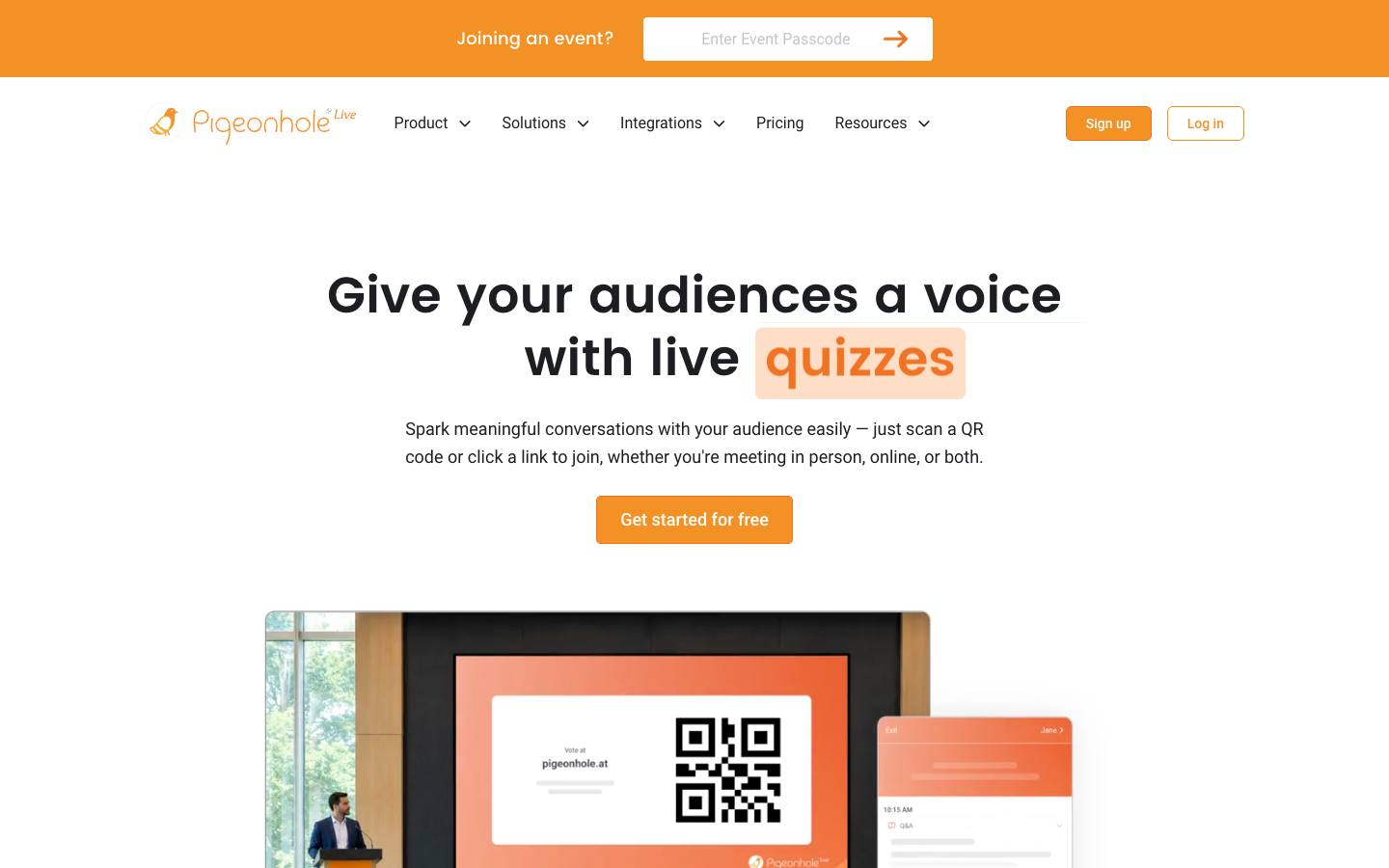
Pigeonhole Live is built around the event, while SlideLizard is built around the slide deck. Pigeonhole offers moderated Q&A, polls, quizzes, word clouds and surveys that attendees join by QR code or link, and its event mode handles multi-session, multi-track and multi-day programs with an agenda, registration and branding. It supports in-person, virtual, hybrid and webinar formats and has 54 interface languages.
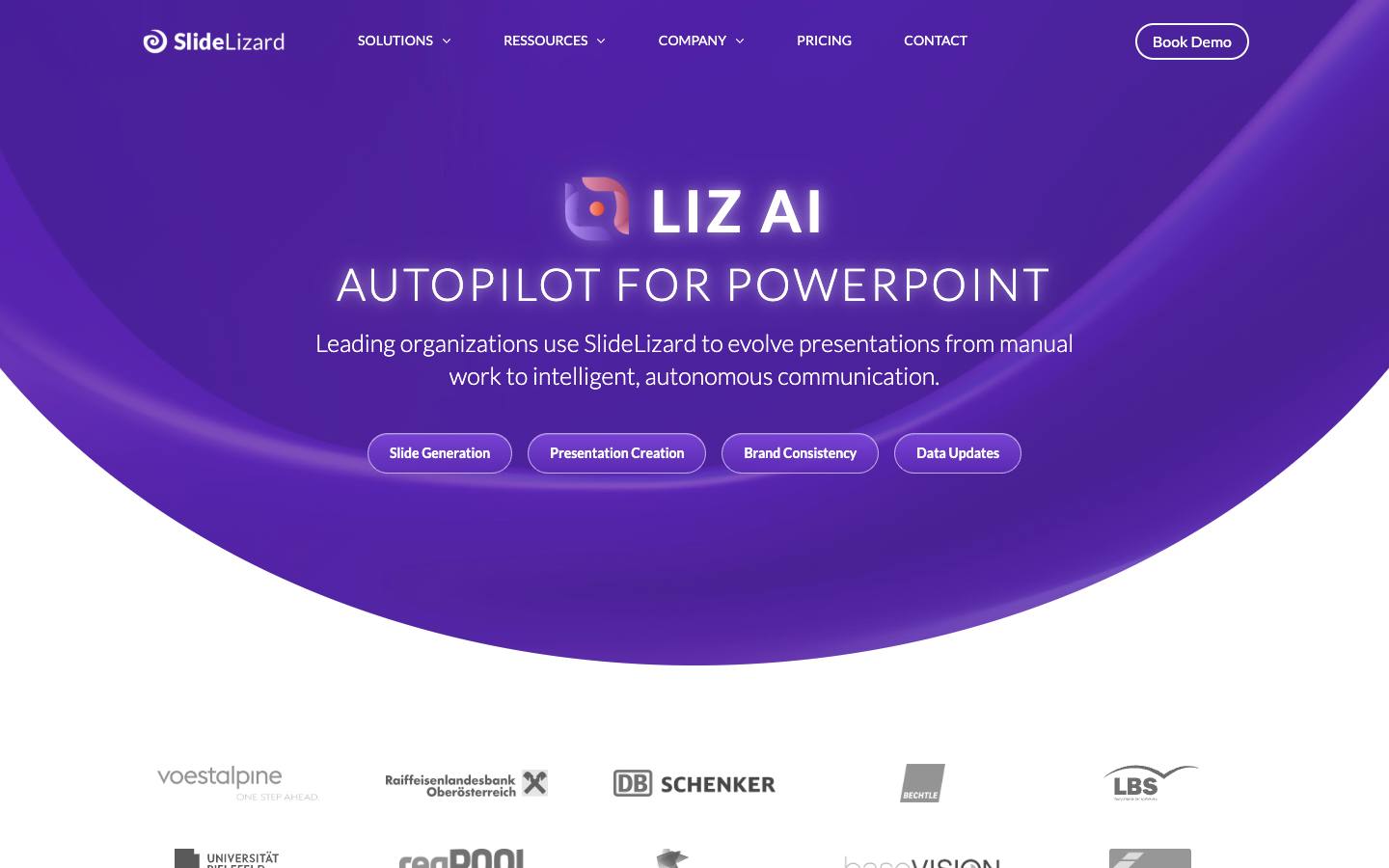
SlideLizard runs inside PowerPoint: a speaker launches polls, word clouds and quiz competitions from slides, and participants answer in a browser with no app. It has also moved toward enterprise presentation management, with a company-wide slide library and an AI layer, so live engagement is one module among several. It covers in-person, virtual and hybrid events, and it is tied to Microsoft PowerPoint, where Pigeonhole also offers PowerPoint and Google Slides add-ins.
Pigeonhole Live vs SlideLizard pricing
Pigeonhole Live publishes four plans and SlideLizard publishes none. Starter is free for up to 100 participants and 1 user, with 60-day data retention. Presenter is $13/month billed annually ($156/yr, or $816/yr billed monthly) for up to 250 participants, and it is for presentations only, not full events. Standard is $150/month billed annually ($1,800/yr, or $5,616/yr billed monthly) for up to 2,000 participants, 3 users, multi-track agendas and registration. Enterprise is custom, for up to 100,000 participants with SSO and API access (checked October 2026). Pigeonhole lists no free trial, but its free plan lets you test the tools.
SlideLizard sells annual user licenses on request: Business covers up to 50 users with custom branding and EU data storage, and Enterprise covers unlimited users, SSO, SLAs and an account manager. We didn't find a free plan or trial. Per-user licensing suits a company where many people present, while Pigeonhole's participant-based tiers suit organizers with a few events and large audiences.
Features and integrations
Pigeonhole lists 16 integrations, including Zoom, Microsoft Teams, Webex, Brightcove, Swoogo, Splash, Kaltura and RainFocus, so it can sit on top of an event platform. CRM and data warehouse syncing goes through its developer API, which is an Enterprise feature, and SAML 2.0 SSO and SCIM provisioning are Enterprise-level too. It documents a sub-processor list and GDPR and CCPA coverage in its privacy policy, and we didn't find a SOC 2 or ISO 27001 report on its public pages.
SlideLizard lists 4 integrations: PowerPoint, Microsoft Teams, live-stream integration and Word and Excel export. We didn't find a public API or webhooks. Its security story centers on data residency: data is stored only in European data centers, with an on-premise option, and its security page claims GDPR compliance. We didn't find an ISO 27001 certificate on its public pages, and SSO appears on its Enterprise license. Its AI layer generates and refreshes on-brand slides, which Pigeonhole doesn't offer; Pigeonhole's AI is a translation add-on.
Which should you choose?
Choose Pigeonhole Live if you run conferences or town halls and need moderated Q&A across several tracks, registration and access controls, or webinars, and want to see a price before talking to sales. Its customers include Deloitte, Unilever, Adobe and Singapore Airlines. It is an engagement layer, so larger events still need a separate registration platform.
Choose SlideLizard if your speakers already live in PowerPoint, you're based in the DACH region and want EU-only hosting or on-premise deployment, or you want a central slide library with brand checks. Its customers include voestalpine, DB Schenker, Bechtle and the European Space Agency. Expect an annual quote.