 vs
Luma vs Tendenci
Both are in our Community platforms category. Luma is best for B2B marketing and community teams hosting side events, meetups and dinners around conferences; Tendenci is best for associations and nonprofits that want membership and event registration in one system they can self-host.
The short answer: Luma is a self-serve event page and ticketing tool with a free plan and Luma Plus at $59/month billed annually. Tendenci is an open-source association management system whose events module sits beside memberships and donations, with managed hosting from $249/month. Pick Luma for meetups and side events, Tendenci for an association running membership and registration in one system.
Built from each vendor's own website and our research profiles. How we research
Side by side
“Not published” means we couldn't find it on the vendor's own pages.
LumaTendenciStrengths and considerations
Luma
What stands out
- Very fast setup and a consumer-grade attendee experience
- Free tier with unlimited events and guests
- Strong network effect in startup, tech and community scenes where attendees already have Luma accounts
Worth checking
- Not designed for large multi-track conferences, exhibitor management or complex B2B registration paths
- Native CRM and marketing-automation integrations are limited; most connections run through Zapier or the API on the paid plan
- Email sending is capped weekly by plan
Tendenci
What stands out
- Open-source code with no licence or per-user fees
- Full AMS rather than a standalone event tool
- Option to self-host and keep full ownership of data
Worth checking
- Events are one module of an AMS, not a dedicated event marketing platform
- Managed hosting requires a one-time development fee that's not published
- Limited marketing-automation and CRM integrations listed
Notable customers
Organizations each vendor names on its own website: customer stories first, then testimonials and logos.
The main difference between Luma and Tendenci
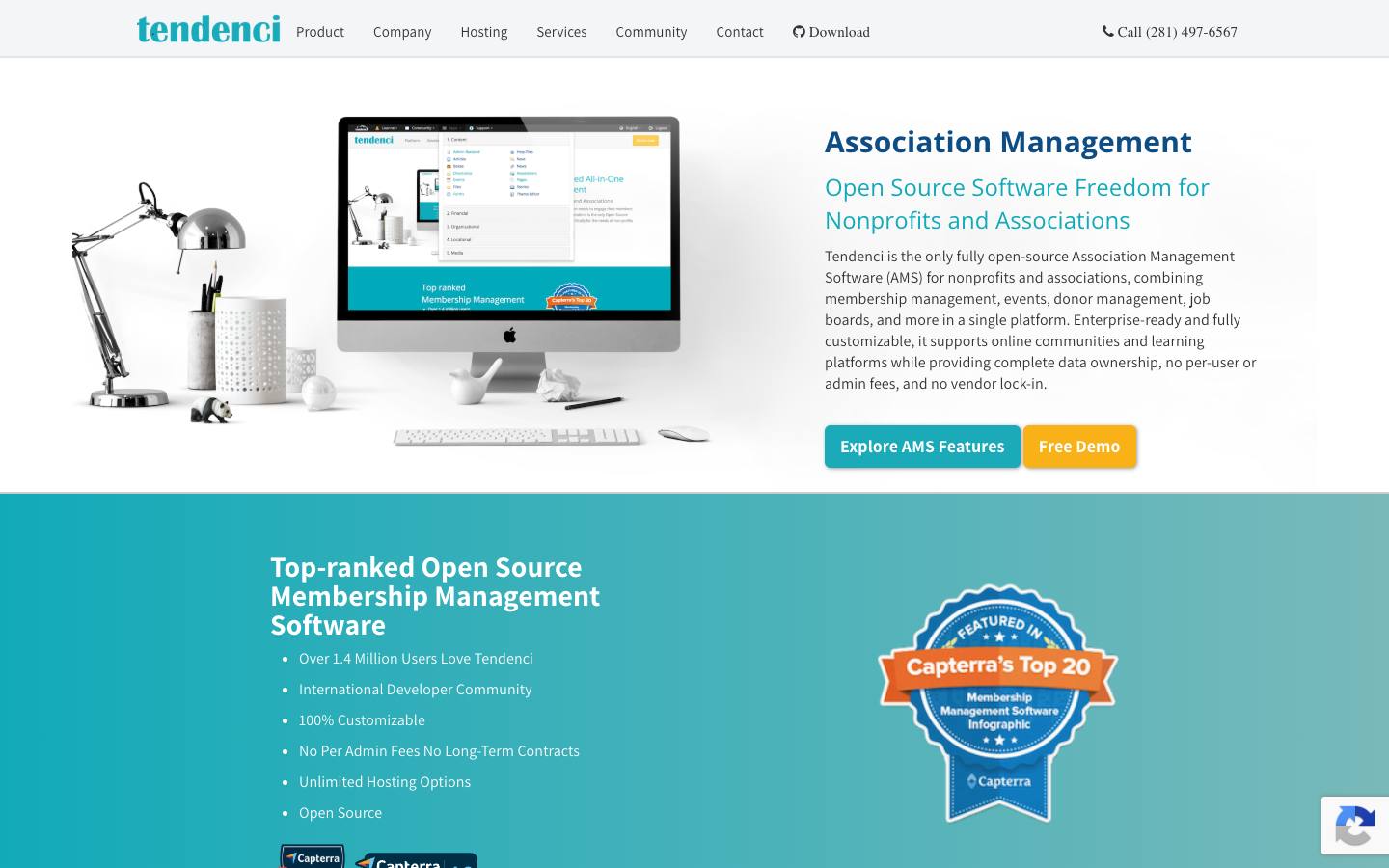
Luma is an event tool; Tendenci is a membership system that includes events. Luma builds event pages in minutes, handles approval-based registration, invites, paid tickets, guest check-in and shared calendars, and uses Zoom for online sessions, so it supports in-person and virtual events. Tendenci bundles memberships, donations, directories and a website CMS with an events module: calendars, tiered ticket pricing, online payment, reminders and printable check-in rosters. It lists in-person events only.
The deployment model differs too. Luma is hosted software that's ready the same day. Tendenci is open-source Python/Django code that you can self-host for free or buy as managed AWS hosting, with a one-time setup fee based on design and customization that isn't published.
Luma vs Tendenci pricing
Luma's pricing is published (checked October 2026). The Free plan has unlimited events and guests, 500 invites per week and a 5% platform fee on paid events. Luma Plus is $59/month billed annually, with a 0% fee, 5,000 invites per week, custom URLs and Zapier and API access. Enterprise is contact-us. There's no free trial.
Tendenci's software is free to self-host. Managed hosting is priced by active members (checked October 2026): Bronze is $249/month for up to 1,000 active members, Silver is $379/month for 1,000 to 5,000, and Gold is $499/month for 5,000+ with load balancing. There are no per-user fees, annual payment saves 10%, and the contract is month-to-month. Budget for the setup fee on top. For a small event team with no membership base, Luma's free plan is the cheaper entry; for an association that would otherwise pay for a separate membership system, Tendenci's hosting covers both.
Features and integrations
Integration depth is thin on both sides. Luma lists Zoom, Stripe, Zapier, a public API (Luma Plus), Apple Pay and Google Pay, with no named CRM connector. Tendenci lists Stripe, Discourse, Mailgun and AWS, has no Zapier app, and offers a documented read-only REST API. Other connections are custom development.
On security, Luma documents an annual SOC 2 Type II audit, a Vanta-hosted trust portal and a DPA covering GDPR and CCPA. For Tendenci we found no security certifications on its public pages; its code is open on GitHub, which lets you inspect it or host it yourself.
Which should you choose?
Choose Luma if you're a B2B marketing or community team hosting side events, dinners and meetups, and want a polished attendee experience, quick setup and a free tier. It isn't designed for large multi-track conferences or exhibitor management. Choose Tendenci if you're an association or nonprofit that wants memberships, donations and event registration in one system you can host and own. Its events module is one part of a larger AMS, and customers on its site include SPE Gulf Coast Section and Houston Technology Center.