 vs

LiveWebinar vs Univid
Both are in our Virtual, webinar & streaming category. LiveWebinar is best for marketing teams running lead-gen webinars that feed email or CRM tools; Univid is best for B2B marketing teams running regular lead-generation webinars.
The short answer: LiveWebinar and Univid are both browser-based webinar platforms for marketers. LiveWebinar starts at 24.00 EUR/month billed annually (Basic, 25 attendees) and lists 32 integrations, mostly email-marketing tools. Univid starts at €99/mo (Growth) with pricing by monthly registrants and lists Salesforce and SAML SSO on its Custom plan.
Built from each vendor's own website and our research profiles. How we research
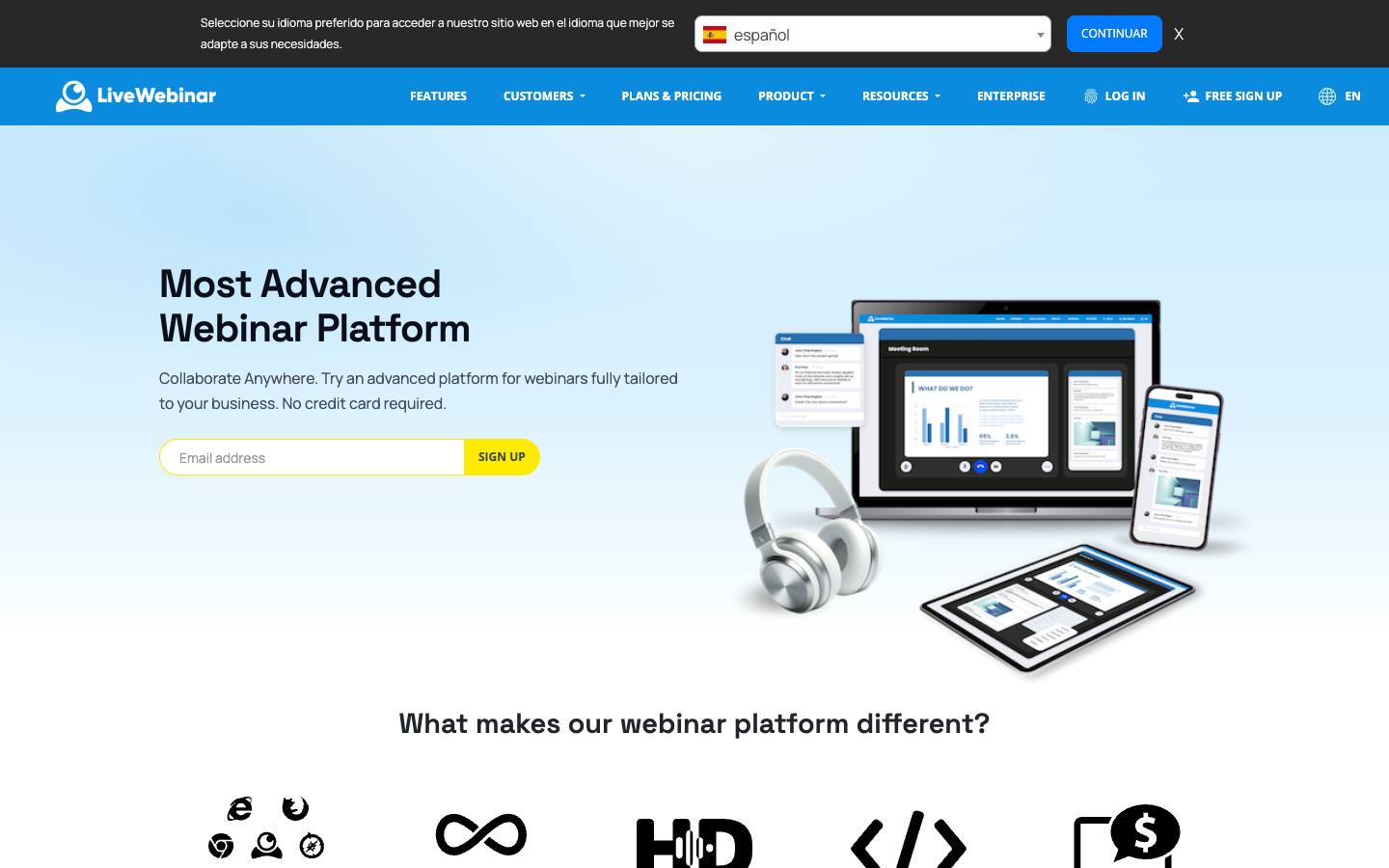
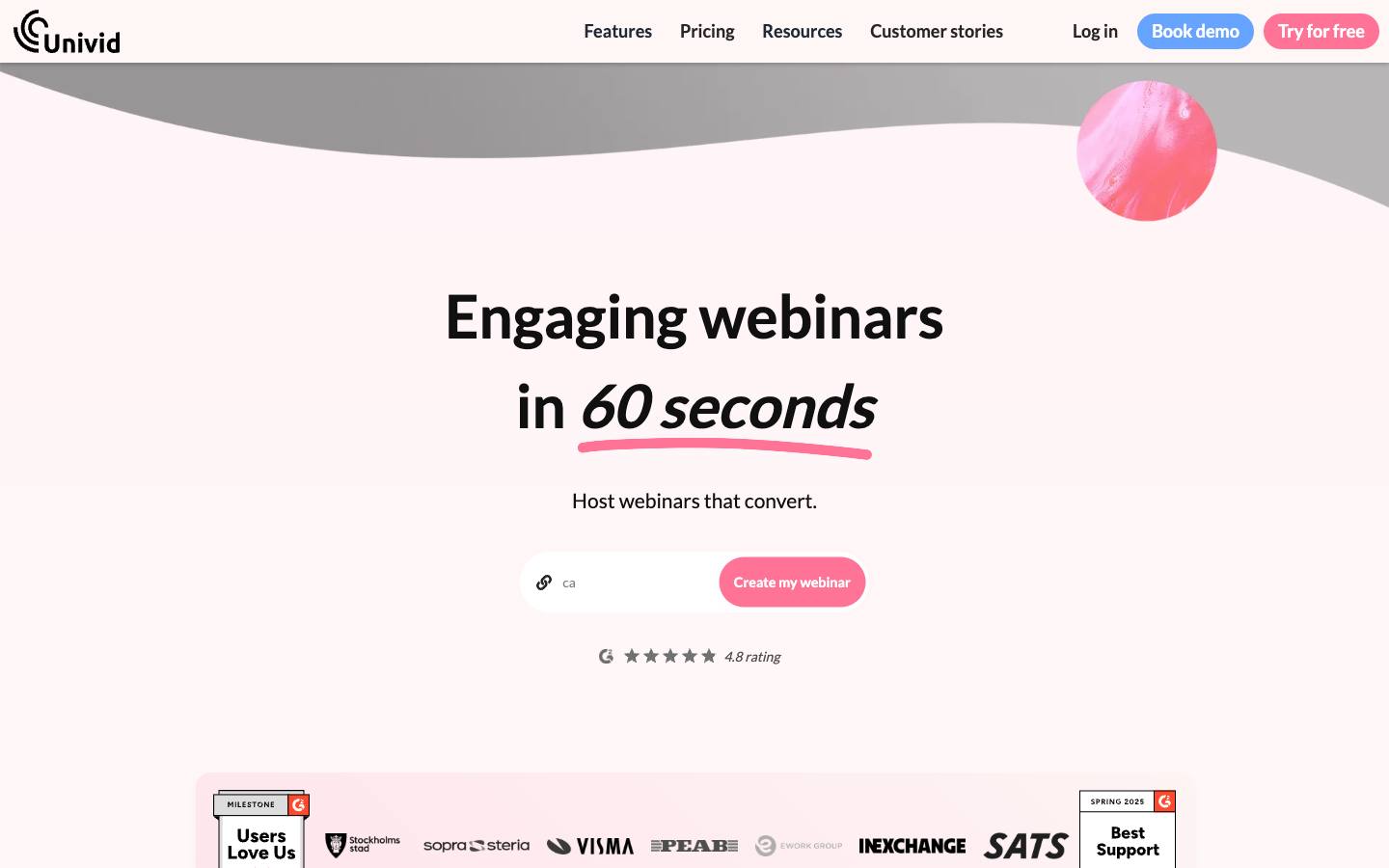
Side by side
“Not published” means we couldn't find it on the vendor's own pages.
LiveWebinarUnividStrengths and considerations
LiveWebinar
What stands out
- Large catalogue of email-marketing and automation integrations
- Free lifetime tier and modular add-ons
- Interface in about 29 languages
Worth checking
- Webinar-only; no registration-heavy conference, in-person or app features
- No ISO or SOC certifications cited
- Base plan prices are set via an on-page slider, so confirm totals including add-ons and VAT
Univid
What stands out
- Quick setup aimed at marketers rather than AV producers
- Audience-based pricing with unlimited hosts and speakers
- Broad set of Nordic and global marketing integrations
Worth checking
- Webinar-only; not suited to in-person or multi-track hybrid events
- Microsoft Dynamics and Pipedrive integrations were listed as not yet released
- GDPR badge shown but no security certifications listed
Notable customers
Organizations each vendor names on its own website: customer stories first, then testimonials and logos.
The main difference between LiveWebinar and Univid
LiveWebinar prices by room size and leans on breadth of connectors: it lists 32 integrations, including HubSpot, Mailchimp, ActiveCampaign, Klaviyo, Brevo, Zapier and Make, and offers automated and paid webinars, breakout rooms (add-on), social streaming and an iOS app. It covers webinar and virtual formats.
Univid prices by monthly registrants with unlimited hosts and speakers, and focuses on the marketing-to-sales handoff: lead scoring by engagement, two-way HubSpot sync, and Salesforce on its Custom plan. It runs webinars only. Univid is based in Stockholm and founded in 2019; LiveWebinar is made by RTCLab in Gdansk.
LiveWebinar vs Univid pricing
LiveWebinar has a free plan for up to 5 attendees and 30-minute sessions. Paid plans are billed annually (checked October 2026): Basic is 24.00 EUR/month for 25 attendees with a 6-hour session limit, Plus is 31.00 EUR/month with breakout rooms, and Premium is 45.58 EUR/month with paid webinars and 20 sub-accounts. Annual billing saves 20%, and Enterprise is custom.
Univid has a free plan too, capped at 20 registrants a month, 10 live participants and 20-minute webinars (checked October 2026). Growth is €99/month for 100 registrants (scaling to 600), up to 100 live participants and 4-hour webinars; Custom is quoted. LiveWebinar's paid entry is lower, but Univid's Growth tier is sized for lead-generation audiences.
Integrations and security
Both list HubSpot. On Univid, HubSpot, Zapier and Make sit on Growth, while Salesforce, Upsales, Lyyti, LinkedIn and the API need Custom; Microsoft Dynamics 365 and Pipedrive are marked coming soon. LiveWebinar doesn't list Salesforce but documents webhooks and an advanced API, and offers a long list of email tools.
Univid documents SAML SSO on its Custom plan; we didn't find SSO documented for LiveWebinar. Neither shows a SOC 2 or ISO 27001 report on public pages, though LiveWebinar publishes a security page and white paper and both state GDPR compliance.
Which should you choose?
Choose LiveWebinar if you want the lower paid entry price, a long email-marketing connector list, paid or automated webinars, or virtual formats beyond webinars. Its customers include Merck, Sanofi, GSK and Kaplan.
Choose Univid if you need Salesforce or SAML SSO (on Custom), lead scoring that feeds a CRM, and unlimited speakers at a registrant-based price. Customers include Visma, SATS, Sopra Steria and Stockholms stad.