 vs

Lenos vs Oniva (formerly Zoon)
Both are in our All-in-one event platforms category. Lenos is best for corporate event and meetings teams that want highly customized event sites without developer help; Oniva (formerly Zoon) is best for corporate marketing and HR teams in DACH running many guest and employee events.
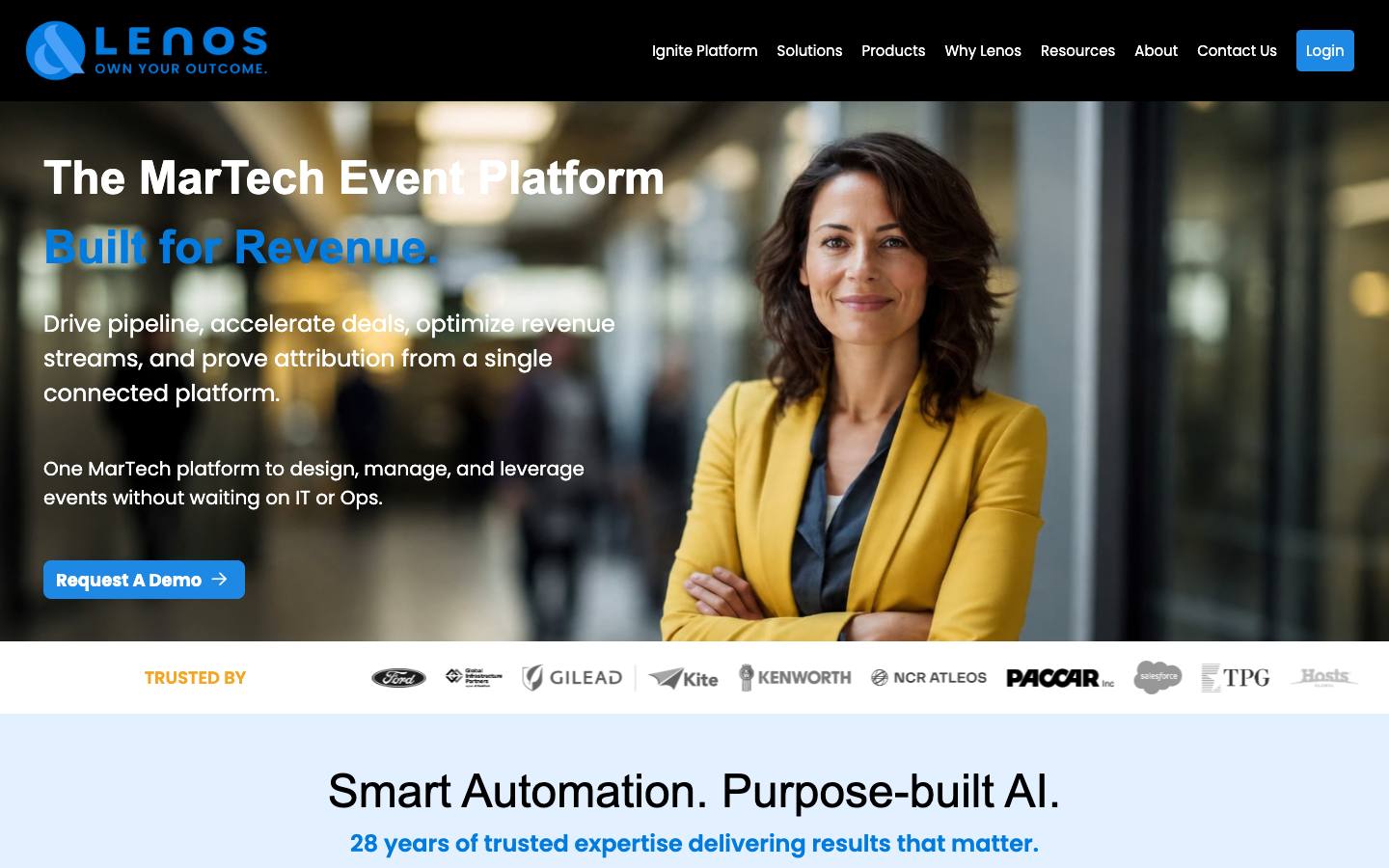
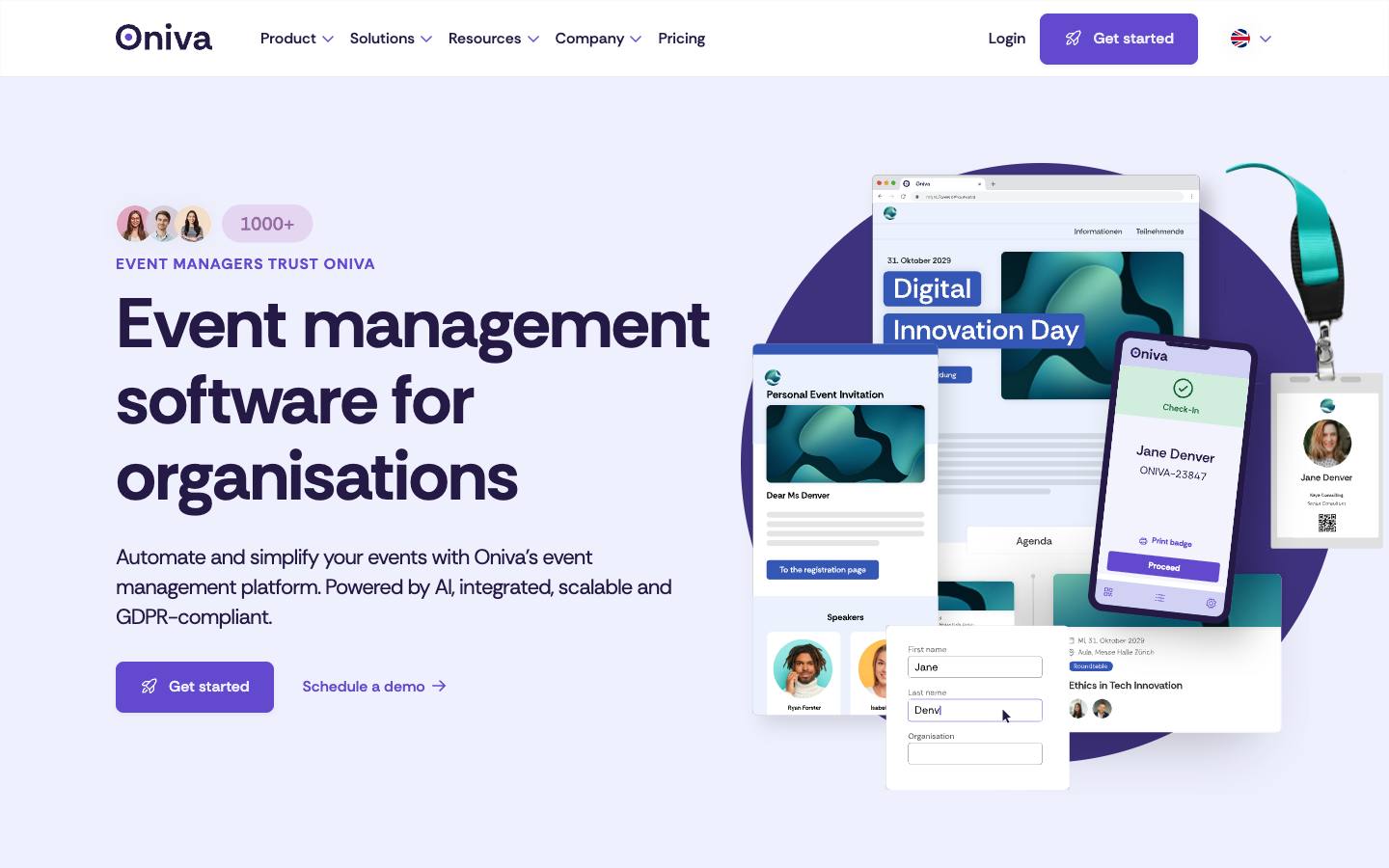
The short answer: Lenos is a San Francisco no-code event site builder founded in 1999, with group air and travel integrations and quote-only pricing. Oniva is a Swiss platform spun off from Swisscom that publishes prices, from €925 per event or €3,490 per year, and hosts data in Swiss Azure data centers. Lenos suits US corporate and agency programs; Oniva suits DACH teams running many guest and employee events.
Built from each vendor's own website and our research profiles. How we research
Side by side
“Not published” means we couldn't find it on the vendor's own pages.
LenosOniva (formerly Zoon)Strengths and considerations
Lenos
What stands out
- Design-first, no-code builder with a long track record in visual event site creation
- Rare depth of travel integrations (GDS and corporate travel tools) for an event platform
- Portfolio cloning tools for teams running many similar events
Worth checking
- AI capabilities are referenced in marketing but not described in detail
- No published security certifications; ask for compliance documentation
- Pricing isn't published
Oniva (formerly Zoon)
What stands out
- Data hosted in Swiss Microsoft Azure data centers with private cloud option
- Wide integration set for a smaller vendor, including Dynamics 365, SAP and Bexio
- Published per-event and annual pricing
Worth checking
- Registration caps per plan can be tight for large events
- Online events rely on links to Zoom, Teams or streaming tools rather than a native virtual venue
- Security certifications cited belong to the Microsoft hosting infrastructure rather than Oniva itself
Notable customers
Organizations each vendor names on its own website: customer stories first, then testimonials and logos.
The main difference between Lenos and Oniva (formerly Zoon)
The main difference is the kind of event team each is built around. Lenos, through its Lenos Ignite platform, centers on design freedom without code: a drag-and-drop designer for event sites and registration, one-step cloning of a whole event site and app, and a companion mobile app generated from the site. It adds group air block and travel integrations (Sabre, Amadeus, SAP Concur, CTM), which suits agencies and travel-heavy corporate programs.
Oniva is built for teams that run many guest, customer and employee events. It combines AI-drafted invitations, branded event websites, registration with quotas, waitlists and approval-based booking, ticketing with payments including Twint and PostFinance, and a check-in app with offline mode and badge printing. Its data sits in Swiss Microsoft Azure data centers, with a private cloud option.
Lenos vs Oniva (formerly Zoon) pricing
Lenos publishes no pricing; it's quote-based and sold through a demo, with no free plan or trial. Oniva publishes its prices in euros (checked October 2026). A single-event license is €925 per event with a €375 one-time setup fee, covering 1 event, 500 registrations, 5,000 emails and 2 admins.
Annual licenses start at €3,490 per year for Basic, with unlimited events and 1,000 registrations a year, then €9,790 for Advanced and €19,490 for Premium (checked October 2026). Enterprise is on request. Each annual tier carries a one-time setup fee, ticket sales carry a 5% payment commission, and there's a 10-day free trial. Registration caps can be tight for large events, so check the plan against your attendance.
Features and integrations
Each covers in-person, virtual and hybrid formats. Oniva's online events rely on links to Zoom, Teams or streaming tools rather than a native virtual venue, and Lenos lists Zoom, Webex, Vimeo, YouTube, Brightcove and Kaltura among its connections.
Lenos lists 30 integrations. It describes native two-way sync with Salesforce, HubSpot and Marketo without middleware, and the other names appear as partner logos without detail. We didn't find Zapier, SAML SSO or a public API on its public pages, or any security certifications.
Oniva lists 17, including native HubSpot, Salesforce and Microsoft Dynamics 365 connectors, plus SAP, Slack, Zapier and Power Automate. It documents SAML 2.0 SSO, REST and GraphQL APIs and webhooks, though the API and webhooks are paid add-ons. It publishes a data processing agreement covering the FADP and GDPR and a subprocessor list. We didn't find a SOC 2 or ISO 27001 report for Oniva itself, as the certifications it cites belong to its Microsoft hosting. Its interface comes in German, English, French and Italian.
Which should you choose?
Choose Lenos if you're a mid-market or enterprise corporate team or agency that wants highly customized event sites without developers, clones similar events across a portfolio, or needs group air and corporate travel tools. It shows customers such as Allstate, Amazon, Ford and PACCAR, and has been around since 1999, with 51-200 employees. Ask for a quote and security documentation up front.
Choose Oniva if you're in Switzerland or the wider DACH region, need Swiss data residency, want published prices, or run many events with in-house staff. Its customers include SBB, Siemens, ETH Zurich and several Swiss cantons. It's a young company, founded in 2024 with 2-10 employees, though the product began inside Swisscom in 2019 as Zoon.