 vs
Gevme vs Klipso
Both are in our All-in-one event platforms category. Gevme is best for APAC government, corporate and agency teams that need registration plus onsite kiosks and badging; Klipso is best for French trade fair and congress organisers selling exhibition space.
The short answer: Gevme is a Singapore-built event platform with a free website and virtual venue tier, paid plans from US$1,050/yr, and SOC 2 Type II and ISO 27001 documented. Klipso is a French platform from the Leni group that adds an exhibition-sales ERP and publishes no price. Pick Gevme for APAC registration and onsite kiosks, Klipso for French trade fairs and congresses.
Built from each vendor's own website and our research profiles. How we research
Side by side
“Not published” means we couldn't find it on the vendor's own pages.
GevmeKlipsoStrengths and considerations
Gevme
What stands out
- Low published entry prices and a free tier for websites and virtual venues
- Strong onsite kiosk and badging offering alongside registration
- Broad certifications for its size: ISO 27001, 27017, 27018 and SOC 2 Type II
- Wider ecosystem of partner products built with industry bodies such as PCMA and ICCA
Worth checking
- Native CRM and marketing automation connectors aren't listed; many links rely on Zapier
- Several registration add-ons carry unpublished extra fees
- Customer base and support footprint are concentrated in Asia-Pacific
Klipso
What stands out
- Combines exhibition-sales ERP with attendee-side event management
- Group offers onsite AV and IT logistics alongside the software
- ISO 20121 sustainable event management certification
Worth checking
- Primarily French market and French-language support
- Pricing not published
- No named third-party integrations or AI features described
Notable customers
Organizations each vendor names on its own website: customer stories first, then testimonials and logos.
The main difference between Gevme and Klipso
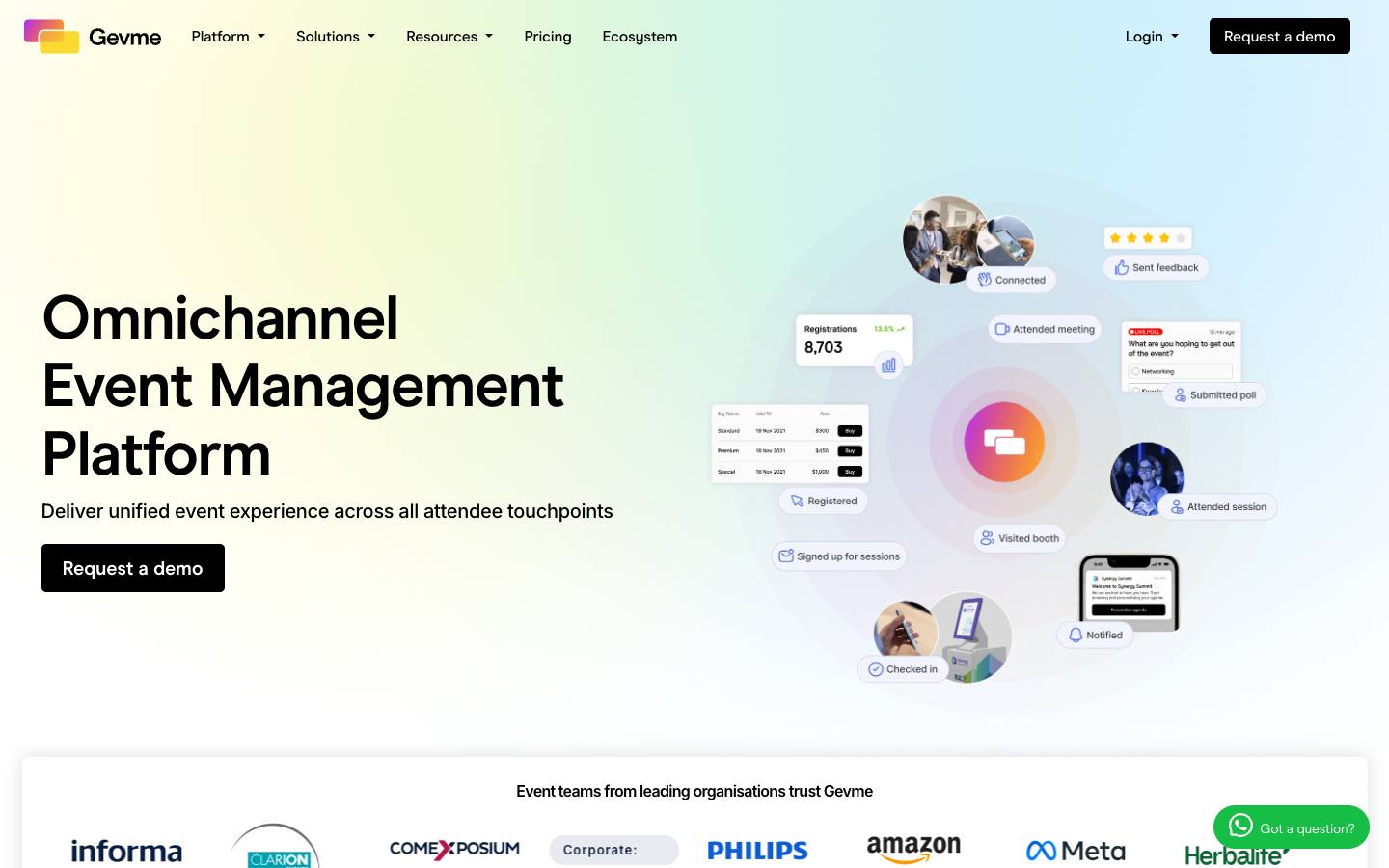
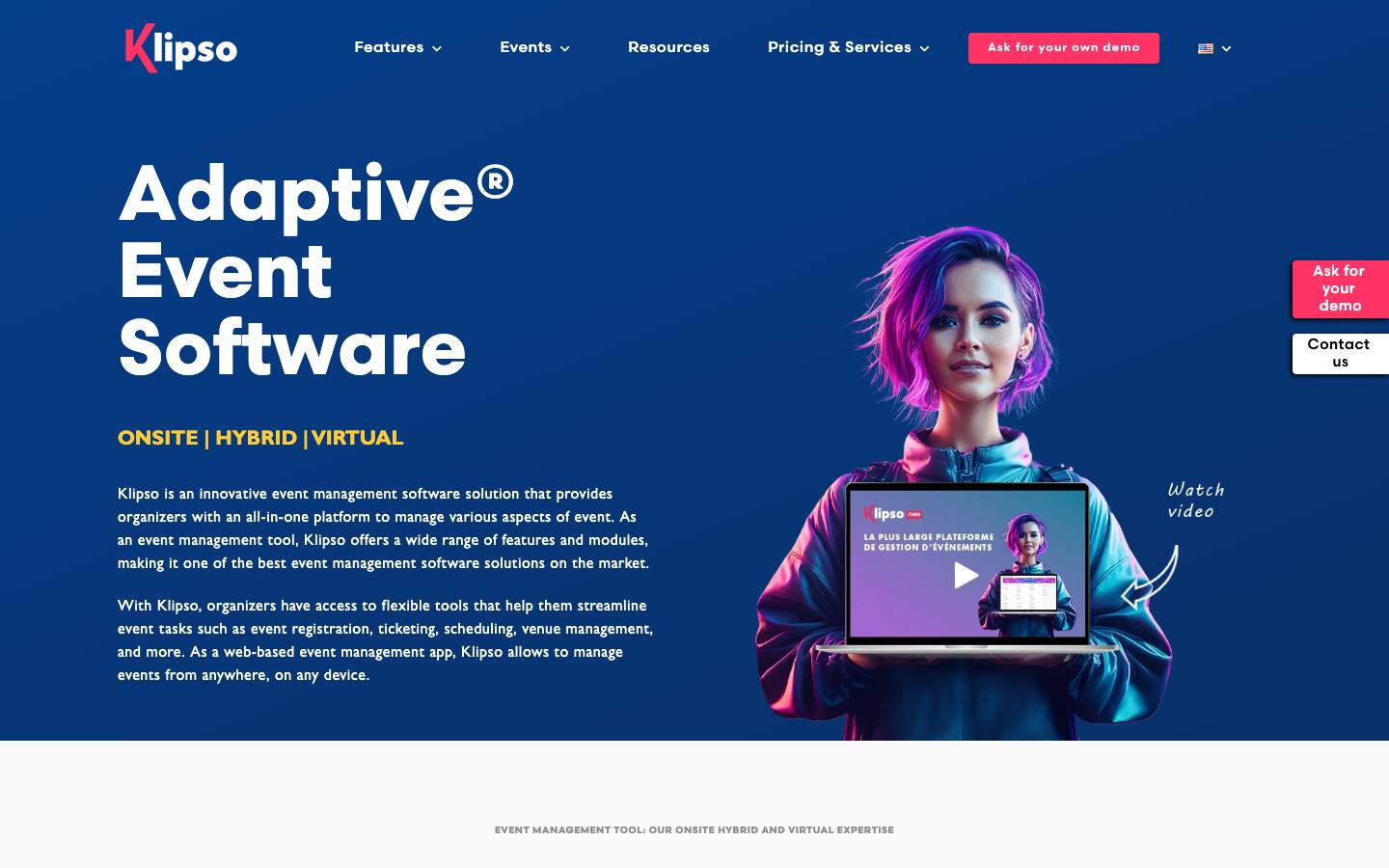
The main difference is the home market and the job around registration. Gevme, founded in 2006 and headquartered in Singapore, pairs registration with onsite check-in kiosks, badge printing, business matching and 2D and 3D virtual venues, and its customer base is concentrated in Asia-Pacific. Klipso, founded in 1999 and based in Montreuil, France, adds an event ERP for exhibition sales: a sales CRM, floorplans, rebooking and deposits, and invoicing.
That ERP is the reason Klipso fits organizers who sell stand space, while Gevme is built around the attendee journey. Klipso also sits inside Leni, which provides AV and IT logistics, so a buyer can get onsite services from the same group as the software. Gevme has offices in the US, the Philippines, China, India and Australia, which gives it wider geographic reach than Klipso's France-based support team.
Gevme vs Klipso pricing
Gevme publishes its prices and Klipso doesn't. Gevme has a Free plan (website builder, virtual venue editor, content management, 50+ themes), Starter from US$1,050/yr billed annually (event mobile app, private pages, advanced engagement features), and Pro from US$2,400/yr billed annually (business matchmaking, advanced analytics, native live streaming, custom themes). Enterprise is quoted and adds dedicated premium support, a white label event app and custom integrations. Prices checked October 2026.
Gevme prices its Omnichannel, Registration and Onsite products separately, extra attendees start at US$2.10 each, and kiosk hardware is booked separately. It has no free trial, and contracts are annual. Prices checked October 2026.
Klipso doesn't publish a starting price. Package and per-feature pricing is on request, and it offers per-event pricing. It describes no-commitment contracts, unlimited admin accounts and multi-year discounts. We didn't find a free plan, and Klipso doesn't publish whether it has a free trial. Because only one side publishes numbers, ask Klipso for a quote scoped to your event size and compare it against the matching Gevme plan.
Features and integrations
Both cover registration and ticketing, event websites, email campaigns, matchmaking, a mobile app, kiosks and badging. Gevme goes further on virtual and AI: 2D and 3D virtual venues, a CoPlanner AI assistant that builds events from plain-language prompts, and AI business matchmaking. Klipso adds abstract management, surveys, lead retrieval, digital posters and webinars, plus the exhibition ERP. Gevme runs in-person, virtual and hybrid events, and Klipso adds webinars to those.
Gevme lists 26 integrations, including Zoom, Webex, Stripe, Adyen, PayPal, Zapier, Eventbrite, Cvent, Bizzabo, ActiveCampaign and Airtable, and it lists webhooks. Klipso lists 17, mostly French payment gateways (Ingenico, Paybox, Lyra, Monetico, Systempay), e-signature (DocuSign, Oodrive Sign), Sendinblue and Chorus Pro, plus an API for querying its database. Neither lists a native Salesforce or HubSpot connector, so CRM syncs on Gevme lean on Zapier, webhooks or custom Enterprise integrations.
On security, Gevme documents SOC 2 Type II and ISO 27001, 27017 and 27018, with a trust center. We didn't find a SOC 2 or ISO 27001 report on Klipso's public pages. Klipso lists ISO 20121 for sustainable event management and documents SSO via Azure AD and ADFS. Gevme documents SSO through ADFS, SAML and OpenID.
Which should you choose?
Choose Gevme if you run conferences, government events or corporate events in Asia-Pacific, want a free tier or a published annual price to start from, and need kiosks and badging alongside registration. It suits SMB through enterprise teams, and the security documentation is stronger if procurement asks for SOC 2 or ISO reports. Expect to use Zapier or custom work for CRM syncs.
Choose Klipso if you organize trade fairs or congresses in France and sell exhibition space, since the ERP handles floorplans, deposits and invoicing in the same system as registration. It also fits mid-market and enterprise teams that want software and onsite AV from one group, with French and English interfaces. Customers it names include MCI, Reed Exhibitions (RX) and Paris 2024. Budget a quote cycle, since pricing isn't public.