 vs

Event Engine vs ReelFlow
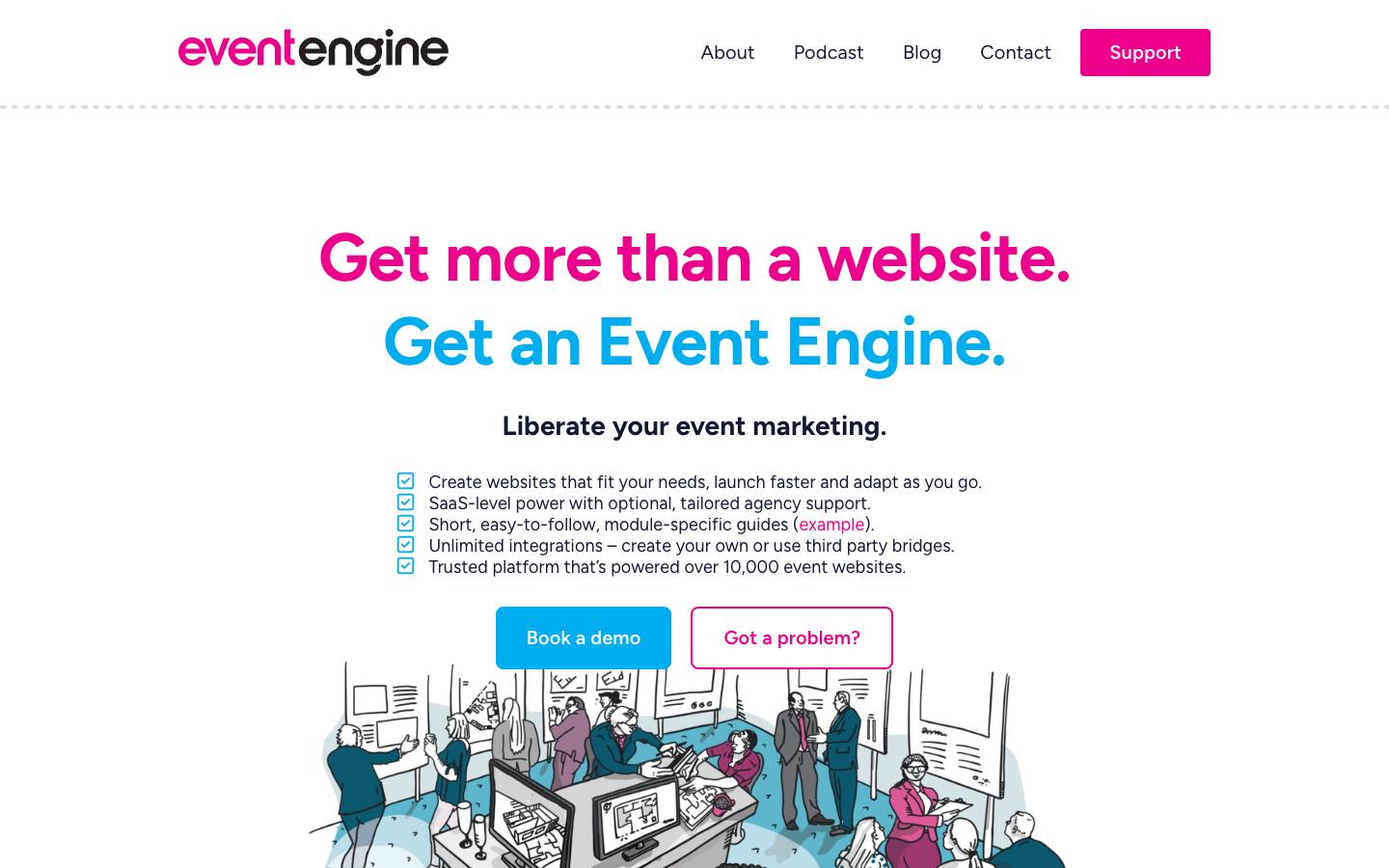
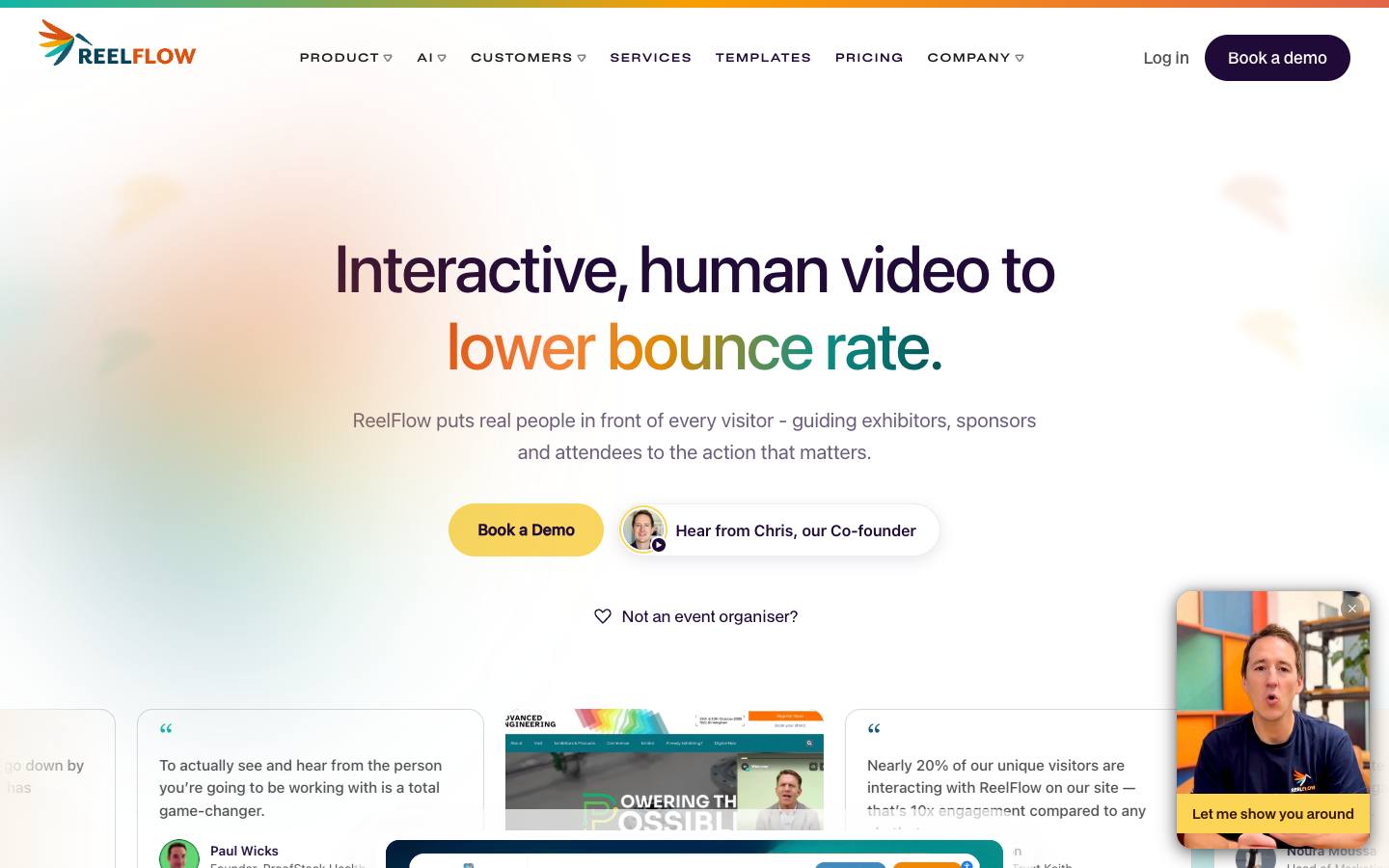
Both are in our Event websites category. Event Engine is best for conference and exhibition organisers running a portfolio of event websites; ReelFlow is best for trade show and conference organizers wanting to lift exhibitor and visitor sign-ups from their website.
The short answer: Event Engine and ReelFlow do different jobs and rarely replace each other. Event Engine, a Bedford company, builds event websites on its Rondayvoo CMS with agenda, speaker and sponsor modules, and quotes prices on request. ReelFlow adds branching interactive video to an existing site from £39/$49 per month. An organizer could use both: Event Engine for the site, ReelFlow to convert its visitors.
Built from each vendor's own website and our research profiles. How we research
Side by side
“Not published” means we couldn't find it on the vendor's own pages.
Event EngineReelFlowStrengths and considerations
Event Engine
What stands out
- Website CMS designed specifically for event portfolios rather than general-purpose site builders
- Blends software with agency-style design and integration services
- Niche exhibitor-to-exhibitor matchmaking product for trade shows
Worth checking
- Doesn't appear to provide its own registration or ticketing; relies on integrations
- Very small team, so check support capacity for large portfolios
- No published pricing or security certifications beyond a GDPR statement
ReelFlow
What stands out
- Event-specific video templates by campaign phase
- Software plus done-for-you video production
Worth checking
- Young company (LinkedIn lists 2024 founding)
- No integrations or security/GDPR details are listed on the site
- Results quoted on the site are vendor-reported
Notable customers
Organizations each vendor names on its own website: customer stories first, then testimonials and logos.
The main difference between Event Engine and ReelFlow
Event Engine builds the website, and ReelFlow adds a video layer on top of one. Event Engine's Rondayvoo CMS provides reusable templates for agendas, speakers, sponsor tiers and sessions, sold as a managed build (Bricks) or self-service editing (Blocks). It also sells Rondayvoo/Live, a virtual venue with livestream stages, and Rondayvoo/Match for exhibitor-to-exhibitor matchmaking. ReelFlow installs with one line of code and shows short presenter-led videos where visitors pick a path such as exhibitor, sponsor, speaker or attendee. Neither product does the other's job, so this is a choice of need, not a rivalry.
Pricing, features and fit
Event Engine publishes no pricing and prospects book a demo (checked October 2026). ReelFlow publishes self-serve plans from £39/$49 per month and a Business plan at £299/$399 per month that adds services such as video production and a Customer Success Manager, with a 14-day free trial and month-to-month cancellation (checked October 2026).
Event Engine lists 6 integrations, including Vimeo, YouTube, Slido, Poll Everywhere and a public REST API, and builds custom bridges to a client's CRM and registration tools. It doesn't appear to provide its own registration or ticketing. ReelFlow lists 5, such as HubSpot chatbot handoff, Intercom and Google Analytics 4, and documents EU hosting on AWS Ireland. Event Engine runs in-person, virtual and hybrid events for SMB and mid-market teams; ReelFlow is for in-person events and customers like Easyfairs, Event Tech Live and SaaStock.
Which should you choose?
Choose Event Engine if you run a portfolio of conferences or exhibitions and need event websites with reusable modules, or an agency-style partner to connect abstracts and speaker data. Corinium and Mines and Money are among its customers, and its team is very small, so check support capacity.
Choose ReelFlow if you already have a site and want more exhibitor and visitor sign-ups from tailored video journeys, with optional scripting and filming from its team. Use both when the site is the foundation and video is a conversion layer on its pages.