 vs

Blinq vs Vendelux Lead Scanner
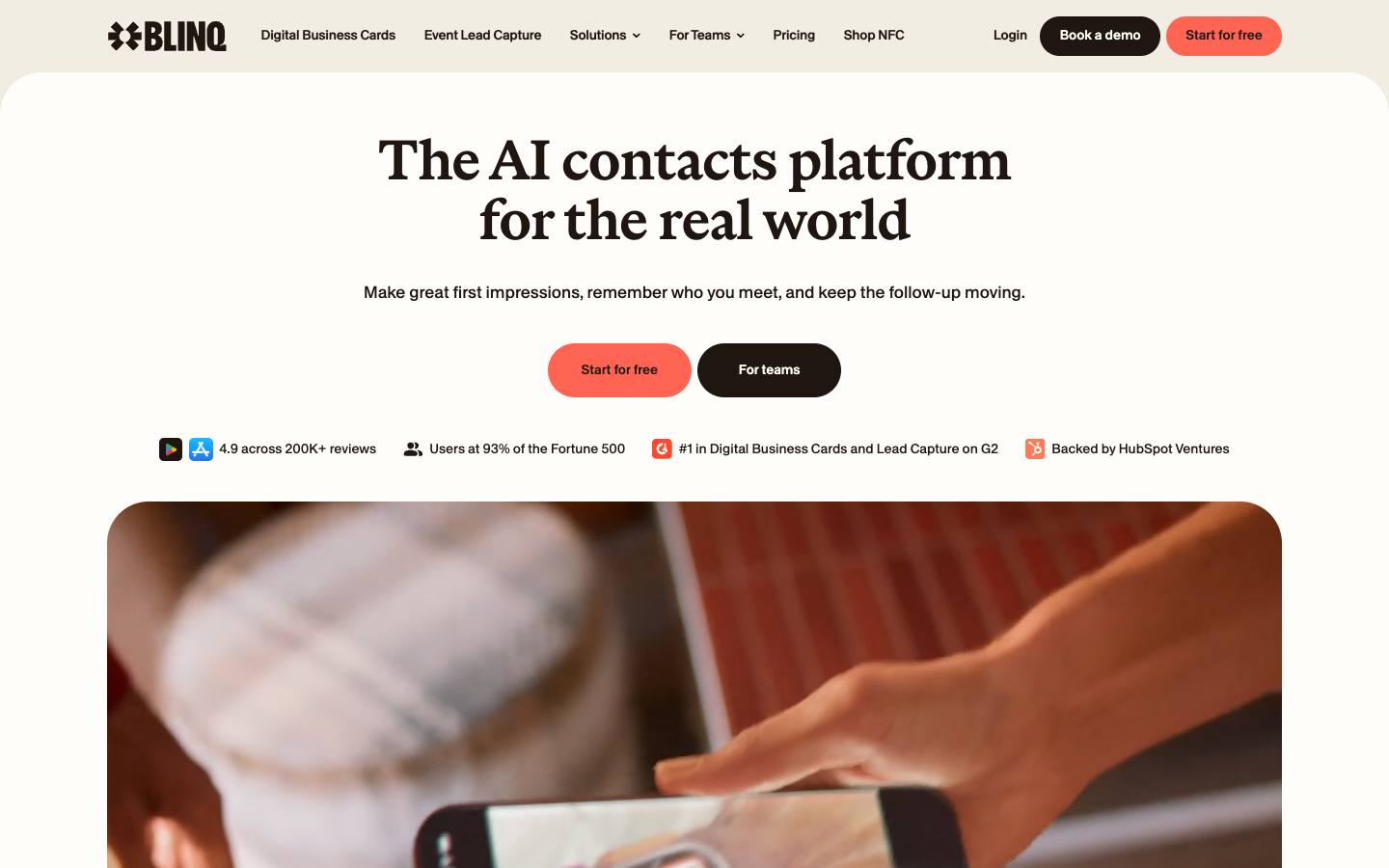
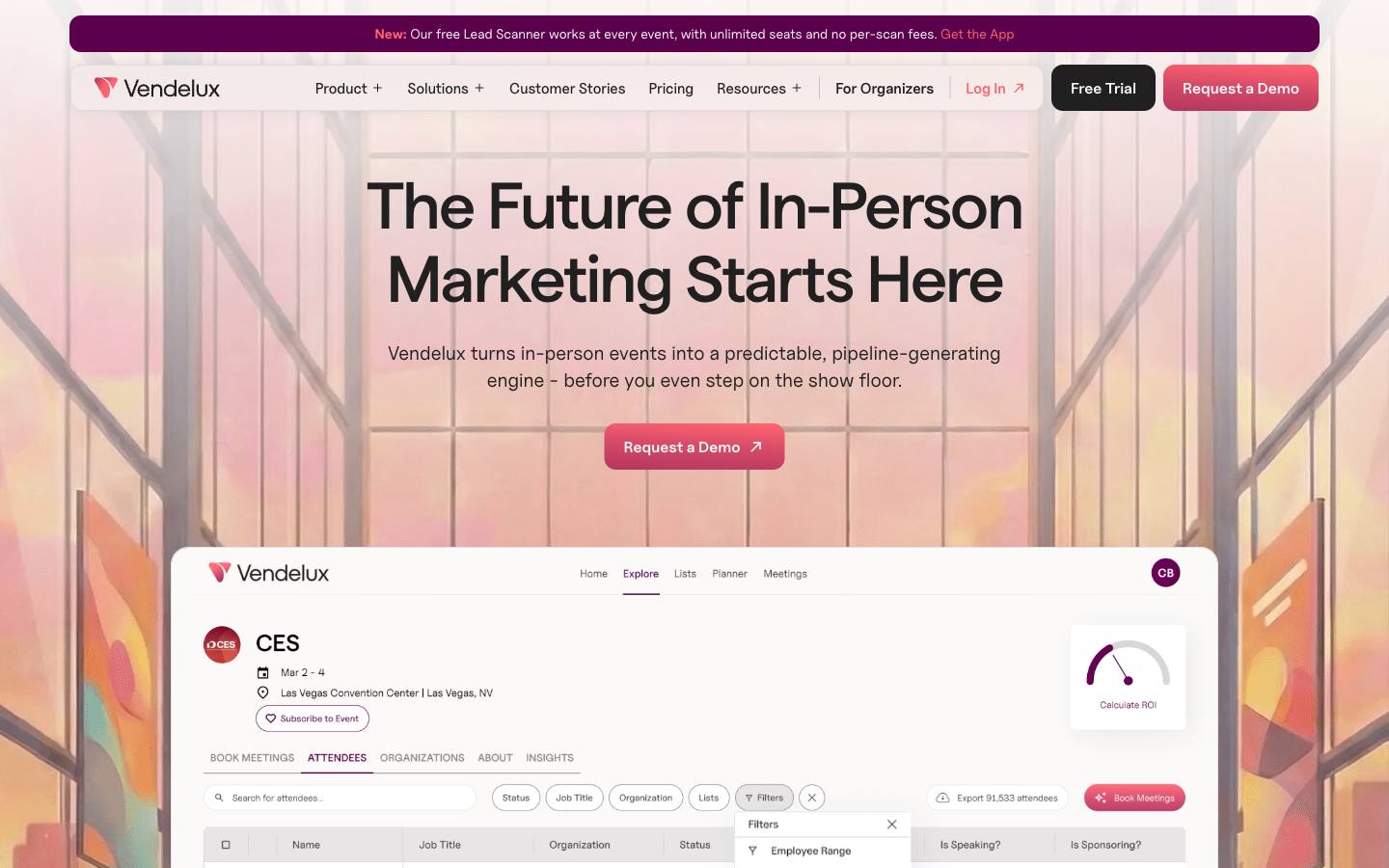
Both are in our Lead capture & retrieval category. Blinq is best for sales and field marketing teams exhibiting at many third-party trade shows and conferences; Vendelux Lead Scanner is best for exhibitor and attendee teams that want one scanner across many third-party events.
The short answer: Blinq is a digital business card platform that added event lead capture, with a free plan and Business from $4.99/user/month billed annually plus $9.99 per captured and enriched lead. Vendelux Lead Scanner is a free app that reads badges and business cards with no per-scan fees, and syncs to HubSpot or Salesforce. Pick Blinq for cards plus CRM context; pick Vendelux for free scanning.
Built from each vendor's own website and our research profiles. How we research
Side by side
“Not published” means we couldn't find it on the vendor's own pages.
BlinqVendelux Lead ScannerStrengths and considerations
Blinq
What stands out
- Lead capture works at any event without depending on the organizer's badge system
- Combines contact enrichment, AI notes and CRM context in the scanning workflow
- Very low entry price for digital business cards, with a free plan
Worth checking
- Not an event management platform; it serves exhibitors and attendees, not organizers
- Per-lead charges can add up for high-volume booths unless an event package is negotiated
- Customer logo wall is labeled as users rather than formal case studies
Vendelux Lead Scanner
What stands out
- Free and uncapped, unlike per-event rental or per-seat lead retrieval licenses
- Works at events regardless of which registration or badge vendor the organizer uses
- Enrichment draws on Vendelux's own event attendee and contact data
Worth checking
- Very new product (first app versions September 2026) with a small number of app store ratings
- Reads the printed name and company rather than the show's encoded badge data, so contact details come from enrichment rather than the registration record
- No specific security certifications named on the product page
- CRM sync covers HubSpot and Salesforce; other CRMs rely on CSV export
Notable customers
Organizations each vendor names on its own website: customer stories first, then testimonials and logos.
The main difference between Blinq and Vendelux Lead Scanner
The main difference is how each one charges for captured leads and what else it does around the scan. Vendelux Lead Scanner is a single-purpose app: unlimited users, events and scans, no per-scan fees, and no paid tier. Blinq started as a digital business card product and added event lead capture on top, so it is a wider tool with a usage-based price for leads.
Both work at events where you don't control the badge system. Vendelux reads printed badges, business cards and handwritten details with the phone camera, then enriches each contact with work email, title, company, LinkedIn and seniority. Blinq's universal scanner captures badges, paper cards, QR codes and LinkedIn pages, and can pull official registration records when an organizer grants badge API access.
Both are for exhibitors and attendees, not organizers. Neither one runs registration or check-in.
Blinq vs Vendelux Lead Scanner pricing
Vendelux Lead Scanner costs nothing and has no seat minimums, per-lead fees or contract. Its pricing page shows a single free tier covering badge and business card scanning, lead enrichment and CRM sync. It has no trial because there is nothing to upgrade to.
Blinq publishes four plans (checked October 2026). Free covers two digital business cards with unlimited sharing and contact creation. Premium is $7.33/month billed annually for up to five cards, a universal contact scanner, an AI notetaker and AI contact enrichment. Business is $4.99/user/month billed annually and adds event lead capture and attribution, native CRM integrations and an admin platform. Enterprise is custom-priced and adds enforced SSO, SCIM provisioning, invoice billing and a dedicated CSM. Trials run 7 days on Premium and 30 days on Business.
The cost that matters for event work is the lead charge. Blinq lists $9.99 per lead captured and enriched on a pay-as-you-go basis for one to three events a year, which requires Business, and offers custom packages for heavier programs. A team scanning thousands of leads at a large show should price that against a free scanner. Prices checked November 2026.
Features and integrations
Both capture offline and sync later, both let reps add notes, and both enrich contacts. Vendelux tags leads hot, warm or cold and transcribes voice notes onto the lead. Blinq adds admin-defined qualifier questions that map to CRM fields, kiosk-style lead forms for unmanned booths, an AI notetaker for booth conversations and per-event reporting on cost per lead, pipeline and rep performance.
On integrations, Vendelux syncs to HubSpot and Salesforce and exports CSV; other CRMs go through CSV. Blinq names Salesforce, HubSpot, Microsoft Dynamics 365, Marketo, Pipedrive and Zoho CRM, plus Zapier for anything else, and shows existing deal history at scan time. Blinq's pricing cards put native CRM integrations on Business, while its comparison table lists them on every plan, so confirm which plan you need.
Both document a SOC 2 Type II report. Blinq lists SAML SSO and, on Enterprise, SCIM; Vendelux lists SSO through Okta using OIDC and we didn't find SCIM. Blinq lists 702 Capterra reviews; Vendelux's scanner launched in September 2026 and has a small number of app store ratings.
Which should you choose?
Choose Blinq if your sales team also wants branded digital business cards, you use Marketo, Pipedrive, Zoho CRM or Dynamics, or you want per-event attribution and deal history shown at the booth. It also fits companies that need SCIM provisioning and a dedicated CSM at the Enterprise level.
Choose Vendelux Lead Scanner if you want unlimited scanning at no cost, your CRM is HubSpot or Salesforce, and your reps mostly need to scan, tag and enrich. It suits teams going to many third-party events who don't want to count leads against a budget. Because it reads the printed name and company, contact details come from enrichment rather than the show's encoded registration record.