 vs

Bizly vs Meetingselect
Both are in our Venue sourcing category. Bizly is best for enterprises that want strategic meetings management controls over decentralized in-person meetings and dinners; Meetingselect is best for corporate travel, procurement and meeting-planning teams that want centralized sourcing, booking and billing of meeting venues.
The short answer: Bizly and Meetingselect both source and book venues for corporate in-person meetings, and neither publishes buyer pricing. Bizly adds a concierge team, a group dining network from its Kapow acquisition and approval workflows for decentralized planners. Meetingselect adds consolidated invoicing, a native Stova integration and ISO 27001 and ISO 9001 certifications. Pick Bizly for executive dinners and policy control, Meetingselect for procurement-led booking.
Built from each vendor's own website and our research profiles. How we research

Side by side
“Not published” means we couldn't find it on the vendor's own pages.
BizlyMeetingselectStrengths and considerations
Bizly
What stands out
- Combines a venue marketplace and concierge sourcing with enterprise meetings policy and approval controls
- Group dining network from Kapow suits executive dinners and conference side events
- Designed so non-professional planners can book within corporate guidelines
Worth checking
- Focused on sourcing, booking and spend control; it doesn't offer event websites, registration marketing or virtual delivery at the depth of event marketing platforms
- Few named software integrations on the site
- Enterprise pricing isn't published
Meetingselect
What stands out
- Two-sided marketplace combining corporate booking tools with venue-side distribution and property-management software
- Consolidated payment and invoicing across many venue bookings, aimed at procurement and finance
- Native integration into the Stova event platform
- ISO 9001 and ISO 27001 certifications plus an EcoVadis sustainability rating
Worth checking
- A venue sourcing and meeting-booking tool, not a registration or event marketing platform
- Pricing for corporate buyers isn't published
- Strongest footprint appears to be in Europe; check venue depth in your target markets
Notable customers
Organizations each vendor names on its own website: customer stories first, then testimonials and logos.
The main difference between Bizly and Meetingselect
Bizly is built around the planner who books a dinner or small meeting inside corporate rules, while Meetingselect is built around the procurement and finance team that wants every venue booking paid and invoiced in one place. Bizly pairs a searchable directory of over a million venues with a concierge team that handles outreach and proposals, and its 2025 Kapow acquisition added restaurants and experiential venues for executive dinners and conference side events. Approval workflows, preloaded contracts and budget tracking enforce policy across decentralized planners.
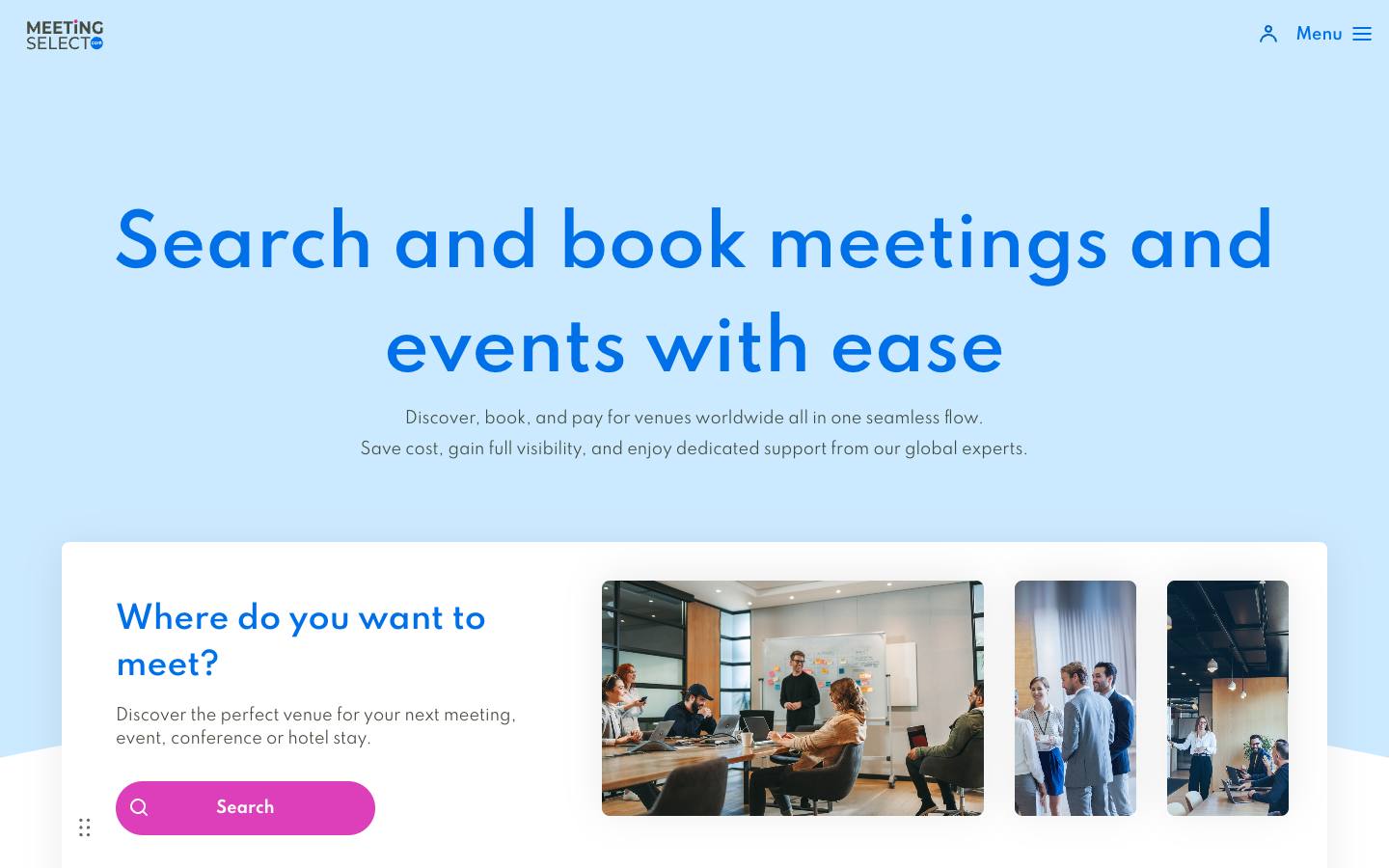
Meetingselect is a Dutch two-sided marketplace. Corporates search, book, pay for and invoice meeting venues and group hotel rooms, while hotels and venues list space and manage requests through supplier tools. Its Instant Booking returns real-time proposals from connected partner hotels instead of manual RFP back-and-forth, and a duty of care dashboard tracks where attendees are. Neither product is an event marketing platform: Bizly doesn't offer event websites or virtual delivery at the depth of those tools, and Meetingselect is a venue sourcing and booking tool rather than a registration platform.
Bizly vs Meetingselect pricing
Neither Bizly nor Meetingselect publishes a starting price, so cost comparison starts with quotes for the same volume of meetings. Bizly's enterprise pricing is quote-based; its site offers free access to teams with upcoming events, and the paid tiers it publishes apply to venues listing on the marketplace. Meetingselect publishes no buyer pricing; venues can list for free and buy paid marketing packages for extra visibility (checked October 2026).
Because both sit on the supply side of the booking, ask each how fees reach you: through negotiated venue rates, a booking fee, or a subscription. Meetingselect's consolidated invoice handling is part of the product, so ask whether payment processing carries a charge.
Features and integrations
Both cover venue search and group hotel room blocks, and both describe AI-driven venue recommendations. Bizly adds guest lists, personalized invitations and RSVP tracking, a planning workspace with agendas and timelines, and an AI assistant for venue and vendor discovery. Meetingselect adds the Meeting Destination Finder, centralized invoice handling and its Meetings for Trees carbon-reduction initiative.
Integrations are thin on both sides. Bizly lists 2 integrations, meeting request forms and unnamed meeting request form integrations, with no public API or Zapier mentioned. Meetingselect lists 4: Stova, Cyberdigma, SAP and the Cyberdigma property management system. Venue search, booking and payment are built into the Stova platform, so Stova users get the tightest link. Neither lists Salesforce or HubSpot.
On security, Bizly's Enterprise page states a SOC 2 Type II compliant platform, though it doesn't name the auditor or say how to get the report. For Meetingselect we didn't find a SOC 2 report on its public pages; its About page shows an ISO 27001 certification mark.
Which should you choose?
Choose Bizly if your meetings are scattered across many occasional planners, you book executive dinners around conferences, or you want a concierge team negotiating with venues. It targets mid-market and enterprise teams, and McDonald's appears among its customers.
Choose Meetingselect if procurement, travel or finance owns meeting spend and you want one consolidated invoice, SAP connectivity and a Stova link. It serves mid-market and enterprise too, with support around the clock and customers such as Danone, ING, Roche and Uber. Its strongest footprint appears to be in Europe, so check venue depth in your target markets. Meetingselect was founded in 2007 and is based in Amsterdam; Bizly was founded in 2016 and is based in Palo Alto.