 vs

Bizibl vs GoTo Webinar
Both are in our Virtual, webinar & streaming category. Bizibl is best for Japanese B2B marketing teams running regular lead-generation webinars; GoTo Webinar is best for marketing teams running regular lead-generation webinars synced to marketing automation.
The short answer: Bizibl is a Tokyo webinar marketing platform, founded in 2018, whose site and support are Japanese-only and which bundles planning and operations consulting with the software. GoTo Webinar is a long-running webinar product with self-serve Reach (500 participants) and Elevate (1,000) plans and a quote-based Complete tier for 3,000. Pick Bizibl for Japanese B2B lead-generation webinars and GoTo Webinar for English-language programs synced to HubSpot, Marketo or Pardot.
Built from each vendor's own website and our research profiles. How we research
Side by side
“Not published” means we couldn't find it on the vendor's own pages.
BiziblGoTo WebinarStrengths and considerations
Bizibl
What stands out
- Focused on webinars as a B2B lead-generation channel rather than general events
- Combines platform with webinar planning and operations services
- Large roster of Japanese SaaS customers with published case studies
Worth checking
- Site and support are Japanese-only; suited mainly to the Japanese market
- Specific CRM/MA integrations aren't named publicly
- No security certifications are listed
GoTo Webinar
What stands out
- Mature, widely used webinar product with simulive and webcast options
- Native connectors to major marketing automation platforms
- Optional managed event and webcasting services
Worth checking
- Webinar-only; no in-person event management
- Prices aren't displayed on the public pricing page
- Security certifications aren't named on the product page
Notable customers
Organizations each vendor names on its own website: customer stories first, then testimonials and logos.
The main difference between Bizibl and GoTo Webinar
The main difference is language and service model. Bizibl is built for Japanese B2B marketing teams: its site and support are Japanese-only, and the software comes with customer success plus webinar planning and operations consulting. Named customers include Kansai Electric Power, Rakus, CADDi, TOKIUM and Sales Marker.
GoTo Webinar is a self-serve product first, with Boston headquarters and a customer list that spans Amazon Advertising, Deloitte, Equifax, Lenovo and the Salvation Army. Reach and Elevate are self-serve, Complete adds full-service registration, and webcasting and event services are optional add-ons rather than part of the package.
Both focus on webinar and virtual formats, and neither covers in-person events. Bizibl positions webinars as a lead-generation channel and also supports multi-stage online conferences with sponsor booths. GoTo Webinar covers live, pre-recorded and simulive sessions from marketing webinars to trainings and town halls.
Bizibl vs GoTo Webinar pricing
Neither product gives a usable starting price, so cost comes down to a quote. Bizibl sells through a Japanese inquiry form for service and pricing, and its pricing is quote-based with no published figure. GoTo Webinar lists annual-billing plans, but its amounts load dynamically and we couldn't read them, so check the live page before budgeting.
What GoTo Webinar does publish is how plans scale. Reach has 1 organizer seat and up to 500 participants, with reporting, polls and live Q&A. Elevate raises that to 1,000 participants and adds branded webinars with custom URLs, cloud recordings, AI summaries and transcripts, and breakout rooms. Complete, via Contact Us, reaches 3,000 participants, adds live streaming to unlimited attendees, paid events and certificates, and includes a GoTo Meeting license. Contracts are annual, and a free trial is offered with its length not shown.
Bizibl lists no free plan or trial. Because it bundles consulting and operations support with the tool, a Bizibl quote covers more than software, so ask each vendor to quote the same audience size and support scope.
Features and integrations
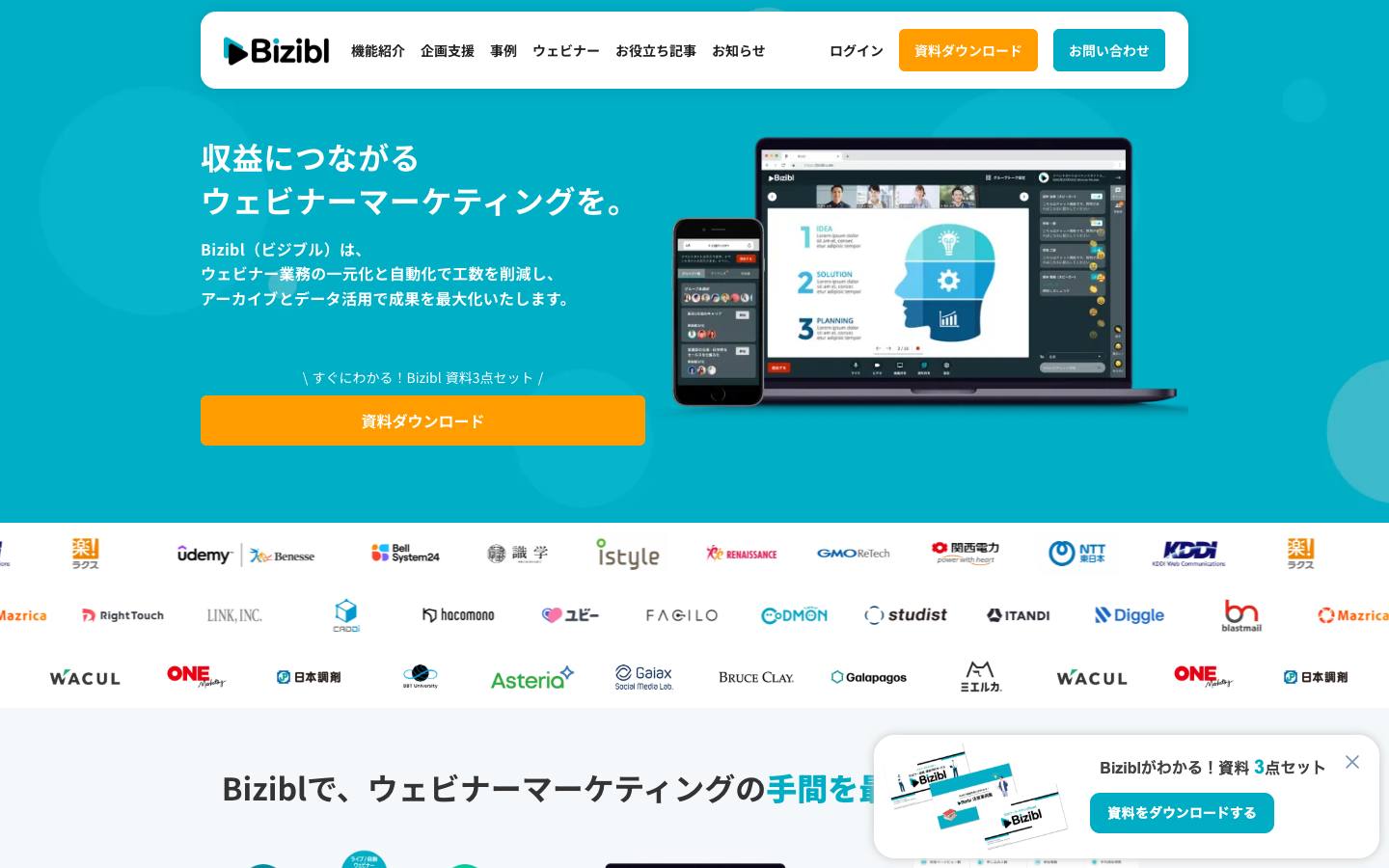
Bizibl runs registration, reminders, hosting and follow-up in one place, turns recorded live sessions into on-demand streams that play automatically, and captures registration, attendance-log and survey data for lead scoring. It includes an AI avatar presenter feature. Its connectors push that data to HubSpot, Zoho CRM and SATORI, and Google Tag Manager is listed among its 5 integrations, along with API access for other marketing automation and CRM tools.
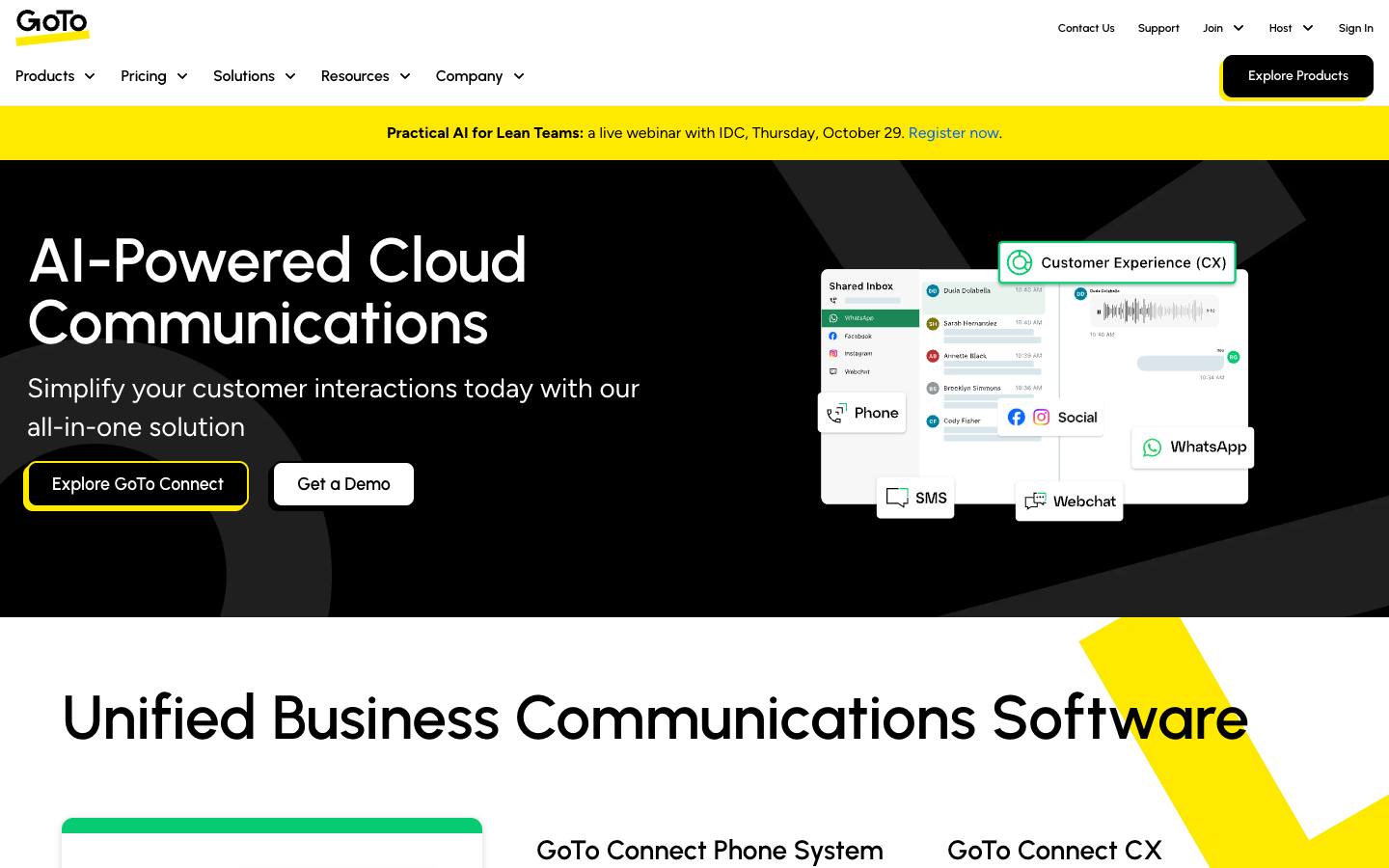
GoTo Webinar lists 10 integrations, including HubSpot, Marketo, Salesforce Pardot (also shown as Account Engagement), Docebo and Intellum for learning content. Check which plan includes the connectors, because the integration notes tie them to the Complete plan. A public Webinar V2 API with webhook events covers custom work. Other features include practice mode for presenters, polls, Q&A, breakout rooms and engagement analytics.
On security, GoTo Webinar documents SOC 2 Type II audits, a SOC 3 report for Webinar and Stage, a sub-processor list, a trust center and a DPA with GDPR and CCPA terms. A BAA is available to US healthcare customers for applicable offerings, though Webinar isn't named as covered. We didn't find security documents for Bizibl on its public pages.
Which should you choose?
Choose Bizibl if your audience and team work in Japanese, you run regular lead-generation webinars, and you want planning and operations help included. It also suits teams that want recordings redistributed automatically as on-demand content and feeding HubSpot or Zoho CRM.
Choose GoTo Webinar if you need English-language webinars, a self-serve start, audiences up to 3,000, and connectors to Marketo or Pardot. It also fits larger programs that want paid events or certificates, and buyers who need documented security reports.