 vs

Akkadu vs LiveVoice
Both are in our Interpreting & captioning category. Akkadu is best for international conferences and summits that need on-screen multilingual captions on a budget; LiveVoice is best for conference organisers needing simultaneous interpretation without renting receivers.
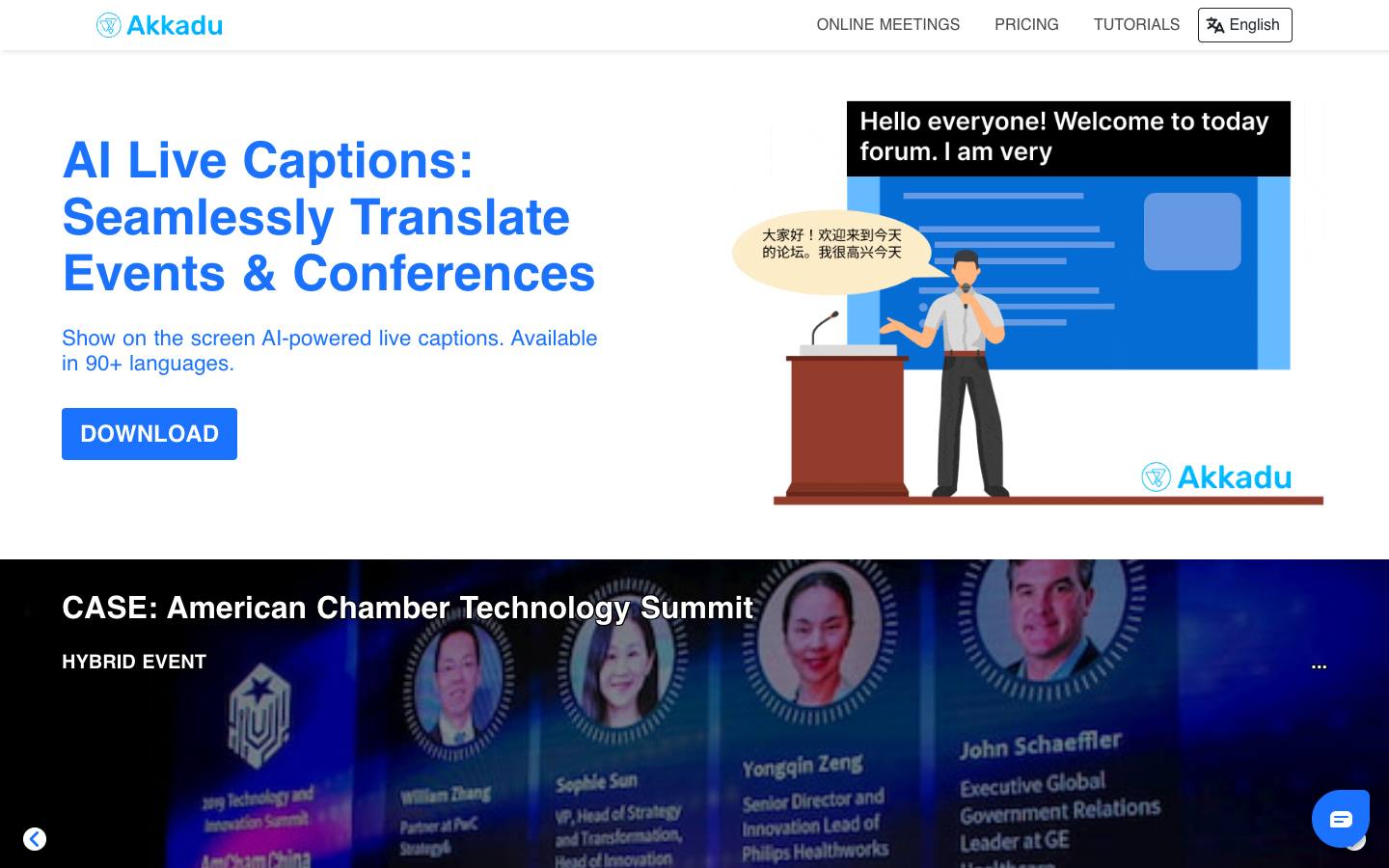
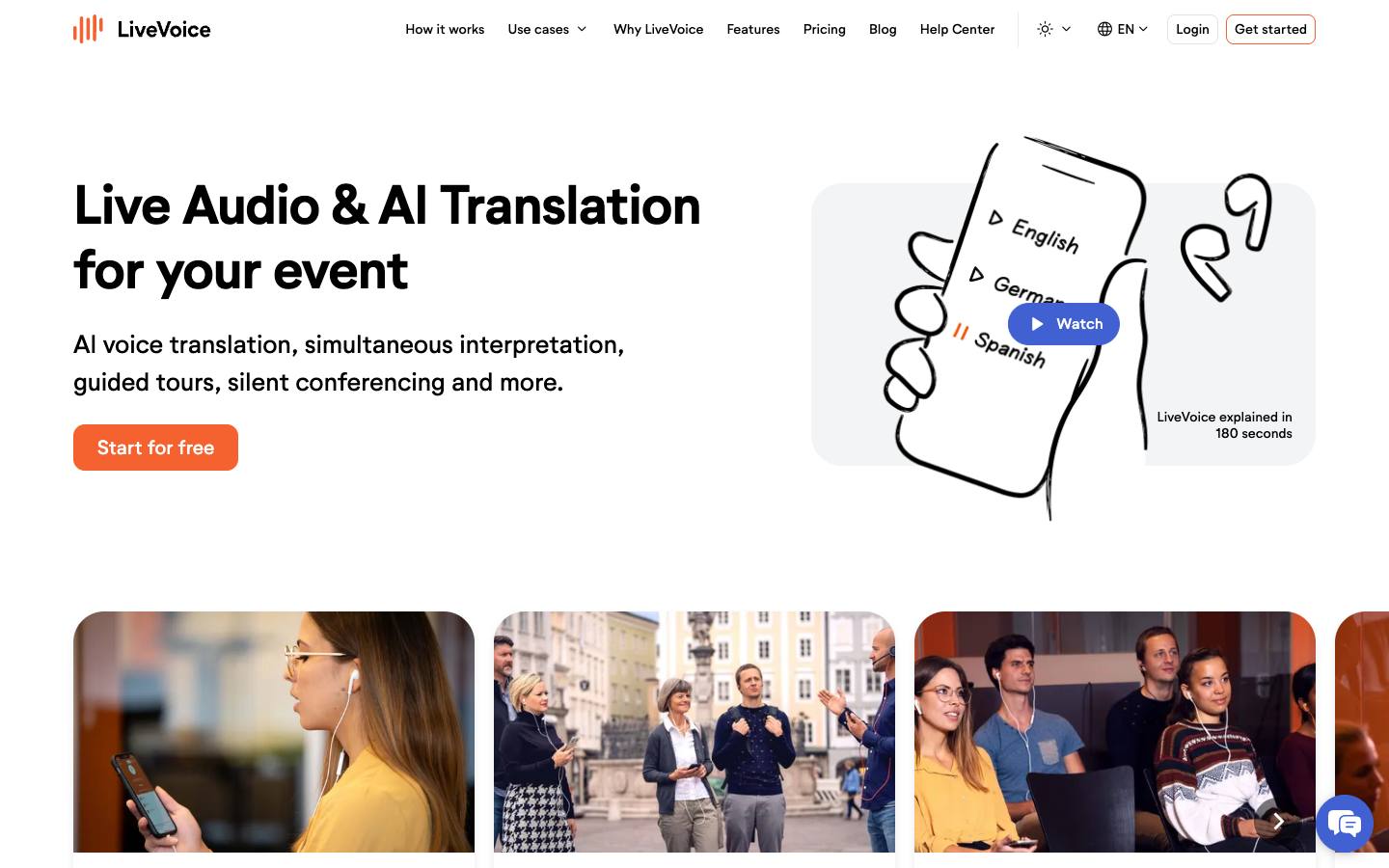
The short answer: Akkadu is a Windows and macOS app that turns an event's audio into AI captions and translated audio in 90+ languages, billed in credits from $6 for 5 credits (about 1 hour of captions). LiveVoice streams human interpreter and AI channels to attendees' own phones, from €8 per day. Choose Akkadu for on-screen captions, LiveVoice for interpretation without receiver hardware.
Built from each vendor's own website and our research profiles. How we research
Side by side
“Not published” means we couldn't find it on the vendor's own pages.
AkkaduLiveVoiceStrengths and considerations
Akkadu
What stands out
- Low per-hour, credit-based pricing with no minimum event size
- Works with any audio source via a laptop, so it's platform-agnostic for in-person, hybrid and virtual sessions
- Lets organisers choose among several third-party AI speech and translation engines
Worth checking
- Accuracy depends on audio quality and language pair; machine output isn't a substitute for human interpreters in high-stakes sessions
- Requires a laptop running the desktop app connected to the sound desk
- Company details (legal entity appears under several names, including Akkadu Inc. and Akkadu Pte. Ltd.) and leadership aren't published on the site
LiveVoice
What stands out
- No receiver hardware needed for interpretation
- Flexible day-pass pricing suited to one-off events
- Human interpreter and AI translation channels in one tool
Worth checking
- Audio and translation layer only; registration and event management need another platform
- No security certifications are published
- Pricing page shows starting prices; exact per-period costs appear in the booking flow
Notable customers
Organizations each vendor names on its own website: customer stories first, then testimonials and logos.
The main difference between Akkadu and LiveVoice
Akkadu puts translation on screens, while LiveVoice puts it in attendees' ears. Akkadu runs on a laptop connected to the sound desk and produces live captions that appear on stage screens or on a livestream through an OBS virtual camera, with AI-voiced translated audio as a costlier alternative. LiveVoice sends interpreter channels, AI voice translation in 70+ languages and live captions to the audience's smartphones, tablets or computers by link, QR code or code.
Both cover in-person, virtual and hybrid events. LiveVoice is built around human interpreters, including remote ones with handover and A/B channel switching, and also supports silent conferencing and guided tours. Akkadu is machine-only, and accuracy depends on audio quality and language pair, so it's a weaker match for high-stakes sessions that need human interpreters.
Akkadu vs LiveVoice pricing
Akkadu sells credits with no minimum event size (checked October 2026): $6 for 5 credits (1 hour of live captions or 30 minutes of live audio), $22 for 20 credits, and $99 for 100 credits. Larger packs of 200 to 1,000 credits are offered, and Enterprise is custom priced. A 10-minute free caption trial is available, but there's no free plan.
LiveVoice prices by booking period (checked October 2026): from €8 per day on the first plan, €13 per day with branding and recording, and €26 per day with video for remote interpreters, automatic floor audio and import. Monthly and yearly subscriptions are also offered. AI translation is billed extra per minute per language. LiveVoice has a free test plan, and day plans can be cancelled up to 48 hours before the booked date.
Features and integrations
Akkadu lists 15 integrations, mostly meeting and streaming destinations: Zoom, Microsoft Teams, Webex, Google Meet, YouTube Live, LinkedIn Live, Facebook Live and OBS, plus WeChat, Line and VooV Meeting for Asian audiences. It works by capturing audio, not through an API, and we didn't find a public API or webhooks.
LiveVoice lists 14, and several are event platforms: Cvent, Swapcard, ON24, BigMarker, InEvent, EventsAir and RingCentral Events. With other platforms it runs in a second browser window or device. Neither lists a CRM or Zapier connector. Neither shows a SOC 2 report on public pages, though Akkadu publishes a DPA and a table of 10 subprocessors, and LiveVoice publishes a WCAG 2.2 AA accessibility statement and documents EU-only servers for EU customers.
Which should you choose?
Choose Akkadu if you run an international summit or hybrid conference and want multilingual captions on the main screen or stream at a few dollars an hour, with no interpreters to hire. It's Singapore-based and shows customers such as Audi, Deloitte and LinkedIn. Setup is self-serve, with support stated as 24/7.
Choose LiveVoice if you need simultaneous interpretation, silent conferencing or overflow rooms and don't want to rent receivers. Founded in 2016 in Salzburg, it shows Siemens, UEFA and Web Summit among its customers and plugs into Cvent or Swapcard events. It handles audio only, so registration and event management stay on another platform.